


 Catalog of Fishes
 literature references
 FishBase
 Bold Systems
 IUCN Red List
 GBIF
GBIF
 NCBI GenBank
Dipturus nidarosiensis
(Storm, 1881)
Norwegian skate
Classification: Elasmobranchii Rajiformes Rajidae
Reference of the original description
Bidrag til kundskab om Trondhjemsfjordens fauna. III. Det Kongelige Norske videnskabers selskabs skrifter. Trondheim, 4(1880): 73–96
Bidrag til kundskab om Trondhjemsfjordens fauna. III. Det Kongelige Norske videnskabers selskabs skrifter. Trondheim, 4(1880): 73–96
Image of the original description
No image in first description.
No image in first description.
Synonyms / new combinations and misspellings
Dipturus nidrosiensis, Raia nidrosiensis, Raja nidarosiensis, Raja nidrosiensis, Raja (Dipturus) nidarosiensis
Dipturus nidrosiensis, Raia nidrosiensis, Raja nidarosiensis, Raja nidrosiensis, Raja (Dipturus) nidarosiensis
Images of types
.jpg)
.jpg)
Description :
Citation: Dipturus nidarosiensis (Storm, 1881): In: Database of modern sharks, rays and chimaeras, www.shark-references.com, World Wide Web electronic publication, Version 06/2026
Please send your images of "Dipturus nidarosiensis" to info@shark-references.com
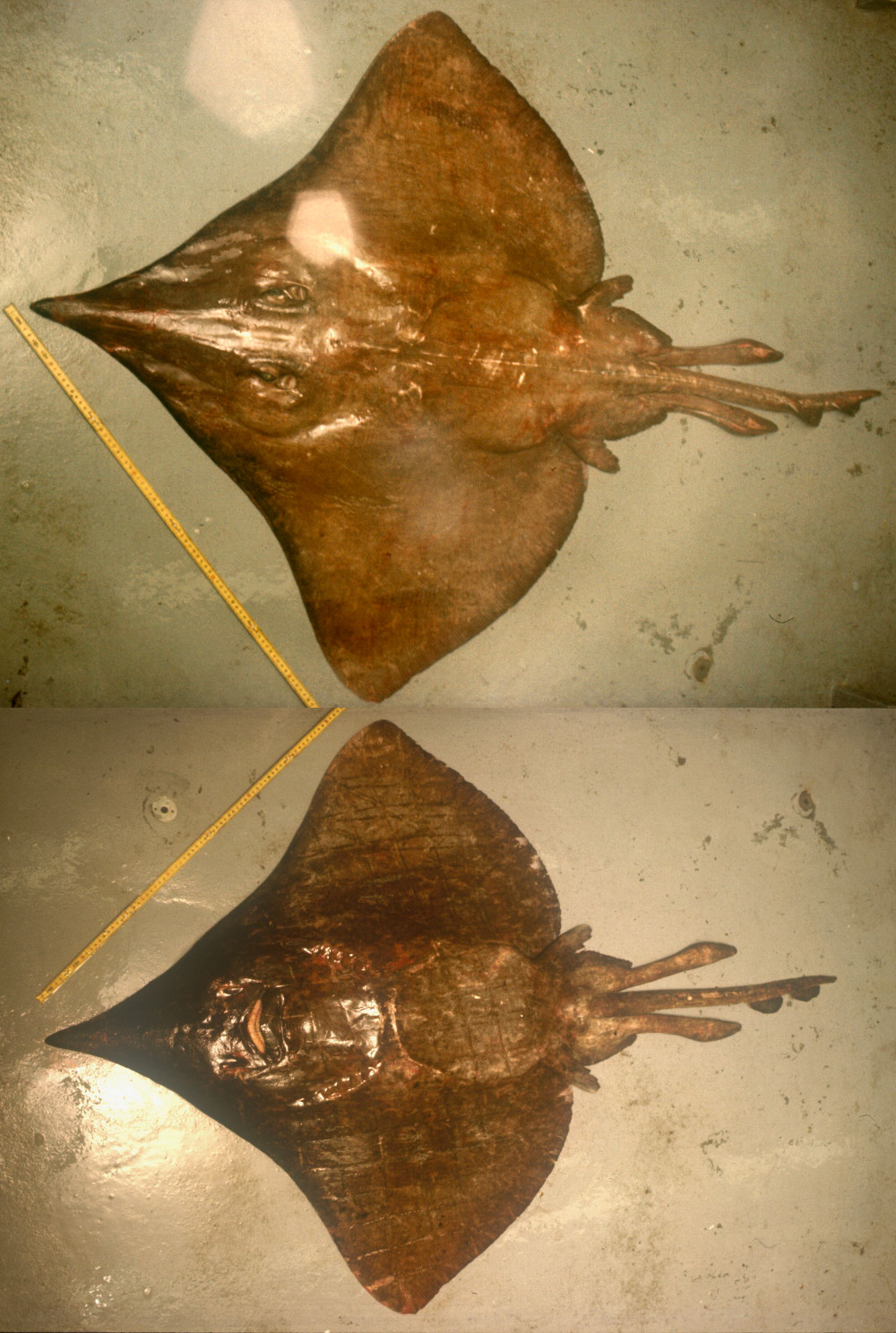
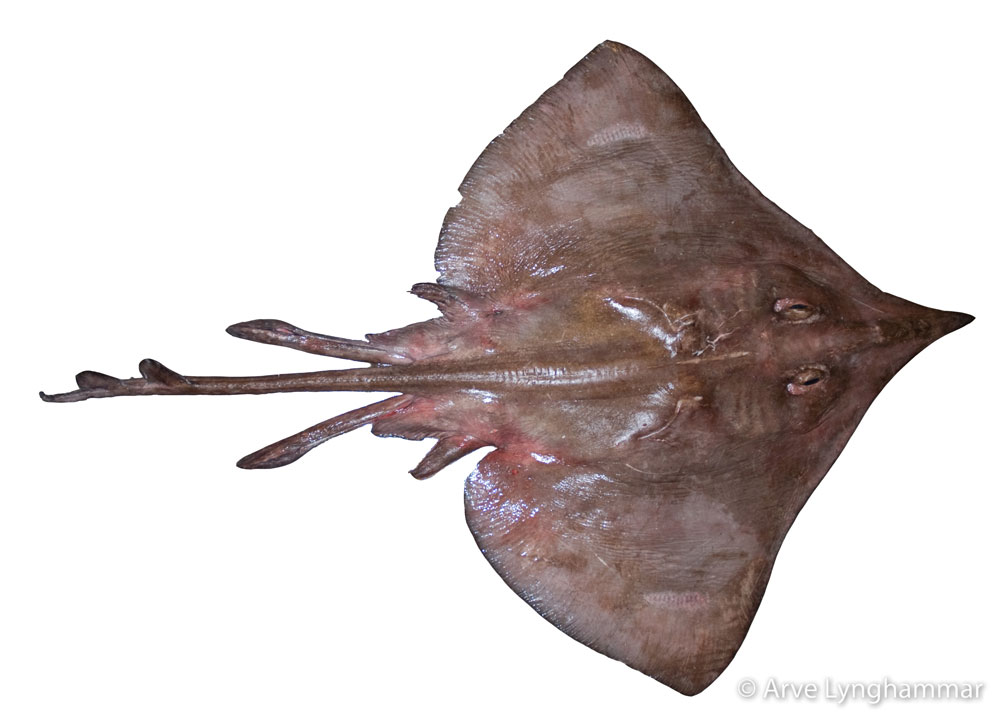
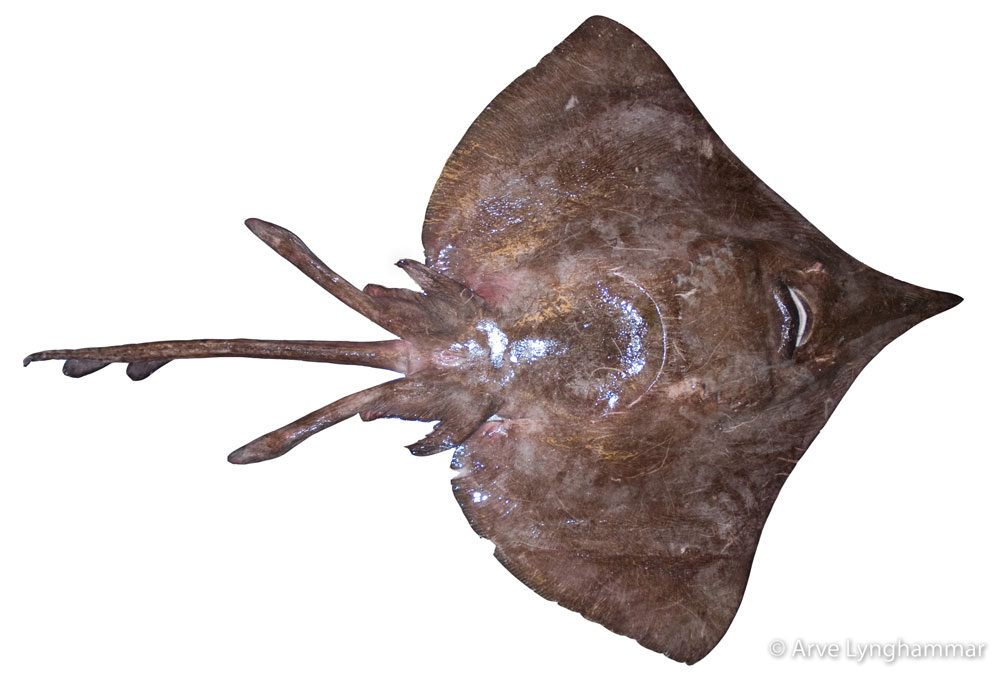
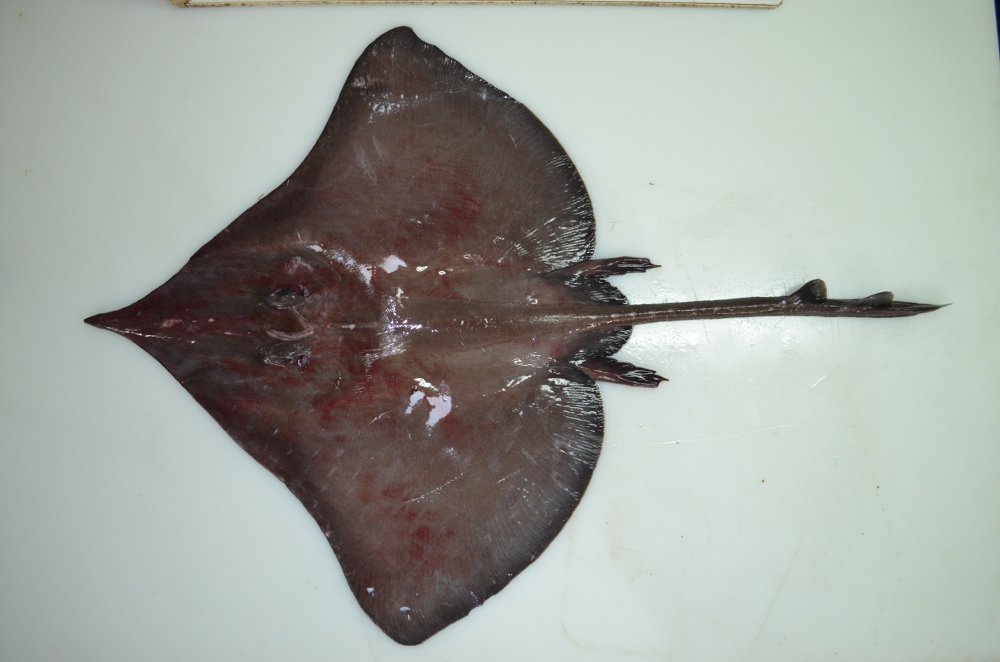
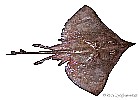
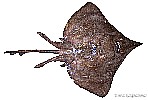
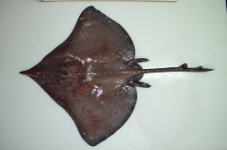
Dipturus nidarosiensis (Storm, 1881), male, adult, coll. no. ZMH 113196 (ISH727-1974), North Atlantic, 13°1'W, 60°7'N © Matthias Stehmann
Dipturus nidarosiensis (Storm, 1881), male, adult, coll. no. ZMH 113196 (ISH727-1974), North Atlantic, 13°1'W, 60°7'N © Matthias Stehmann
Common names
 Raya noruega,
  Pocheteau de Norvège,
  Norwegian skate
Raya noruega, Pocheteau de Norvège, Norwegian skate
Short Description
Diagnosis after Ebert and Stehmann, 2013 [17836]: Field Marks: Disc broadly rhombic, wider than long, with acute outer corners and anterior margins deeply concave. Snout very long and pointed. Tail rather solid and relatively short. Upper disc largely smooth, prickly only on head and along anterior disc margins; in contrast, underside almost entirely covered with densely set, coarse dermal denticles. No thorns on upper disc, except for occasionally small thornlets on orbital rims; only a median row of 40 to 50 small thorns along tail to first dorsal fin, flanked at times by parallel rows in large females, and 1 to 3 small thorns between dorsal fins. Colour above plain dark greyishbrown, underside somewhat darker plain brown but often covered by a thick, firm layer of black mucus camouflaging the black marked dots and streaks of lateral line and sensory pores which also marked black dorsally. Diagnostic Features: Disc broadly rhombic, with acute outer corners and anterior margins deeply concave, so that a theoretical line from snout tip to outer wing tip does not even touch anterior disc margin. Snout very long and pointed, its preorbital length less than, or at most 5 times the interorbital distance. Tail rather solid, relatively short and gradually tapering to tip, with two equally small dorsal fins at rear separated by distinct interspace. Upper disc largely smooth, prickly only on head and along anterior disc margins; in contrast, underside almost entirely covered with densely set, very coarse dermal denticles. No thorns on upper disc, except for occasionally small thornlets on orbital rims and alar thorn fields of mature males; only a median row of 40 to 50 small thorns along tail to first dorsal fin, flanked at times by parallel rows in large females, and 1 to 3 small thorns between dorsal fins. Teeth in upper jaw in 41 to 44 rows, set in pavement in young and females, but in parallel rows in mature males. Colour: above plain dark greyish-brown, underside somewhat darker plain brown but often covered by a thick, firm layer of black mucus camouflaging the relatively few black marked dots and streaks of lateral line and sensory pores which also marked black dorsally.
Diet: 2012: Central Western Mediterranean Sea (data base: 23 speciemens, collected between 2005 and 2011, 19 stomachs analyzed, 3 empty): Decapod crustaceans were the most important preys, found in 13 stomachs on 16, followed by bony fishes (found in 6 stomachs). cephalopods, elasmobranchs and polychaetes seemed to be accidental preys. [17734]
Diagnosis after Ebert and Stehmann, 2013 [17836]: Field Marks: Disc broadly rhombic, wider than long, with acute outer corners and anterior margins deeply concave. Snout very long and pointed. Tail rather solid and relatively short. Upper disc largely smooth, prickly only on head and along anterior disc margins; in contrast, underside almost entirely covered with densely set, coarse dermal denticles. No thorns on upper disc, except for occasionally small thornlets on orbital rims; only a median row of 40 to 50 small thorns along tail to first dorsal fin, flanked at times by parallel rows in large females, and 1 to 3 small thorns between dorsal fins. Colour above plain dark greyishbrown, underside somewhat darker plain brown but often covered by a thick, firm layer of black mucus camouflaging the black marked dots and streaks of lateral line and sensory pores which also marked black dorsally. Diagnostic Features: Disc broadly rhombic, with acute outer corners and anterior margins deeply concave, so that a theoretical line from snout tip to outer wing tip does not even touch anterior disc margin. Snout very long and pointed, its preorbital length less than, or at most 5 times the interorbital distance. Tail rather solid, relatively short and gradually tapering to tip, with two equally small dorsal fins at rear separated by distinct interspace. Upper disc largely smooth, prickly only on head and along anterior disc margins; in contrast, underside almost entirely covered with densely set, very coarse dermal denticles. No thorns on upper disc, except for occasionally small thornlets on orbital rims and alar thorn fields of mature males; only a median row of 40 to 50 small thorns along tail to first dorsal fin, flanked at times by parallel rows in large females, and 1 to 3 small thorns between dorsal fins. Teeth in upper jaw in 41 to 44 rows, set in pavement in young and females, but in parallel rows in mature males. Colour: above plain dark greyish-brown, underside somewhat darker plain brown but often covered by a thick, firm layer of black mucus camouflaging the relatively few black marked dots and streaks of lateral line and sensory pores which also marked black dorsally.
Diet: 2012: Central Western Mediterranean Sea (data base: 23 speciemens, collected between 2005 and 2011, 19 stomachs analyzed, 3 empty): Decapod crustaceans were the most important preys, found in 13 stomachs on 16, followed by bony fishes (found in 6 stomachs). cephalopods, elasmobranchs and polychaetes seemed to be accidental preys. [17734]
Distribution
Eastern Atlantic: fjords of central and southern Norway, southern Iceland, around Rockall Trough in Ireland and northern Mauritania. Central Western Mediterranean Sea [17734], Alboran Sea, Mediterranean Sea [25542] Source: www.gbif.org
Eastern Atlantic: fjords of central and southern Norway, southern Iceland, around Rockall Trough in Ireland and northern Mauritania. Central Western Mediterranean Sea [17734], Alboran Sea, Mediterranean Sea [25542] Source: www.gbif.org
Human uses
fisheries: of no interest
fisheries: of no interest
Biology
Oviparous, paired eggs are laid. Embryos feed solely on yolk [733]. Distinct pairing with embrace. Young may tend to follow large objects, such as their mother [17086]. Inhabits deep slope waters. Feeds on all kinds of bottom animals.
Oviparous, paired eggs are laid. Embryos feed solely on yolk [733]. Distinct pairing with embrace. Young may tend to follow large objects, such as their mother [17086]. Inhabits deep slope waters. Feeds on all kinds of bottom animals.
Size / Weight / Age
200 cm TL (male/unsexed; [7180]); Central Western Mediterranean Sea (data base: 23 speciemens, collected between 2005 and 2011): Females ranging from 247 to 1482 mm in TL and from 20.12 to 13783 g in TW; males ranged from 240 to 1180 mm in TL and from 27.7 to 6948 g in TW. [17734]
200 cm TL (male/unsexed; [7180]); Central Western Mediterranean Sea (data base: 23 speciemens, collected between 2005 and 2011): Females ranging from 247 to 1482 mm in TL and from 20.12 to 13783 g in TW; males ranged from 240 to 1180 mm in TL and from 27.7 to 6948 g in TW. [17734]
Remarks
shark-references Species-ID=2019;
shark-references Species-ID=2019;
Image gallery
.jpg)
.jpg)
.jpg)
.jpg)
.jpg)
.jpg)