


 Catalog of Fishes
 literature references
 FishBase
 Bold Systems
 IUCN Red List
 GBIF
GBIF
 NCBI GenBank
Carcharhinus acronotus
(Poey, 1860)
Blacknose shark
Classification: Elasmobranchii Carcharhiniformes Carcharhinidae
Reference of the original description
Memorias sobra la historia natural de la Isla de Cuba, acompañadas de sumarios Latinos y extractos en Francés. Tomo 2. La Habana. Vluda de Barcina, Havana, 2, 1–442
Memorias sobra la historia natural de la Isla de Cuba, acompañadas de sumarios Latinos y extractos en Francés. Tomo 2. La Habana. Vluda de Barcina, Havana, 2, 1–442
Image of the original description
.jpg)
Carcharhinus acronotus (Poey, 1860)
Carcharhinus acronotus (Poey, 1860)
Synonyms / new combinations and misspellings
Carcharhinus aff. acronotus, Carcharhinus cf. acronotus, Carcharhinus remotus, Carcharias acronotus, Carcharias remotus, Carcharias (Prionodon) remotus, Carcharinus acronotus, Carcharinus remotus, Platypodon acronotus, Prionodon cucuri, Squalus acronotus
Carcharhinus aff. acronotus, Carcharhinus cf. acronotus, Carcharhinus remotus, Carcharias acronotus, Carcharias remotus, Carcharias (Prionodon) remotus, Carcharinus acronotus, Carcharinus remotus, Platypodon acronotus, Prionodon cucuri, Squalus acronotus
Types
Carcharhinus acronotus
Holotype: XXXX: No types known;
Carcharias (Prionodon) remotus
Holotype: MNHN: A-966
Carcharhinus acronotus
Holotype: XXXX: No types known;
Carcharias (Prionodon) remotus
Holotype: MNHN: A-966
Description :
Citation: Carcharhinus acronotus (Poey, 1860): In: Database of modern sharks, rays and chimaeras, www.shark-references.com, World Wide Web electronic publication, Version 10/2026
Please send your images of "Carcharhinus acronotus" to info@shark-references.com

Carcharhinus acronotus (Poey, 1860), male, STL 117 cm, northern Gulf of Mexico © Bryan Huerta
Carcharhinus acronotus (Poey, 1860), male, STL 117 cm, northern Gulf of Mexico © Bryan Huerta
Common names
 Cazon amarillo, Cazón, Sarda, Tiburon amarillo, Tiburón cangüay, Tiburón hocico negro, Tiburón limón, Tiburón tollo, Tollo,
  Requin nez noir,
  Blacknose shark,
  Cação, Cação-lombo-preto, Corta-garoupa, Lombo-preto
Cazon amarillo, Cazón, Sarda, Tiburon amarillo, Tiburón cangüay, Tiburón hocico negro, Tiburón limón, Tiburón tollo, Tollo, Requin nez noir, Blacknose shark, Cação, Cação-lombo-preto, Corta-garoupa, Lombo-preto
Short Description
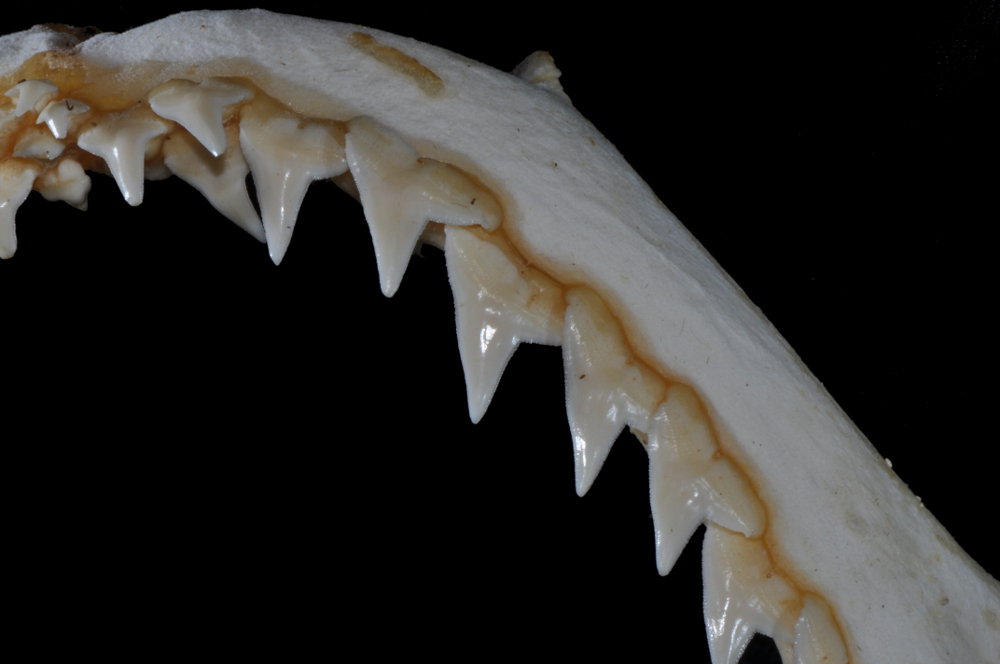
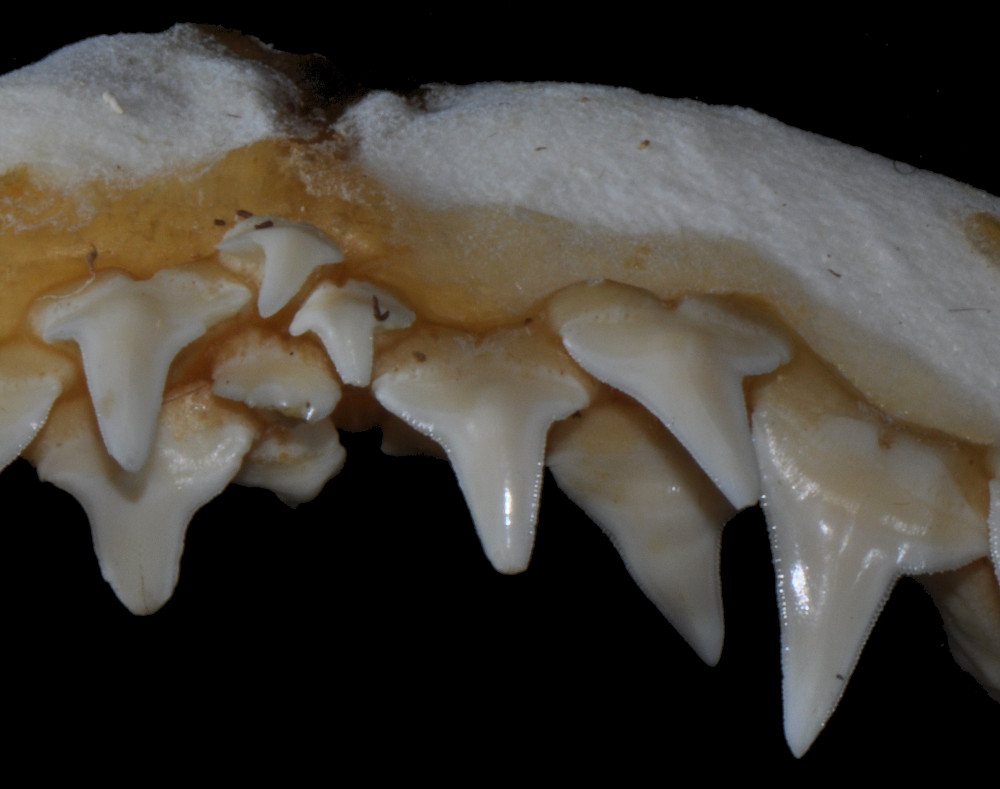
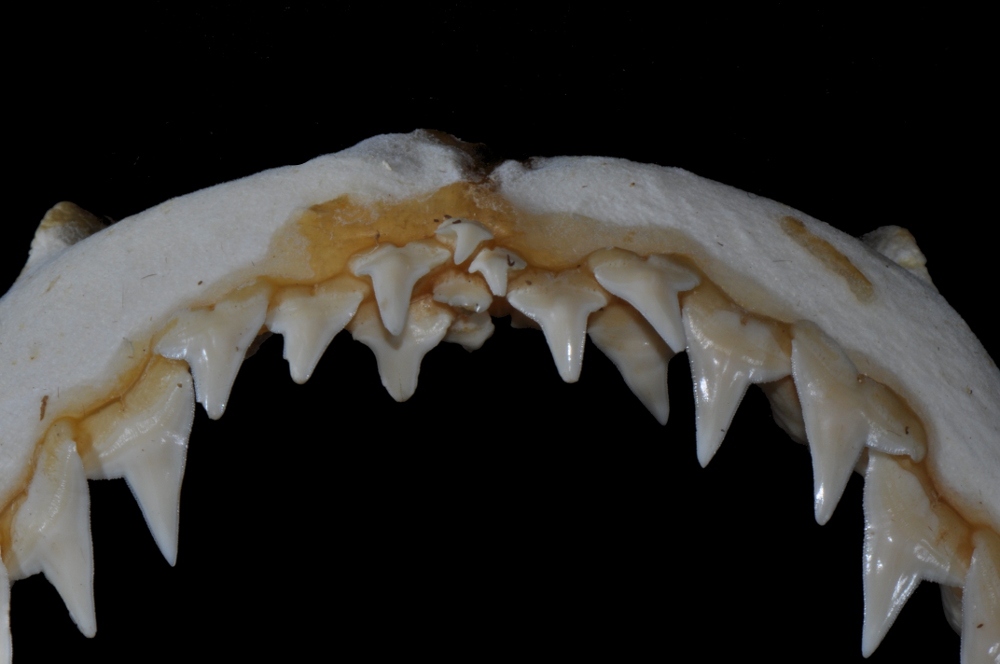
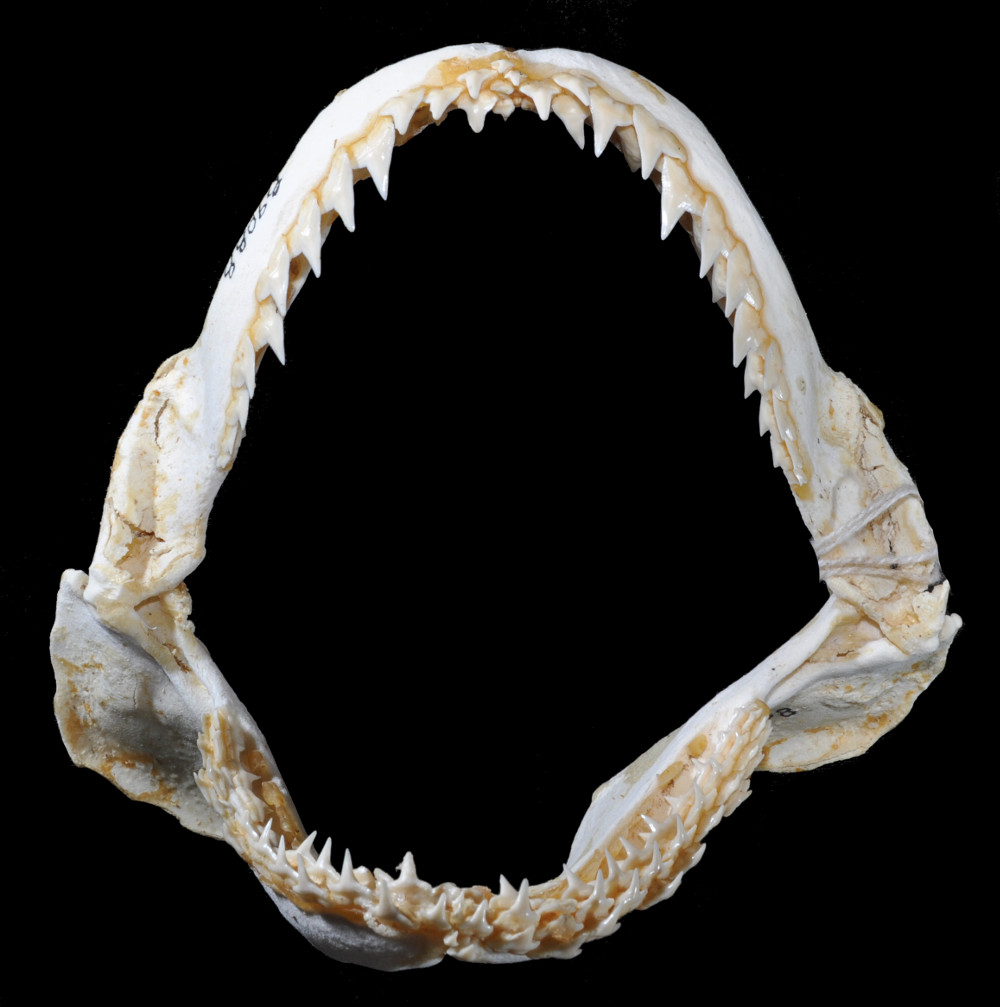
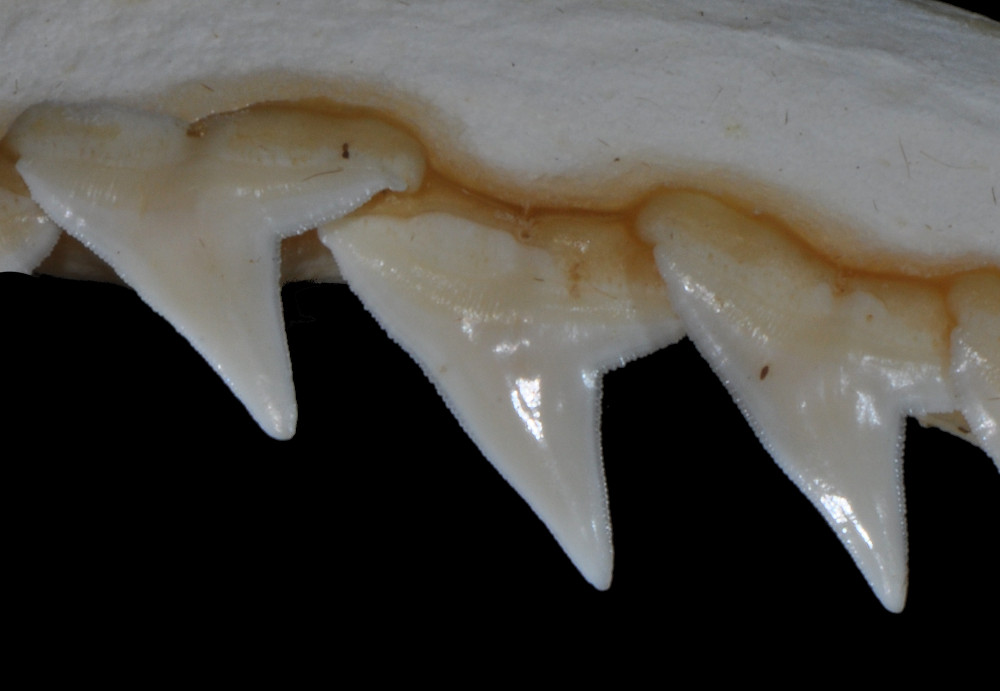
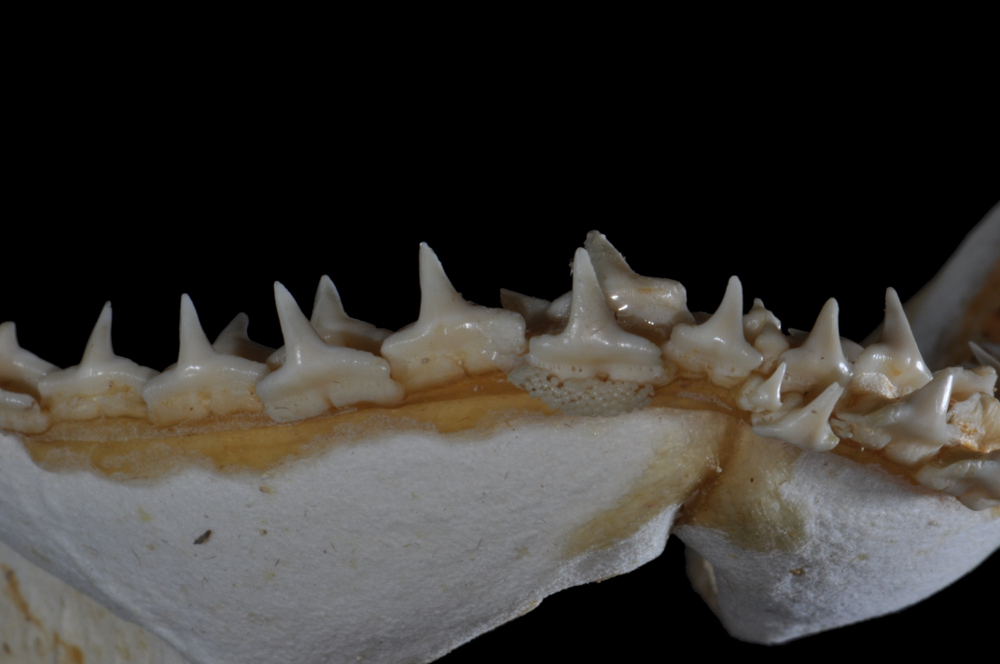
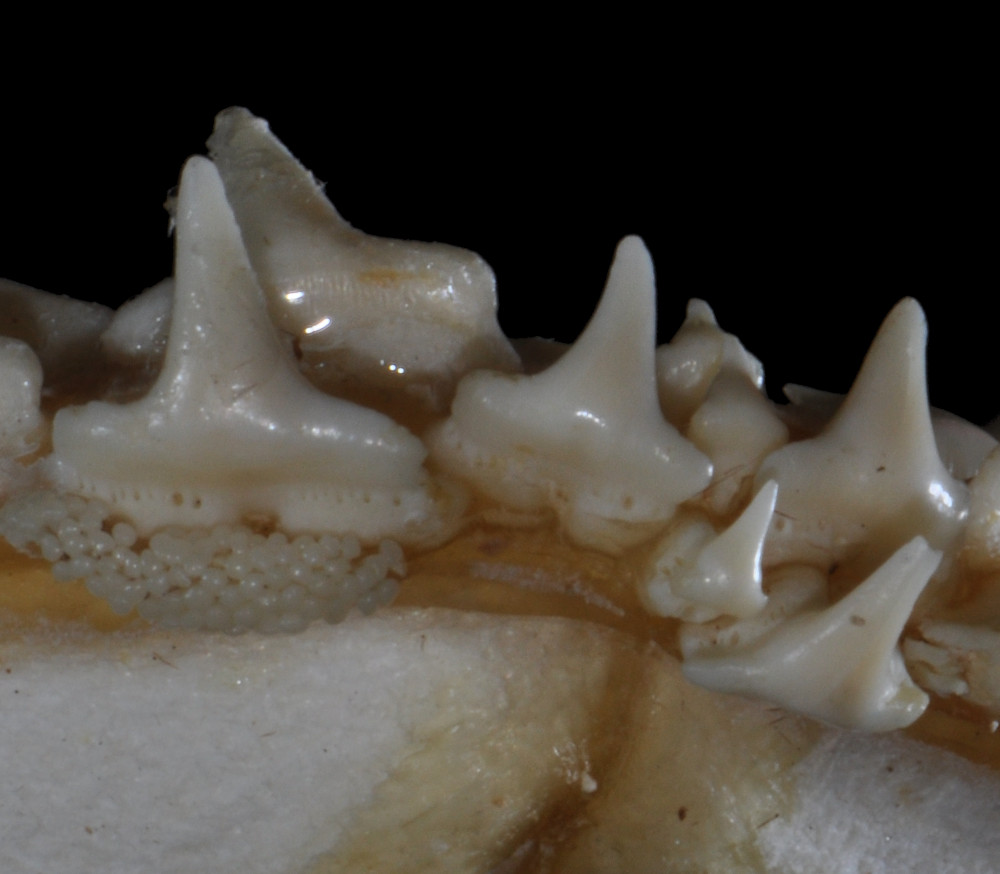
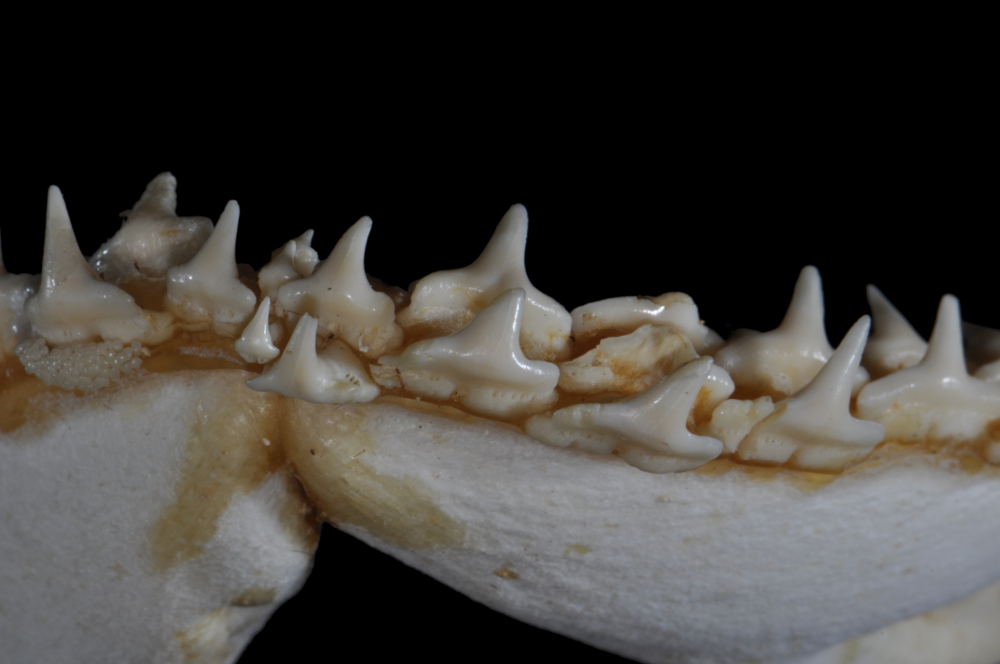
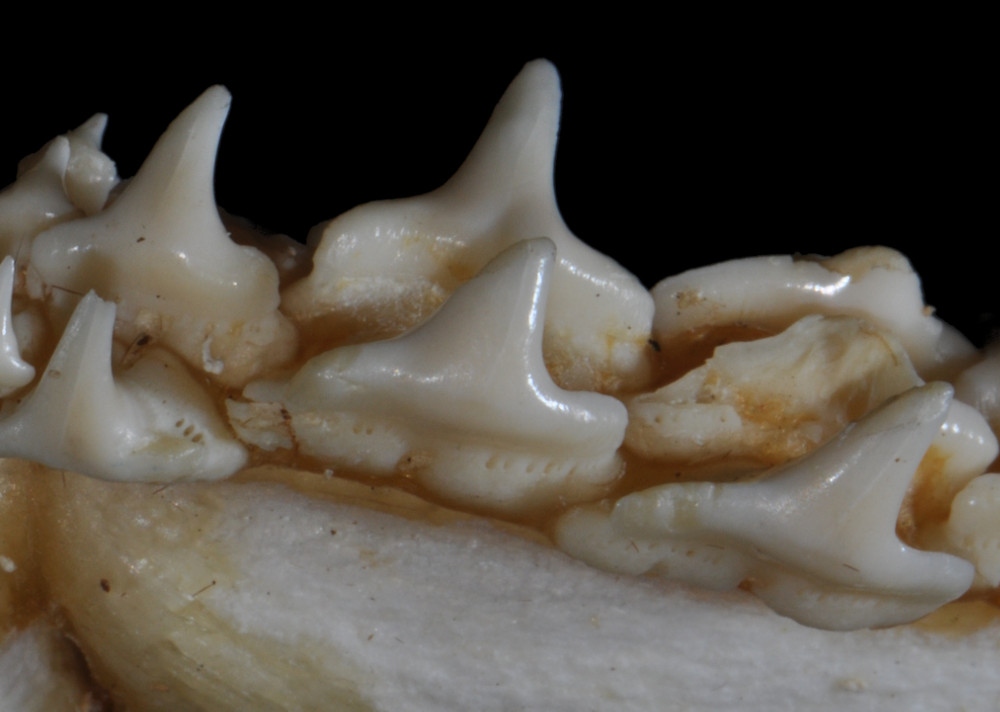
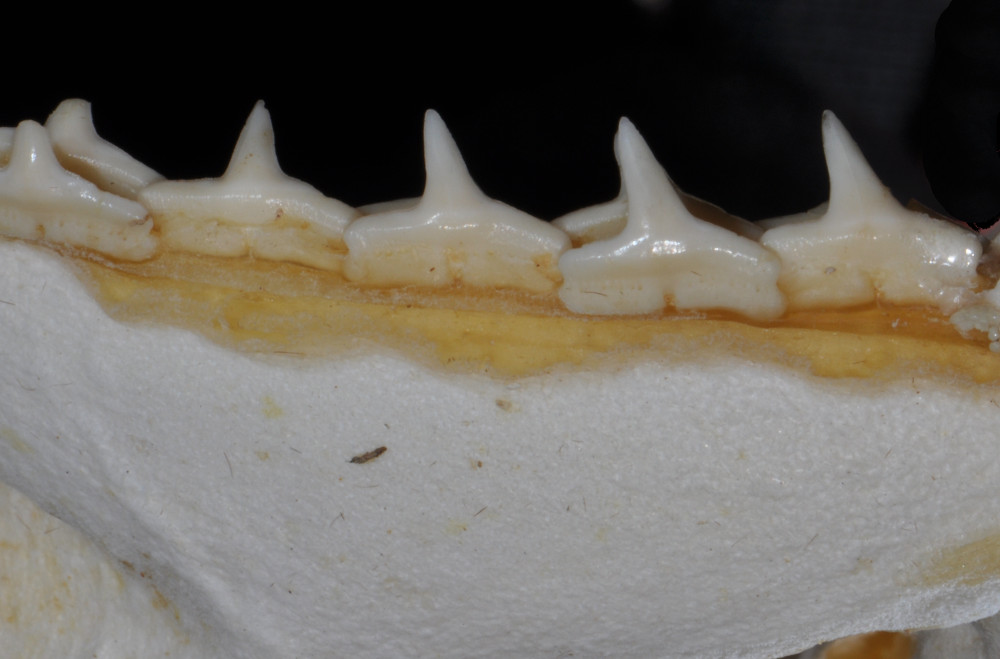
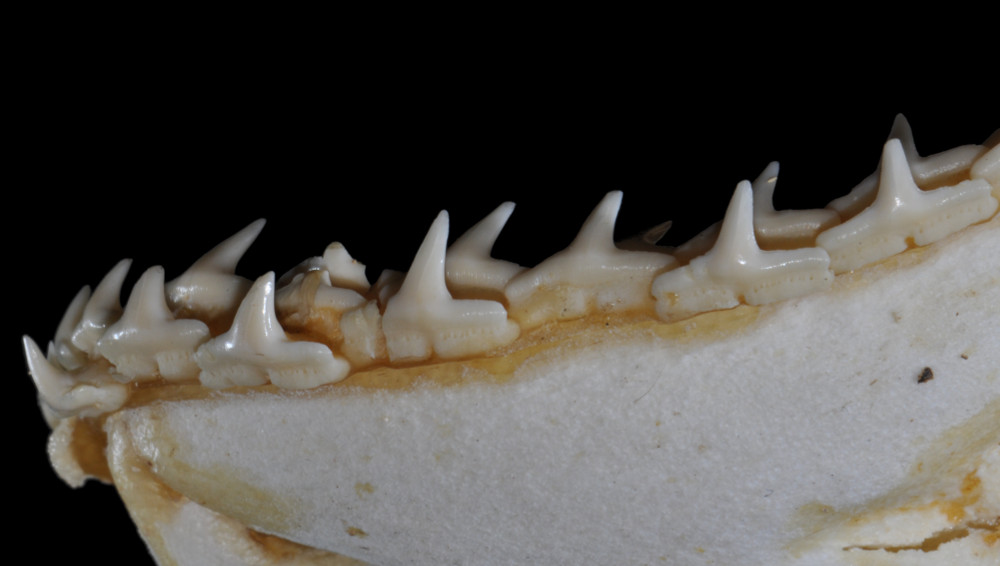
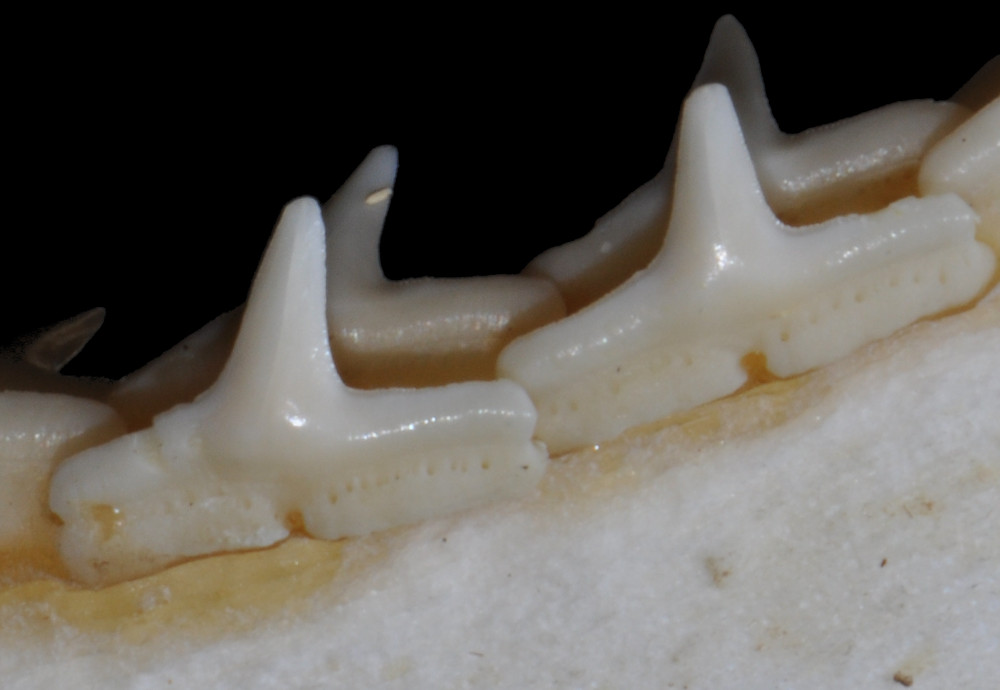
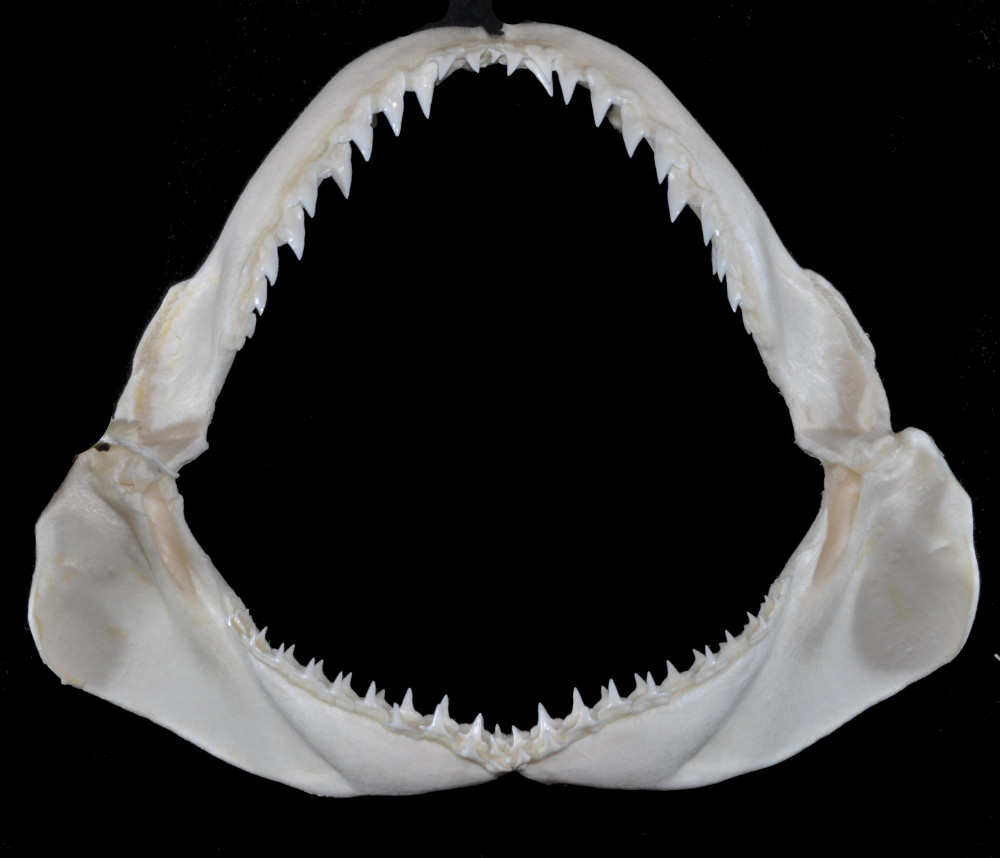
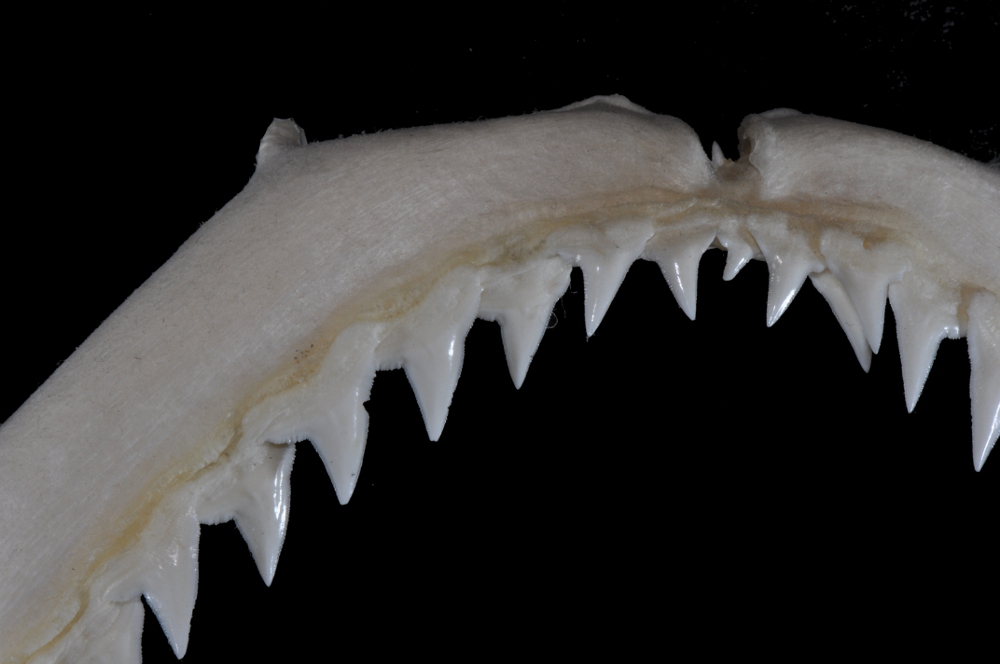
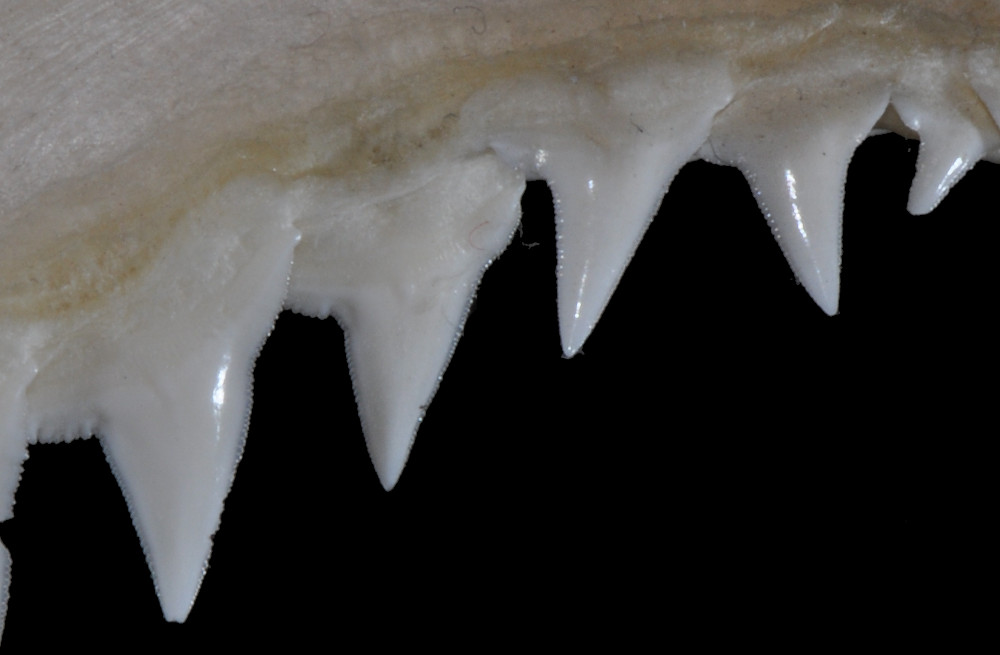
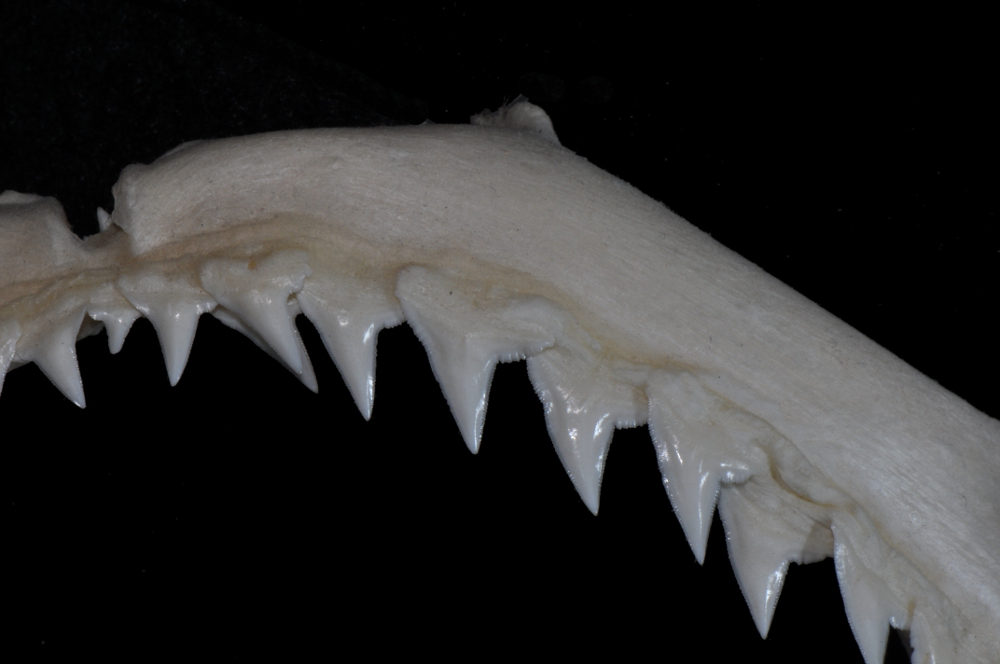
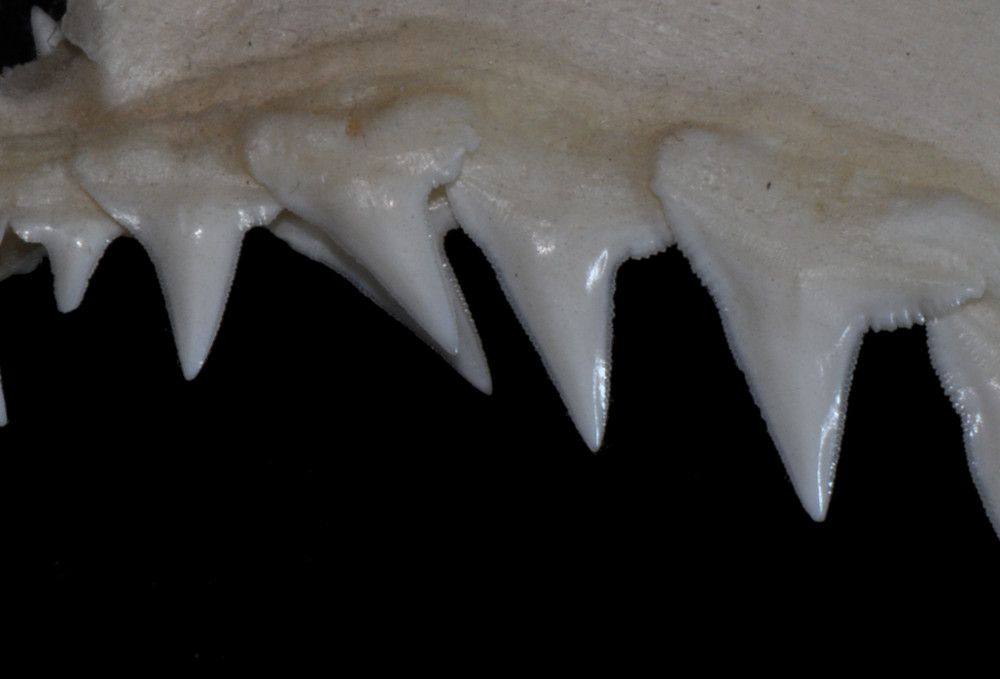
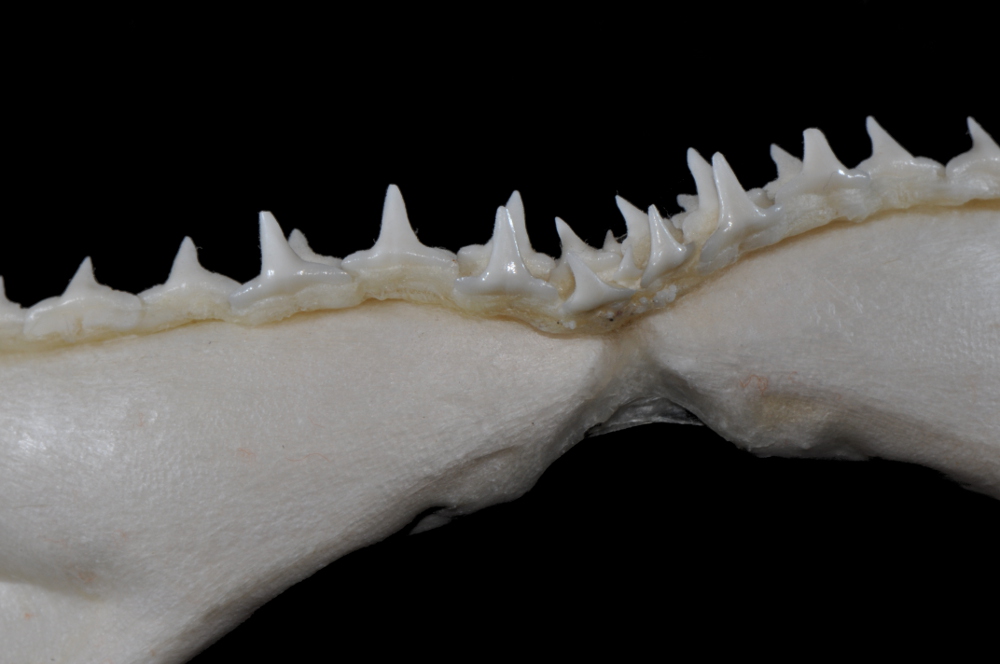
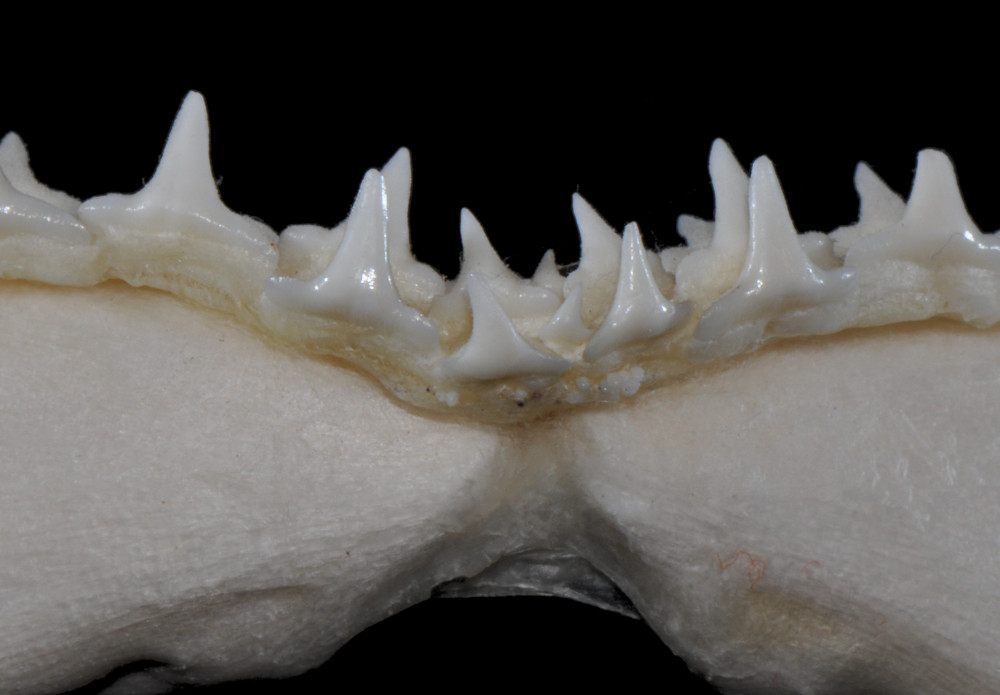
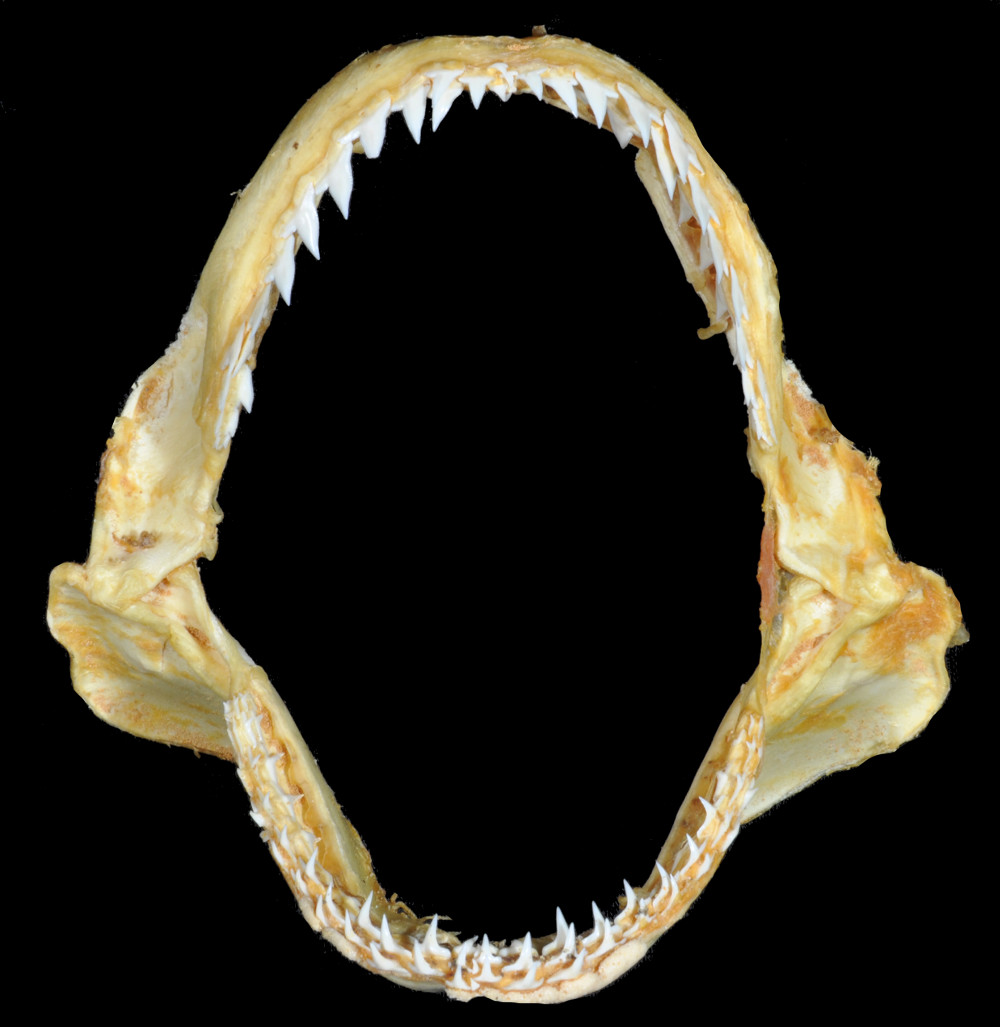
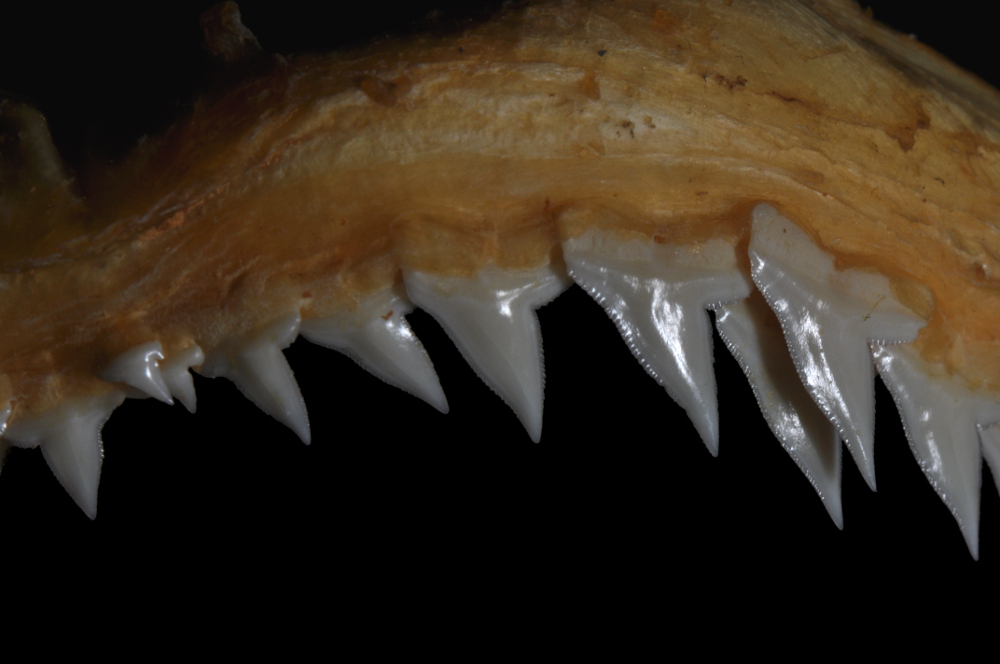
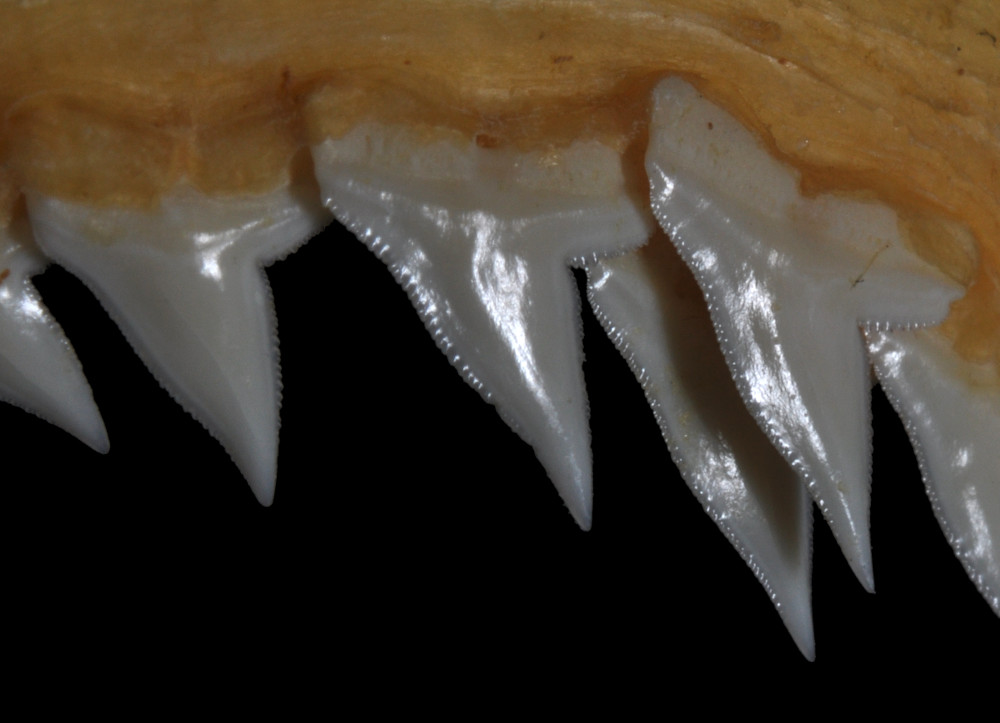
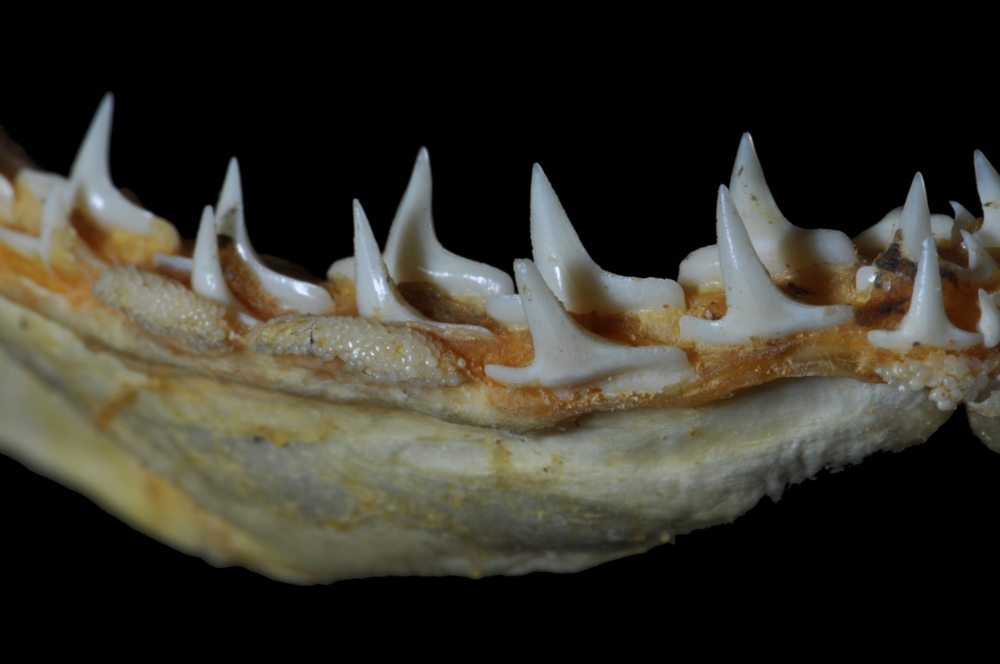
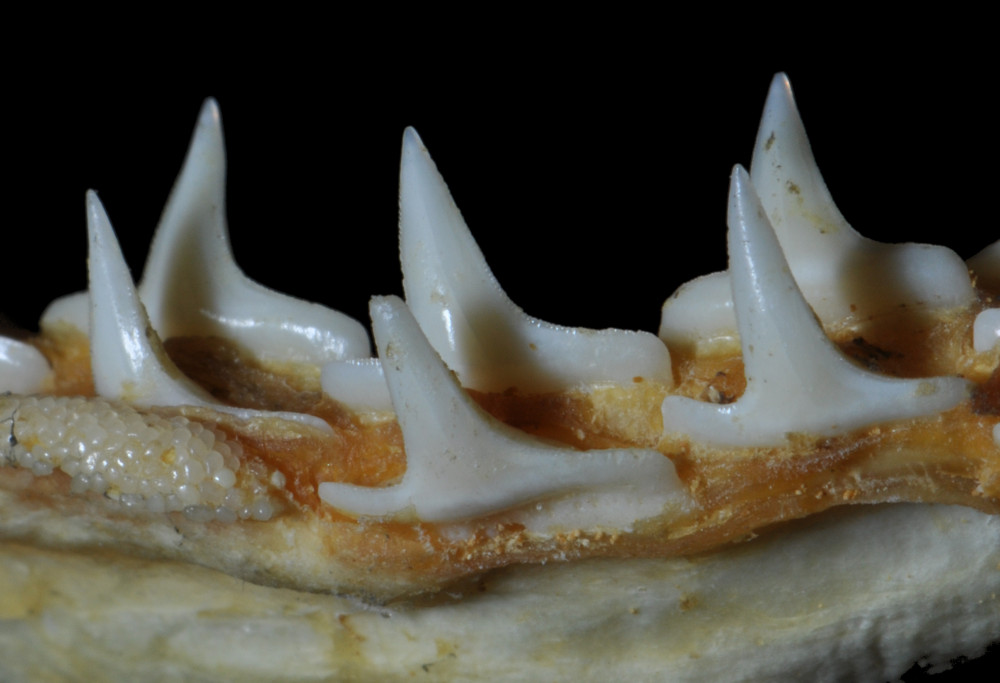
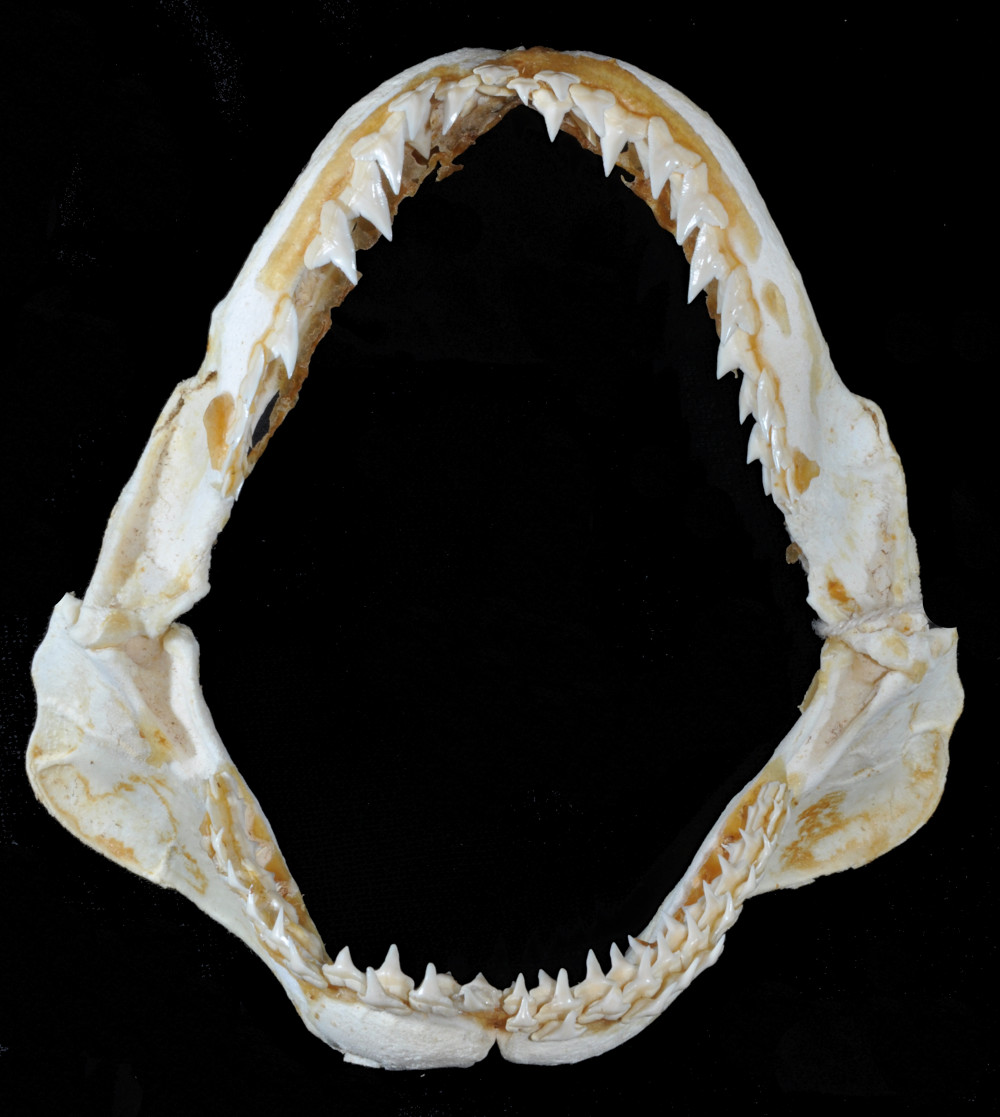
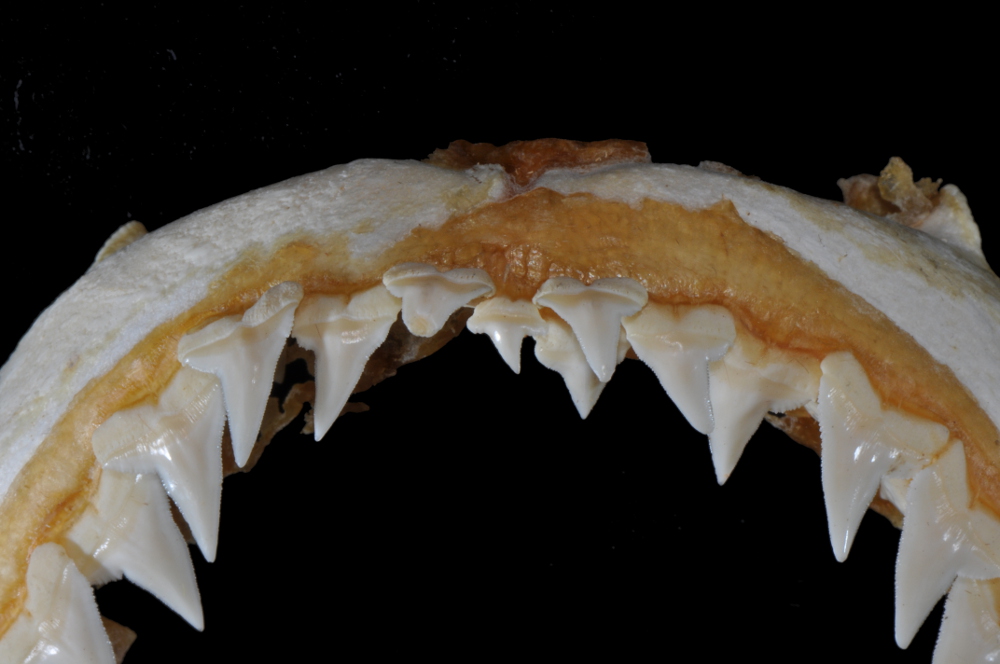
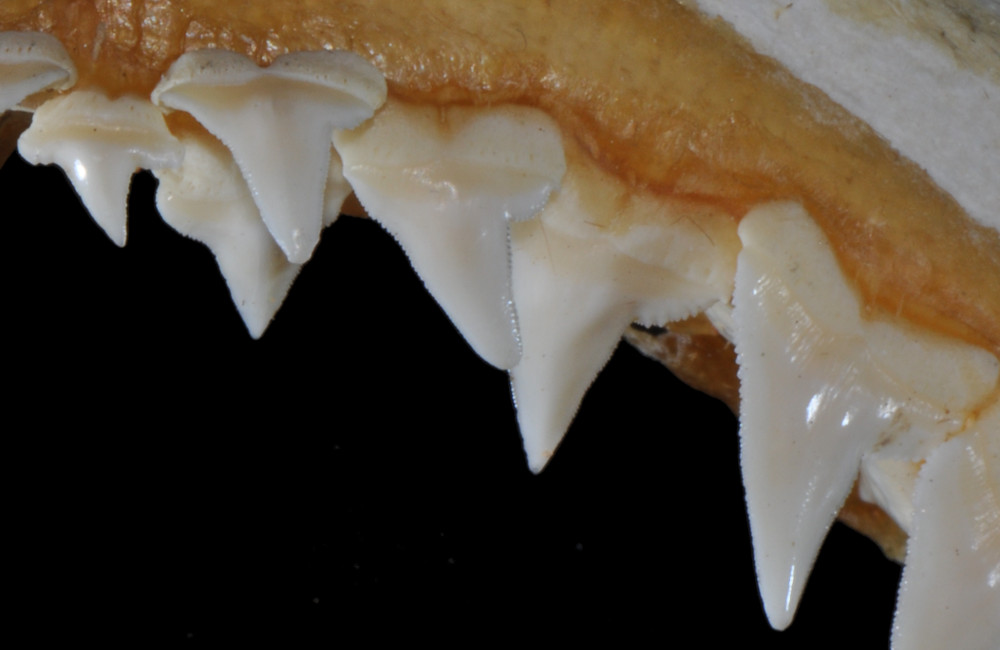
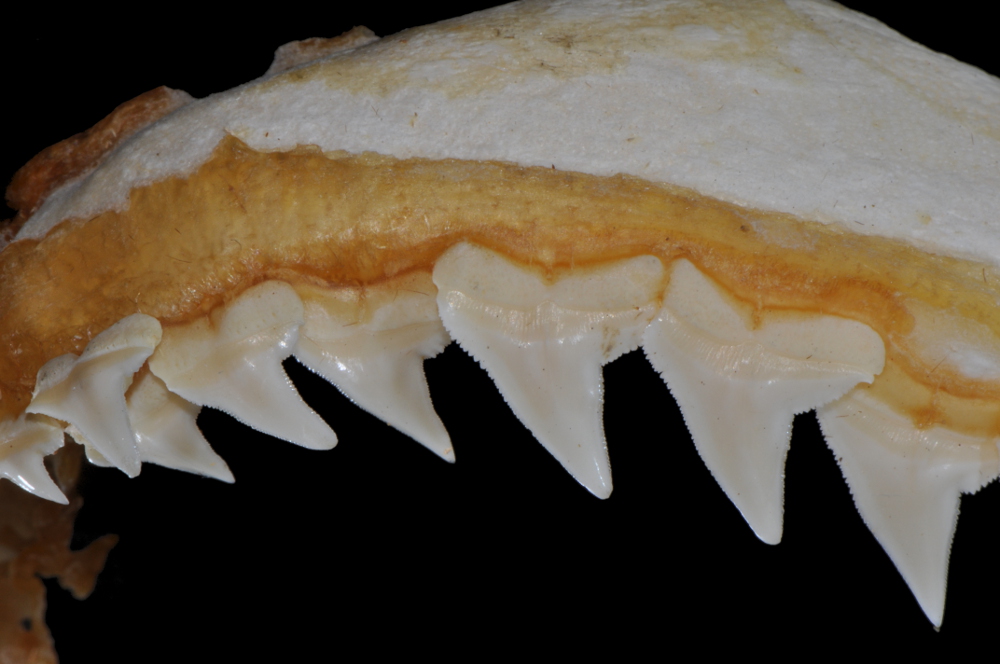
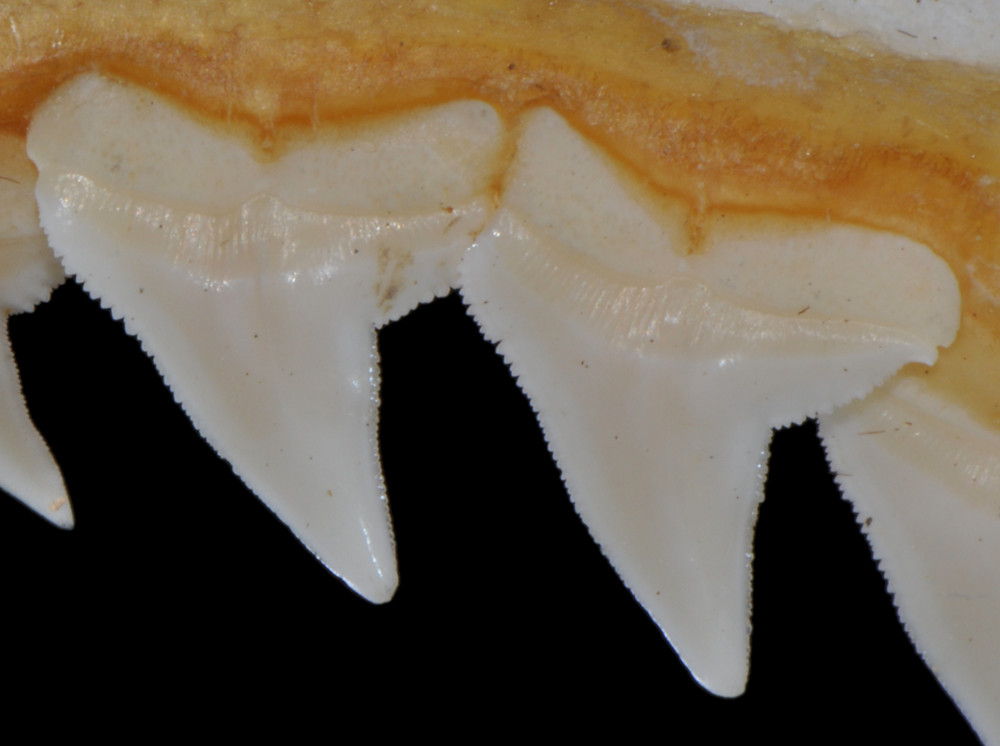
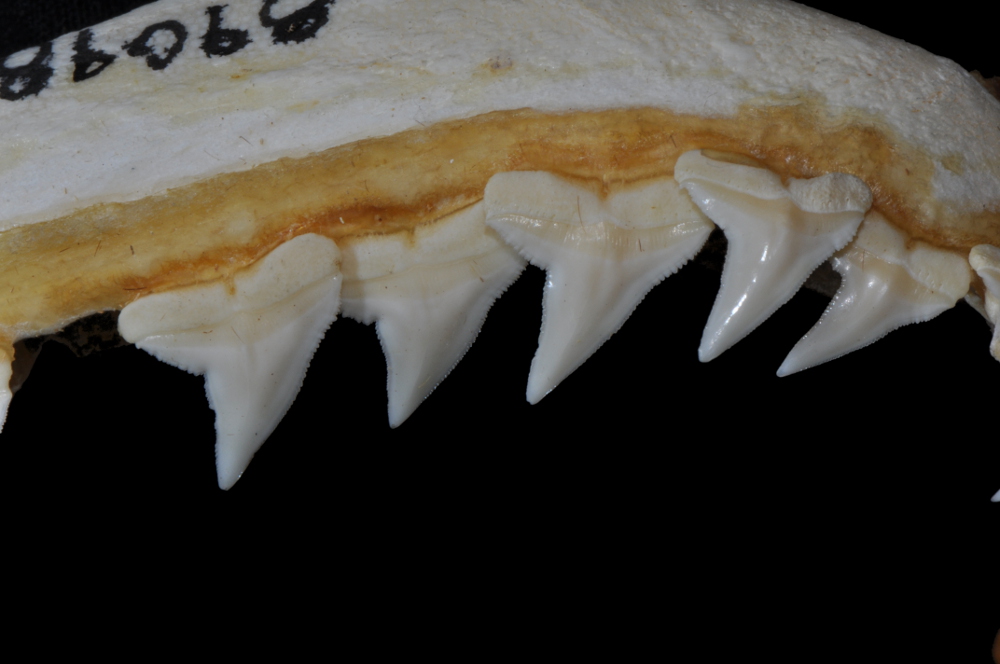
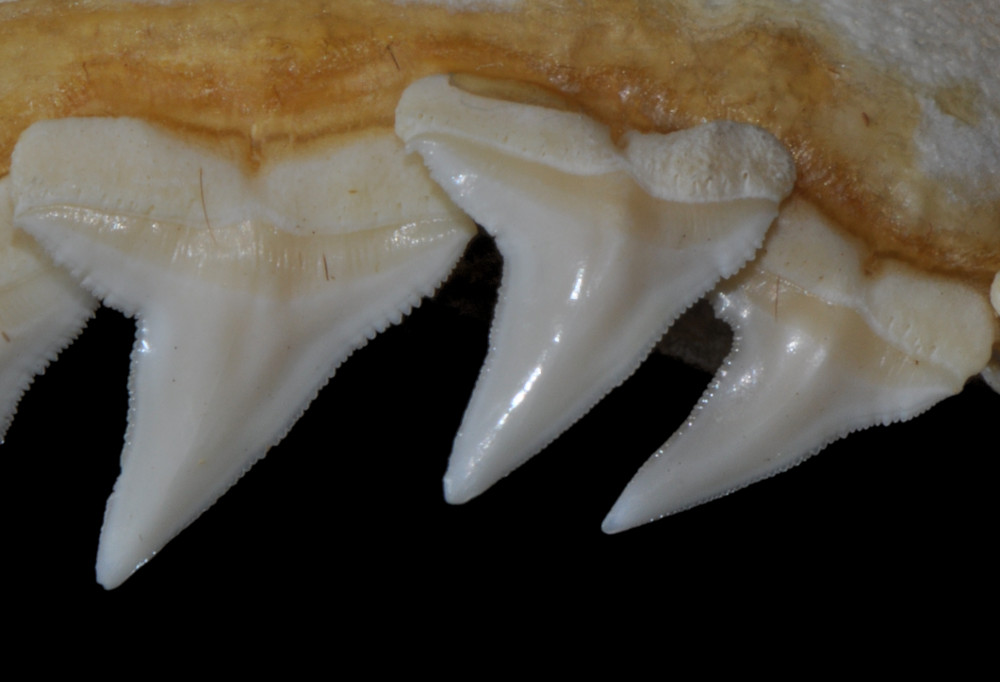
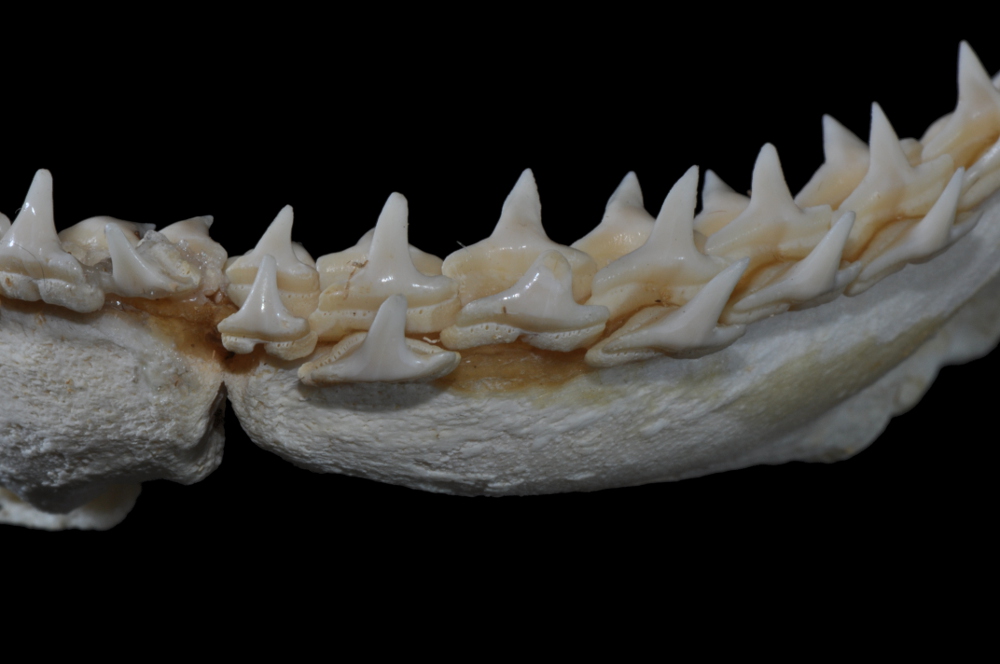
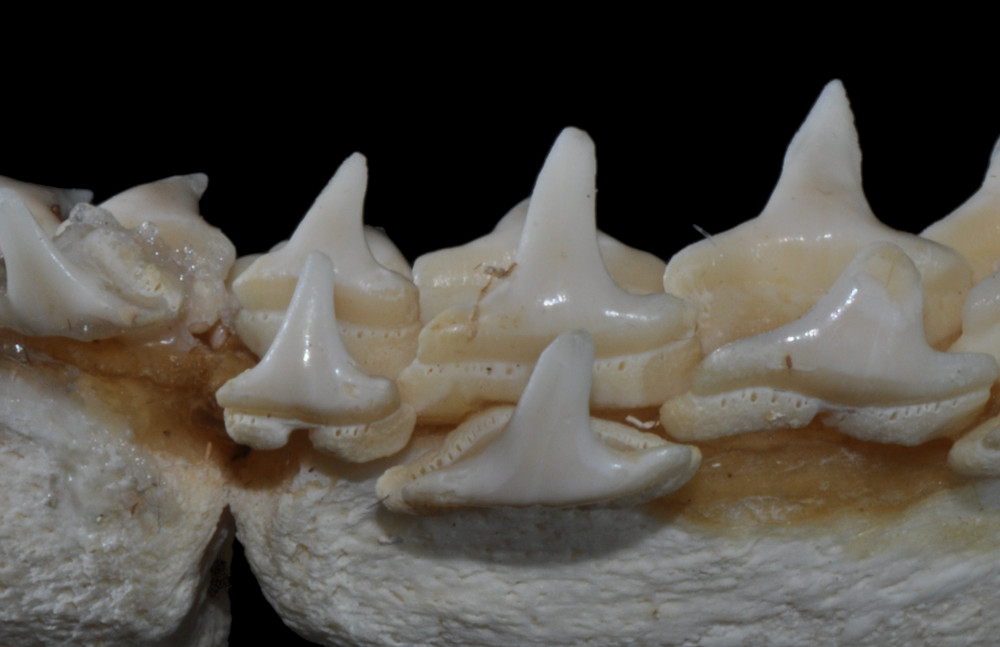
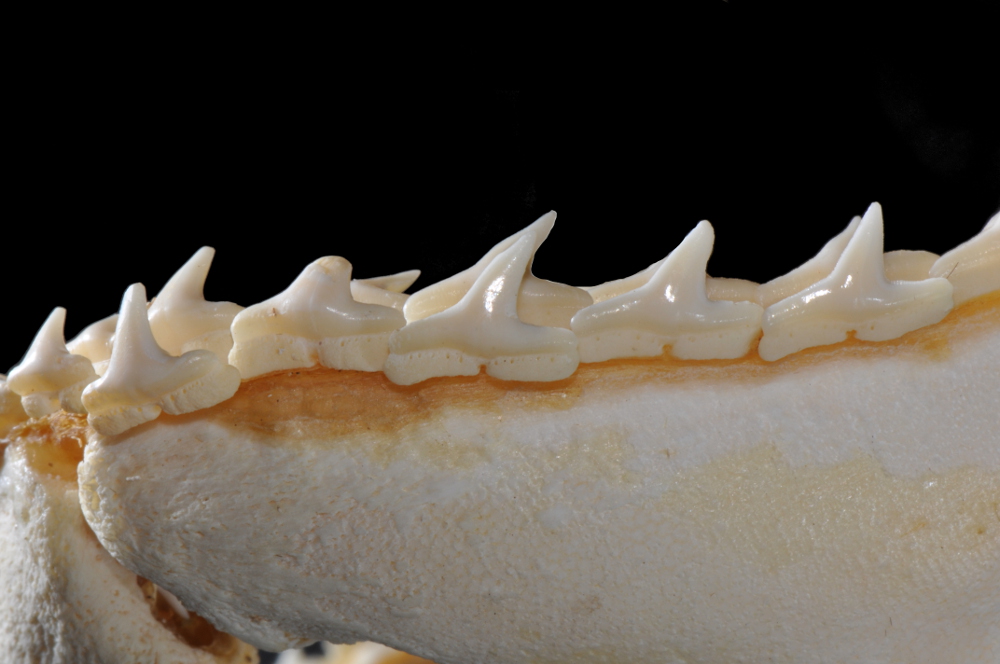
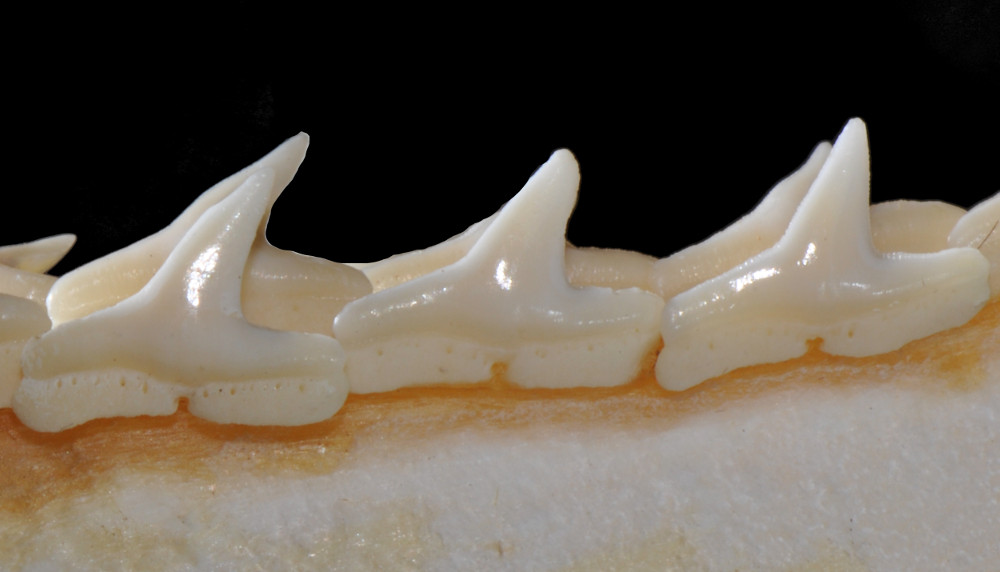
Field marks and Diagnostic Features after EBERT & STEHMANN, 2013 [17836]: Field Marks: A small shark with moderately long rounded snout, fairly large eyes, a black spot on the underside of the snout tip, oblique-cusped serrated teeth in both jaws, upper teeth without cusplets, no interdorsal ridge, small pectoral fins, a small first dorsal fin with a short rear tip and a moderately large second dorsal fin with a short rear tip, and dusky to blackish markings on the second dorsal and upper caudal tip. Diagnostic Features: Small, relatively slender sharks (up to about 140 cm) with snout moderately long and rounded, internarial width 1.4 to 1.7 in preoral length. Eyes horizontally oval or circular and moderately large, length 1.6 to 1.7% total length in specimens over 80 cm long. Upper labial furrows short and inconspicuous. Hyomandibular line of pores just behind mouth corners not conspicuously enlarged. Gill slits short, 3rd 2.7 to 3.2% TL and less than a third of first dorsal base. Upper teeth with moderately narrow, strongly serrated, strongly oblique cusps, and crown feet with slightly coarser serrations but no cusplets; lower teeth with slightly oblique serrated cusps and transverse roots; tooth counts usually 25 to 28 upper jaw and 23 to 25 lower jaw. No interdorsal ridge. Pectoral fins small, falcate, with narrowly rounded or pointed apices, length of anterior margins about 15% TL in individuals above 80 cm long. First dorsal fin small and semifalcate, with pointed or narrowly rounded apex and posterior margin curving ventrally from fin apex; origin of first dorsal fin over pectoral–fin free rear tip; inner margin of first dorsal fin short, less than a third of dorsal–fin base. Second dorsal fin moderately large, height 2.6 to 2.9% TL, inner margin short and 1.1 to 1.3 times height; origin of second dorsal fin over or slightly behind anal–fin origin. Vertebral counts: total vertebral counts 161 to 181, precaudal vertebral counts 80 to 88, caudal vertebral counts 81 to 94. A moderate sized Carcharhinus species with a maximum length of about 137 cm. Colour: black or dusky tips present on second dorsal, dorsal caudal–fin lobe, and sometimes preventral edge of ventral caudal–fin lobe; underside of snout with a conspicuous dusky to black blotch.
Field marks and Diagnostic Features after EBERT & STEHMANN, 2013 [17836]: Field Marks: A small shark with moderately long rounded snout, fairly large eyes, a black spot on the underside of the snout tip, oblique-cusped serrated teeth in both jaws, upper teeth without cusplets, no interdorsal ridge, small pectoral fins, a small first dorsal fin with a short rear tip and a moderately large second dorsal fin with a short rear tip, and dusky to blackish markings on the second dorsal and upper caudal tip. Diagnostic Features: Small, relatively slender sharks (up to about 140 cm) with snout moderately long and rounded, internarial width 1.4 to 1.7 in preoral length. Eyes horizontally oval or circular and moderately large, length 1.6 to 1.7% total length in specimens over 80 cm long. Upper labial furrows short and inconspicuous. Hyomandibular line of pores just behind mouth corners not conspicuously enlarged. Gill slits short, 3rd 2.7 to 3.2% TL and less than a third of first dorsal base. Upper teeth with moderately narrow, strongly serrated, strongly oblique cusps, and crown feet with slightly coarser serrations but no cusplets; lower teeth with slightly oblique serrated cusps and transverse roots; tooth counts usually 25 to 28 upper jaw and 23 to 25 lower jaw. No interdorsal ridge. Pectoral fins small, falcate, with narrowly rounded or pointed apices, length of anterior margins about 15% TL in individuals above 80 cm long. First dorsal fin small and semifalcate, with pointed or narrowly rounded apex and posterior margin curving ventrally from fin apex; origin of first dorsal fin over pectoral–fin free rear tip; inner margin of first dorsal fin short, less than a third of dorsal–fin base. Second dorsal fin moderately large, height 2.6 to 2.9% TL, inner margin short and 1.1 to 1.3 times height; origin of second dorsal fin over or slightly behind anal–fin origin. Vertebral counts: total vertebral counts 161 to 181, precaudal vertebral counts 80 to 88, caudal vertebral counts 81 to 94. A moderate sized Carcharhinus species with a maximum length of about 137 cm. Colour: black or dusky tips present on second dorsal, dorsal caudal–fin lobe, and sometimes preventral edge of ventral caudal–fin lobe; underside of snout with a conspicuous dusky to black blotch.
Distribution
Western Atlantic: North Carolina, USA to southern Brazil and Uruguay [5839], including the Gulf of Mexico and the Caribbean. Source: www.gbif.org
Western Atlantic: North Carolina, USA to southern Brazil and Uruguay [5839], including the Gulf of Mexico and the Caribbean. Source: www.gbif.org
Human uses
fisheries: minor commercial; gamefish: yes; price category: medium; price reliability: very questionable: based on ex-vessel price for species in this family
fisheries: minor commercial; gamefish: yes; price category: medium; price reliability: very questionable: based on ex-vessel price for species in this family
Biology
Viviparous, placental [733], with 3 to 6 young per litter [517]. Distinct pairing with embrace [17086]. Found on continental and insular shelves, mainly over sandy, shell, and coral bottoms. Feeds on small fishes, including pinfish (Sparidae) and porcupine fish. Preyed on by larger sharks.
Viviparous, placental [733], with 3 to 6 young per litter [517]. Distinct pairing with embrace [17086]. Found on continental and insular shelves, mainly over sandy, shell, and coral bottoms. Feeds on small fishes, including pinfish (Sparidae) and porcupine fish. Preyed on by larger sharks.
Size / Weight / Age
200 cm TL (male/unsexed; [517]); max. published weight: 18.9 kg (Ref. 40637); max. reported age: 6 years [5105]
200 cm TL (male/unsexed; [517]); max. published weight: 18.9 kg (Ref. 40637); max. reported age: 6 years [5105]
Remarks
shark-references Species-ID=703; Taxonomic remark: Carcharias (Prionodon) remotus Dumeril, 1865 is a synonym of Carcharhinus acronotus; Carcharhinus remotus Dumeril, 1865 is a synonym of Carcharhinus brachyurus (see Compagno 1984 [517], Compagno 1988 [519])
shark-references Species-ID=703; Taxonomic remark: Carcharias (Prionodon) remotus Dumeril, 1865 is a synonym of Carcharhinus acronotus; Carcharhinus remotus Dumeril, 1865 is a synonym of Carcharhinus brachyurus (see Compagno 1984 [517], Compagno 1988 [519])
Parasites (arranged by Jürgen Pollerspöck)
Cestoda
Copepoda
Cestoda
- Scyphophyllidium bullardi (Ruhnke, Daniel & Jensen, 2020) [28796]
- Triloculatum jodyi Caira & Jensen, 2009 [7582]
- Triloculatum triloculatum (Linton, 1901) [7620] [7582]
Copepoda
- Eudactylina dollfusi Brian, 1924 [16589]
- Kroyeria sphyrnae Rangnekar, 1957 [16589]
- Nemesis atlantica Wilson, 1922 [16589]
- Nesippus orientalis Heller, 1868 [16589]
- Pandarus sinuatus Say, 1818 [16589]
- Perissopus dentatus Steenstrup & Lütken, 1861 [16589]
Image gallery