


 Catalog of Fishes
 literature references
 FishBase
 Bold Systems
 IUCN Red List
 GBIF
GBIF
 NCBI GenBank
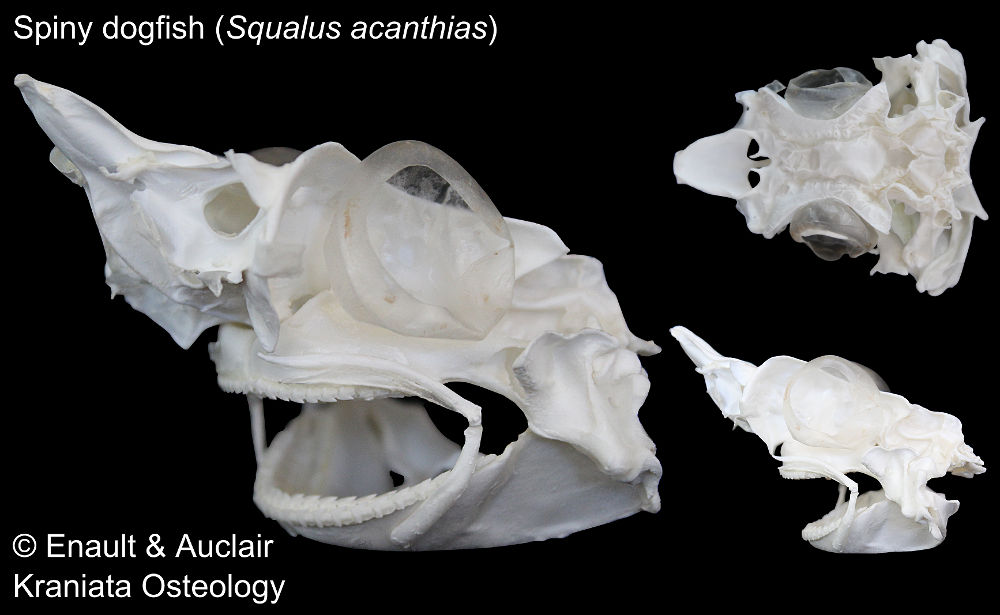
Squalus acanthias
Linnaeus, 1758
Piked dogfish
Classification: Elasmobranchii Squaliformes Squalidae
Reference of the original description
Systema Naturae per regna tria naturae, regnum animale, secundum classes, ordines, genera, species, cum characteribus differentiis synonymis, locis. Tomus I. Editio decima, reformata. Stockholm, Laurentii Salvii, 824pp.
Systema Naturae per regna tria naturae, regnum animale, secundum classes, ordines, genera, species, cum characteribus differentiis synonymis, locis. Tomus I. Editio decima, reformata. Stockholm, Laurentii Salvii, 824pp.
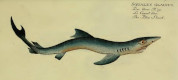
Image of the original description
No image in first description.
No image in first description.
Images of the original description (synonym)
Synonyms / new combinations and misspellings
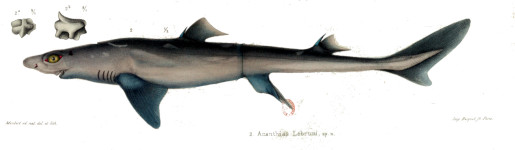
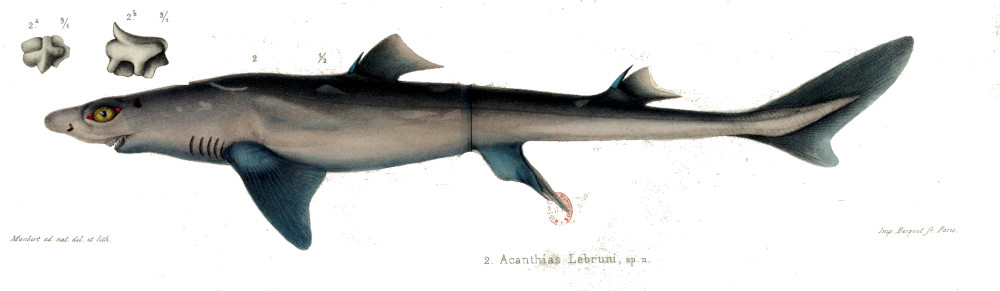
Acanthias acanthias, Acanthias americanus, Acanthias commun, Acanthias lebruni, Acanthias linnei, Acanthias vulgaris, Acanthias vulgaris., Flakeus tasmaniensis, Koinga kirki, Koinga lebruni, Koinga whitleyi, Spinax acanthias, Spinax fernandinus, Spinax mediterraneus, Squalus acanthias acanthias, Squalus acanthias africana, Squalus acanthias chilensis, Squalus acanthias ponticus, Squalus acanthius, Squalus aff. acanthias, Squalus barbouri, Squalus cf. acanthias, Squalus cf. fernandinus, Squalus fernandinus, Squalus kirki, Squalus lebruni, Squalus tasmaniensis, Squalus wakiyae, Squalus whitleyi, Squalus (Spinax) acanthias
Acanthias acanthias, Acanthias americanus, Acanthias commun, Acanthias lebruni, Acanthias linnei, Acanthias vulgaris, Acanthias vulgaris., Flakeus tasmaniensis, Koinga kirki, Koinga lebruni, Koinga whitleyi, Spinax acanthias, Spinax fernandinus, Spinax mediterraneus, Squalus acanthias acanthias, Squalus acanthias africana, Squalus acanthias chilensis, Squalus acanthias ponticus, Squalus acanthius, Squalus aff. acanthias, Squalus barbouri, Squalus cf. acanthias, Squalus cf. fernandinus, Squalus fernandinus, Squalus kirki, Squalus lebruni, Squalus tasmaniensis, Squalus wakiyae, Squalus whitleyi, Squalus (Spinax) acanthias
Types
Squalus acanthias
Syntype: NRM: 85; ZMUU: Linn. coll. 160 (possible syntype); ZMUU: Linn. coll. 159 (possible syntype);
Acanthias lebruni
Holotype: MNHN: 1883-0201 or 0202; Paratype: MNHN: 1883-0201 or 0202
Squalus acanthias africana
Holotype: ZMMU: P-15990;
Squalus acanthias ponticus
Holotype: ZMMU: P-15983;
Squalus barbouri
Holotype: MCZ: 1463-S;
Squalus kirki
Syntype: NMV: ?
Squalus tasmaniensis
Holotype: MCZ: 146-S;
Squalus wakiyae
Syntype: ZUMT: 7332; ZUMT: 4684; ZUMT: 4684;
Squalus acanthias
Syntype: NRM: 85; ZMUU: Linn. coll. 160 (possible syntype); ZMUU: Linn. coll. 159 (possible syntype);
Acanthias lebruni
Holotype: MNHN: 1883-0201 or 0202; Paratype: MNHN: 1883-0201 or 0202
Squalus acanthias africana
Holotype: ZMMU: P-15990;
Squalus acanthias ponticus
Holotype: ZMMU: P-15983;
Squalus barbouri
Holotype: MCZ: 1463-S;
Squalus kirki
Syntype: NMV: ?
Squalus tasmaniensis
Holotype: MCZ: 146-S;
Squalus wakiyae
Syntype: ZUMT: 7332; ZUMT: 4684; ZUMT: 4684;
Description :
Citation: Squalus acanthias Linnaeus, 1758: In: Database of modern sharks, rays and chimaeras, www.shark-references.com, World Wide Web electronic publication, Version 10/2026
Please send your images of "Squalus acanthias" to info@shark-references.com
.jpg)
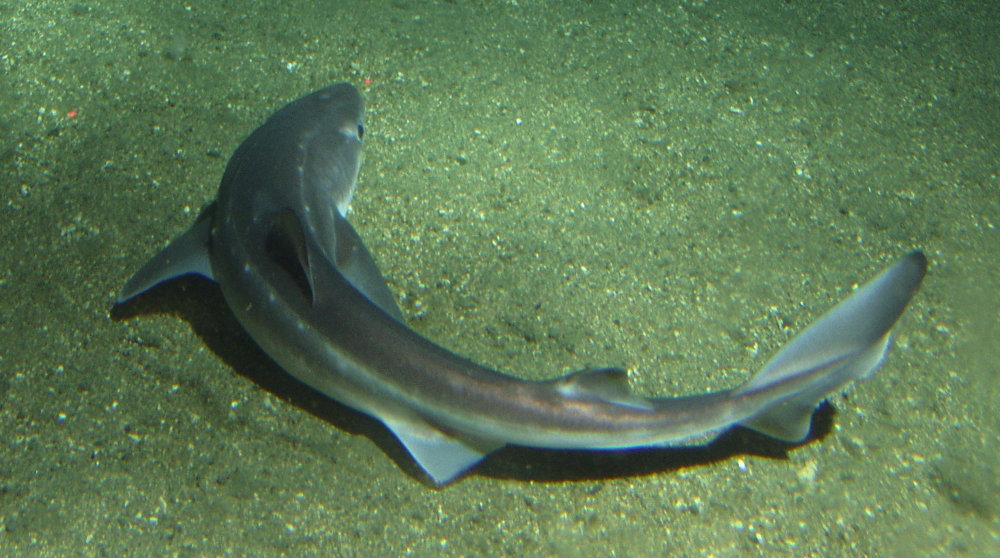
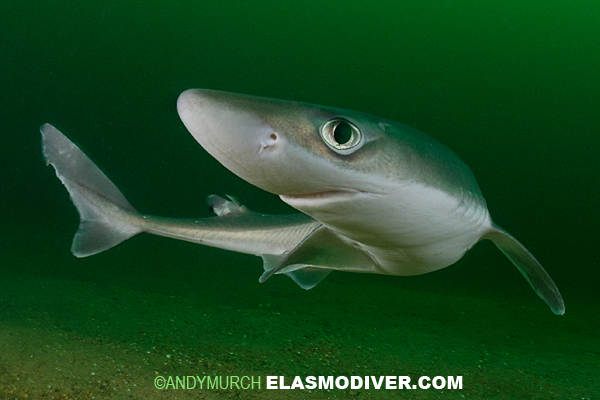
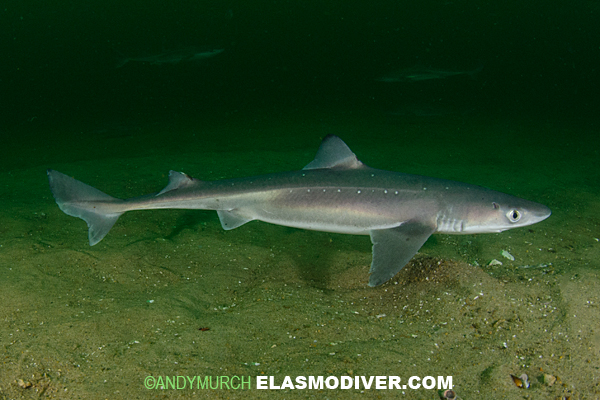
Squalus acanthias Linnaeus, 1758, Rhode Island, USA © Fredrik Akerman
Squalus acanthias Linnaeus, 1758, Rhode Island, USA © Fredrik Akerman
Common names
 Dornfisch, Dornhai, Gefleckter Dornhai, Gemeiner Dornhai, Grundhai, Schillerlocken,
  Cazón espinoso común, Galludo, Galludo espinoso, Mielga, Pinchudo, Tollo de cachos,
  Aiguillat, Aiguillat commun, Aiguillat tacheté,
  Blue dog, Common spiny fish, Darwen salmon, Dogfish, Flake, Grayfish, Huss, Pacific dogfish, Picked dogfish, Piked dogfish, Rigg, Rock salmon, Southern spiny dogfish, Spiky dog, Spiny dogfish, Spotted spiny dogfish, Spring dogfish, Spur dogfish, Spurdog, Victorian spotted dogfish, White-spotted dogfish, White-spotted spurdog, Whitespotted dogfish,
  Agoggiau, Aguggiao rosso, Agugliau, Agusèo, Archilao, Arculate, Arquilato, Asià a muso a schizzo, Caddutu, Cagnoleto, Cagnolo, Can bianco, Can spinoso, Cendroene, Centrune, Cintroni, Cintrune, Ferraro, Ghialoru "mperiali, Ogghialuni, Smoca, Spinarolo, Spinarolo bruno, Spinarolo imperiale, Spineddu, Spinoelo, Stiracciole, Ugghiarule, Ugghiatu, Ujato, Ujatu,
  Cação-bagre, Cação-de-espinho, Cação-espinho, Cação-prego, Galhudo, Galhudo-malhado, Malhado melga, Mazzola griza (malta)
Dornfisch, Dornhai, Gefleckter Dornhai, Gemeiner Dornhai, Grundhai, Schillerlocken, Cazón espinoso común, Galludo, Galludo espinoso, Mielga, Pinchudo, Tollo de cachos, Aiguillat, Aiguillat commun, Aiguillat tacheté, Blue dog, Common spiny fish, Darwen salmon, Dogfish, Flake, Grayfish, Huss, Pacific dogfish, Picked dogfish, Piked dogfish, Rigg, Rock salmon, Southern spiny dogfish, Spiky dog, Spiny dogfish, Spotted spiny dogfish, Spring dogfish, Spur dogfish, Spurdog, Victorian spotted dogfish, White-spotted dogfish, White-spotted spurdog, Whitespotted dogfish, Agoggiau, Aguggiao rosso, Agugliau, Agusèo, Archilao, Arculate, Arquilato, Asià a muso a schizzo, Caddutu, Cagnoleto, Cagnolo, Can bianco, Can spinoso, Cendroene, Centrune, Cintroni, Cintrune, Ferraro, Ghialoru "mperiali, Ogghialuni, Smoca, Spinarolo, Spinarolo bruno, Spinarolo imperiale, Spineddu, Spinoelo, Stiracciole, Ugghiarule, Ugghiatu, Ujato, Ujatu, Cação-bagre, Cação-de-espinho, Cação-espinho, Cação-prego, Galhudo, Galhudo-malhado, Malhado melga, Mazzola griza (malta)
Short Description
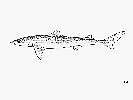
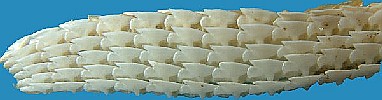
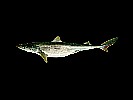
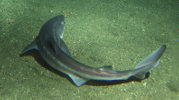
This moderately sized species is distinguished by the following set of characters: very slender body, abdomen width 7.2-9.2% TL; narrow head, width at mouth 7.9-10.2% TL; mouth width 1.7-2.2 times its horizontal prenarial length; moderately long snout, preoral length 2.2-2.5 times horizontal prenarial length, 8.5-9.8% TL; single-lobed anterior nasal flap; small dorsal fins, raked, first dorsal-fin height 1.1-1.3 times its inner margin length, second dorsal-fin height 0.7-0.9 times its inner margin length; origin of first dorsal-fin located just posterior to pectoral-fin free rear tips; exposed bases of dorsal-fin spines relatively narrow, 0.4-0.7% TL; short spine of first dorsal fin, exposed length 1.7-2.7% TL; pectoral-fin anterior margin 1.9-3.1 times its inner margin length; preventral caudal margin 1.9-2.6 times inner margin of pelvic fin; pale caudal fin with poorly demarcated, whitish margin, blackish caudal blotch at the apex of upper lobe, anterior margins of both lobes whitish in juveniles; dark caudal bar absent; dorsal and lateral surfaces of body bluish grey with an irregular array of moderately-large white spots; flank denticles tricuspid; monospondylous centra 41-45, precaudal centra 74-79, total centra 100-105 [3326].
This moderately sized species is distinguished by the following set of characters: very slender body, abdomen width 7.2-9.2% TL; narrow head, width at mouth 7.9-10.2% TL; mouth width 1.7-2.2 times its horizontal prenarial length; moderately long snout, preoral length 2.2-2.5 times horizontal prenarial length, 8.5-9.8% TL; single-lobed anterior nasal flap; small dorsal fins, raked, first dorsal-fin height 1.1-1.3 times its inner margin length, second dorsal-fin height 0.7-0.9 times its inner margin length; origin of first dorsal-fin located just posterior to pectoral-fin free rear tips; exposed bases of dorsal-fin spines relatively narrow, 0.4-0.7% TL; short spine of first dorsal fin, exposed length 1.7-2.7% TL; pectoral-fin anterior margin 1.9-3.1 times its inner margin length; preventral caudal margin 1.9-2.6 times inner margin of pelvic fin; pale caudal fin with poorly demarcated, whitish margin, blackish caudal blotch at the apex of upper lobe, anterior margins of both lobes whitish in juveniles; dark caudal bar absent; dorsal and lateral surfaces of body bluish grey with an irregular array of moderately-large white spots; flank denticles tricuspid; monospondylous centra 41-45, precaudal centra 74-79, total centra 100-105 [3326].
Distribution
Western Atlantic: Greenland to Argentina. Eastern Atlantic: Iceland and Murmansk Coast (Russia) to South Africa, including the Mediterranean and Black Sea. Western Pacific: Bering Sea to New Zealand. Reports from off New Guinea are doubtful [1388]. Eastern Pacific: Bering Sea to Chile. Source: www.gbif.org
Western Atlantic: Greenland to Argentina. Eastern Atlantic: Iceland and Murmansk Coast (Russia) to South Africa, including the Mediterranean and Black Sea. Western Pacific: Bering Sea to New Zealand. Reports from off New Guinea are doubtful [1388]. Eastern Pacific: Bering Sea to Chile. Source: www.gbif.org
Human uses
fisheries: commercial; gamefish: yes
fisheries: commercial; gamefish: yes
Biology
Ovoviviparous, with litters of 1 to 20 young. Gestation period of 18 to 24 months, longest known of all chondrichthyans [578]. Size at birth 18-30 cm [578]. Sex ratio at birth is 1:1. The mother shark experiences a series of rhythmic contractions, just like in mammals, and the young are delivered head first. Mating may occur in winter. Common in cold waters; usually at temperatures of 6-15°C (Ref. 5951) and inhabits rocky regions [17641]. A carnivore [17641] and opportunist feeder (Ref. 43115). Feeds on fishes (mackerel, sand lance, silver hake, white hake, haddock, pollock, Atlantic salmon, menhaden, winter flounder and longhorn sculpin), amphipods, crabs, squid, shrimp, polychaete worms, sea anemones, jellyfish, and red, green and brown algae; herring, capelin and cod found to be important foods (Ref. 5951). Newly born are prone to predaceous bony fishes and sharks, while juveniles and adults may fall prey to swordfish and grey seals (Ref. 5951). Parasites of the species include: 1 protozoan, 2 monogeneans, 5 trematodes, 4 cestodes, 5 nematodes, 1 hirudineid and 1 copepod (Ref. 5951).
Ovoviviparous, with litters of 1 to 20 young. Gestation period of 18 to 24 months, longest known of all chondrichthyans [578]. Size at birth 18-30 cm [578]. Sex ratio at birth is 1:1. The mother shark experiences a series of rhythmic contractions, just like in mammals, and the young are delivered head first. Mating may occur in winter. Common in cold waters; usually at temperatures of 6-15°C (Ref. 5951) and inhabits rocky regions [17641]. A carnivore [17641] and opportunist feeder (Ref. 43115). Feeds on fishes (mackerel, sand lance, silver hake, white hake, haddock, pollock, Atlantic salmon, menhaden, winter flounder and longhorn sculpin), amphipods, crabs, squid, shrimp, polychaete worms, sea anemones, jellyfish, and red, green and brown algae; herring, capelin and cod found to be important foods (Ref. 5951). Newly born are prone to predaceous bony fishes and sharks, while juveniles and adults may fall prey to swordfish and grey seals (Ref. 5951). Parasites of the species include: 1 protozoan, 2 monogeneans, 5 trematodes, 4 cestodes, 5 nematodes, 1 hirudineid and 1 copepod (Ref. 5951).
Size / Weight / Age
160 cm TL (male/unsexed; [518]); 120 cm TL (female); max. published weight: 9,100 g [199]; max. reported age: 75 years (Ref. 39247)
160 cm TL (male/unsexed; [518]); 120 cm TL (female); max. published weight: 9,100 g [199]; max. reported age: 75 years (Ref. 39247)
Habitat
benthopelagic; oceanodromous [17660]; brackish; marine; depth range 0 - 1460 m [578], usually ? - 200 m (Ref. 9253)
benthopelagic; oceanodromous [17660]; brackish; marine; depth range 0 - 1460 m [578], usually ? - 200 m (Ref. 9253)
Remarks
shark-references Species-ID=6684;
shark-references Species-ID=6684;
Parasites (arranged by Jürgen Pollerspöck)
Ciliophora
Conoidasida
Myxosporea
Monogenea
Cestoda
Trematoda
Nematoda
Copepoda
Isopoda
Hirudinea
- Austromegabalanus psittacus (Molina, 1788) [30621]
- Opisa tridentata Hurley, 1963 [16606]
- Scopelocheirus hopei (Costa in Hope, 1851) [31787]
Ciliophora
Conoidasida
- Goussia lucida Lom & Dyková, 1982 [32027]
- Goussia squali (Fitzgerald, 1975) Lom & Dyková, 1992 [32027]
Myxosporea
- Chloromyxum leydigi Mingazzini, 1890 [22626]
- Chloromyxum ovatum Jameson, 1929 [22626]
- Chloromyxum squali Gleeson & Adlard, 2012 [15542]
- Sphaerospora argentinensis Cantatore & Lisnerová, 2021 [30593]
- Sphaerospora sp. [28169]
Monogenea
- Amphibdelloides maccallumi (Johnston & Tiegs, 1922) Price, 1937 [17205]
- Calicotyle ramsayi Robinson, 1961 [17847] [16602] [17436]
- Erpocotyle abbreviata (Olssen, 1876) [22616] [19874] [9355]
- Erpocotyle pseudacanthi Tendeiro & Valdez, 1955 [22563]
- Heterocotyle minima (Maccallum, 1916) [17134] [17150] [17205] [9644]
- Microbothrium apiculatum Olsson, 1869 [17134] [17150] [15273] [17205]
- Squalonchocotyle abbreviata (Olsson, 1876) Cerfontaine, 1899 [22589] [17150] [17205]
- Squalonchocotyle sp. [17150]
- Squalonchocotyle squali Maccallum, 1931 [22561] [22561] [17150] [22557] [22557] [16602] [15273] [17205] [4782] [22626] [22565] [34724]
- Squalonchocotyle tropai (Teindeiro & Valdez, 1955) Euzet & Maillard, 1974 [22563]
- Squalotrema llewellyni Kearn & Green, 1983 [15247] [15273] [17002]
Cestoda
- Acanthobothrium coronatum (Rudolphi, 1819) Van Beneden, 1850 [16448]
- Chimaerarhynchus rougetae Beveridge & Campbell, 1989 [17839] [16112]
- Eutetrarhynchus ruficollis (Eysenhardt, 1829) [16112]
- Gilquinia robertsoni Beveridge, 1990 [16112]
- Gilquinia squali (Fabricius, 1794) [16303] [16303] [23382] [16354] [17079] [16251] [9355] [16112] [15747] [21041]
- Grillotia (Christianella) minuta (Van Beneden, 1849) [16112]
- Grillotia erinaceus (Van Beneden, 1858) [16112]
- Hepatoxylon megacephalum (Rudolphi, 1819) [16112]
- Hepatoxylon trichiuri (Holten, 1802) [16602] [21481] [16112] [27172]
- Lacistorhynchus tenuis (Van Beneden, 1858) [16112]
- Nybelinia anthicosum Heinz & Dailey, 1974 [16112]
- Nybelinia sp. [16112]
- Otobothrium cysticum (Mayer, 1842) [16112]
- Phyllobothrium lactuca Van Beneden, 1850 [16443] [16443]
- Phyllobothrium loliginis (Leidy, 1887) [16443]
- Phyllobothrium sp. [12575] [16443]
- Phyllobothrium sp. [16443]
- Sphyriocephalus viridis (Wagener, 1854) Pintner, 1913 [16112] [25091]
- Trilocularia acanthiaevulgaris (Olsson, 1867) [16245] [16443] [16443] [16602] [16354] [17079]
- Trilocularia gracilis Olssen, 1869 [9355] [20261] [21041]
- Yamaguticestus squali (Yamaguti, 1952) [16443] [17079] [7382] [22626] [21041] [34140]
Trematoda
- Hemiurus levinseni Odhner, 1905 [12575]
- Otodistomum veliporum (Creplin, 1837) Stafford, 1904 [12575]
- Probolitrema richiardii (López, 1888) [16602] [22626]
- Prosorhynchus squamatus Odhner, 1905 [12575]
- Ptychogonimus megastomum (Rudolphi, 1819) [24384]
- Steganoderma formosum Stafford, 1904 [12575]
Nematoda
- Anisakis simplex (Rudolphi, 1809) [9355]
- Anisakis sp. [12575] [16602] [24384]
- Contracaecum sp. [22626]
- Cucullanus micropapillatus Tornquist, 1931 [24384]
- Hysterothylacium aduncum (Rudolphi, 1802) [9355] [22626]
- Pancreatonema americanum Moravec, Borucinska & Frasca, 2001 [21198] [31368]
- Phlyctainophora lamnae Steiner, 1921 [9643]
- Phlyctainophora squali Mudry & Dailey, 1969 [19881] [15949] [31368]
- Piscicapillaria (Piscicapillaria) hathawayi (Read, 1948) [31368]
- Pseudanisakis tricupola Gibson, 1973 [17029] [22626]
Copepoda
- Achtheinus dentatus Wilson, 1911 [27172]
- Achtheinus oblongus Wilson, 1908 [16544] [15303] [14331] [27172]
- Achtheinus parvidens Wilson, 1923 [15303]
- Achtheinus pinguis Wilson, 1912 [27172]
- Alebion gracilis Wilson, 1905 [14785]
- Caligus coryphaenae Steenstrup & Lütken, 1861 [15303] [27172]
- Caligus curtus Müller, 1785 [9355]
- Caligus regalis Leigh-Sharpe, 1930 [15303]
- Charopinus dalmanni (Retzius, 1829) [15303] [27172]
- Demoleus latus Shiino, 1954 [16603] [16602]
- Echthrogaleus coleoptratus (Guérin-Méneville, 1837) [9355]
- Eudactylina acanthii Scott, 1901 [16606] [17867] [16609] [9355] [15303]
- Eudactylina acuta Van Beneden, 1853 [16609]
- Eudactylina valei Nunes-Ruivo, 1956 [15303]
- Lepeophtheirus cuneifer Kabata, 1974 [17919]
- Lernaeopoda galei Krøyer, 1837 [22626]
- Pandarus bicolor Leach, 1816 [16603] [16599] [16609] [9355] [15303] [22626] [27172] [29091]
- Pseudocharopinus bicaudatus (Krøyer, 1837) [16606] [16609] [21212] [9355]
- Pseudocharopinus tenshken Montes, Castro-Romero & Bovcon, 2025 [35018]
- Trebius caudatus Krøyer, 1838 [14785] [16609]
Isopoda
- Aega bicarinata Leach, 1818 [23898]
- Aega serricauda Guillemin, McNab, Williamson & Bruce, 2025 [34429]
- Conilera cylindracea (Montagu, 1804) [23898]
- Natatolana borealis (Lilljeborg, 1851) [23898]
- Natatolana neglecta (Hansen, 1890) [31787]
Hirudinea
- Calliobdella nodulifera (Malm, 1863) [22616]
- Cystobranchus vividus Verrill, 1872 [17101]
- Pontobdella leucothela Schimarda, 1861 [28595]
Image gallery
.jpg)
.jpg)
.jpg)
.jpg)
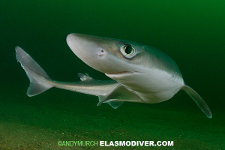
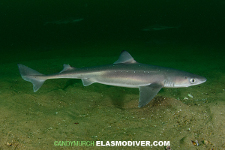
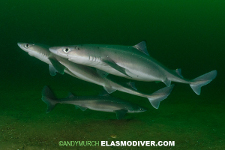
.jpg)
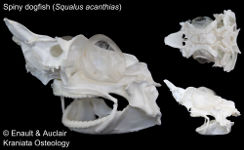
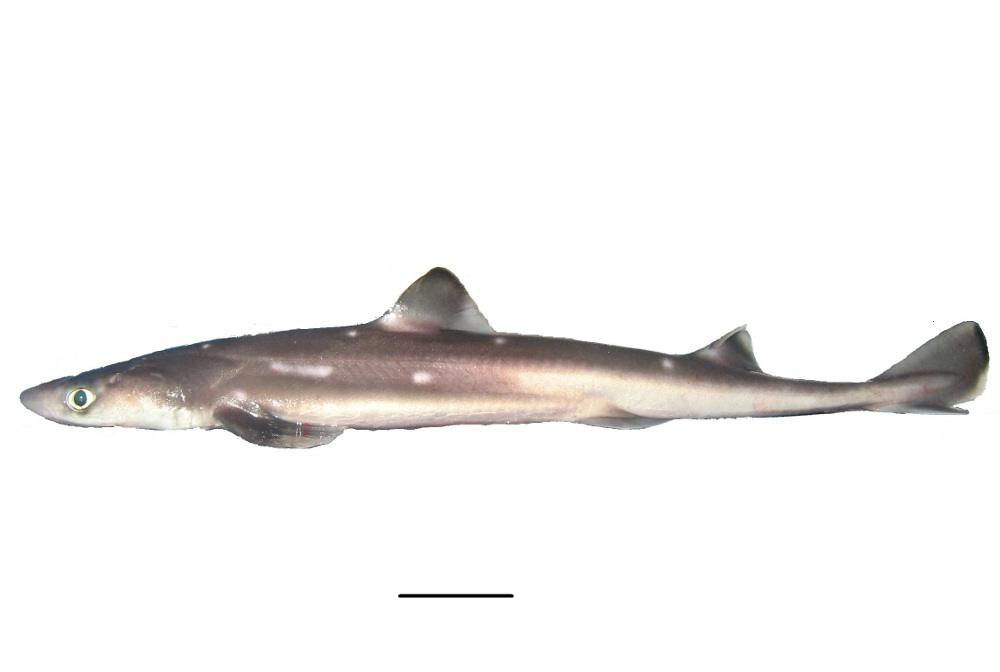

.jpg)
.jpg)
.jpg)
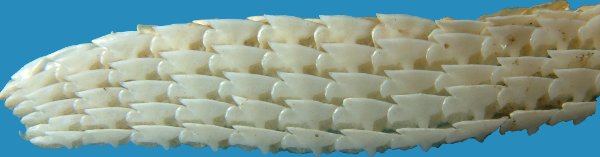
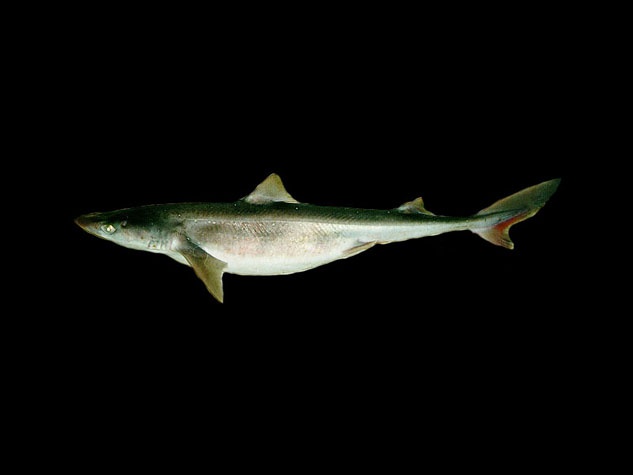
.jpg)

.jpg)