


 Catalog of Fishes
 literature references
 FishBase
 IUCN Red List
 NCBI GenBank
Cephaloscyllium formosanum
Teng, 1962
Classification: Elasmobranchii Carcharhiniformes Scyliorhinidae
Reference of the original description
Classification and distribution of the Chondrichthyes of Taiwan. Ogawa Press, Maizuru, Kyoto, Japan, pp. 1–304, figs 1–77
Classification and distribution of the Chondrichthyes of Taiwan. Ogawa Press, Maizuru, Kyoto, Japan, pp. 1–304, figs 1–77
Synonyms / new combinations and misspellings
Cephaloscyllium fasciatum, Cephaloscyllium maculatum, Cephaloscyllium pardelotum
Cephaloscyllium fasciatum, Cephaloscyllium maculatum, Cephaloscyllium pardelotum
Types
Cephaloscyllium formosanum
Holotype: TFRI: 4339;
Cephaloscyllium fasciatum
Holotype: BMNH: 1965.8.11.1; Paratype: BMNH: 1965.8.11.5; BMNH: 1965.8.11.3; BMNH: 1965.8.11.4; BMNH: 1965.8.11.2;
Cephaloscyllium maculatum
Holotype: CAS: 224877;
Cephaloscyllium pardelotum
Holotype: CAS: 224876;
Cephaloscyllium formosanum
Holotype: TFRI: 4339;
Cephaloscyllium fasciatum
Holotype: BMNH: 1965.8.11.1; Paratype: BMNH: 1965.8.11.5; BMNH: 1965.8.11.3; BMNH: 1965.8.11.4; BMNH: 1965.8.11.2;
Cephaloscyllium maculatum
Holotype: CAS: 224877;
Cephaloscyllium pardelotum
Holotype: CAS: 224876;
Description :
Citation: Cephaloscyllium formosanum Teng, 1962: In: Database of modern sharks, rays and chimaeras, www.shark-references.com, World Wide Web electronic publication, Version 10/2026
Please send your images of "Cephaloscyllium formosanum" to info@shark-references.com
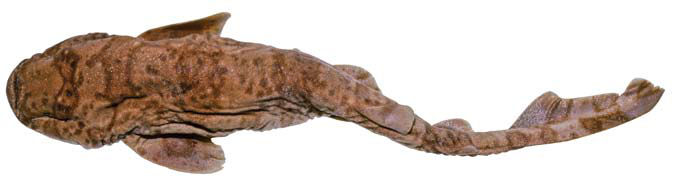
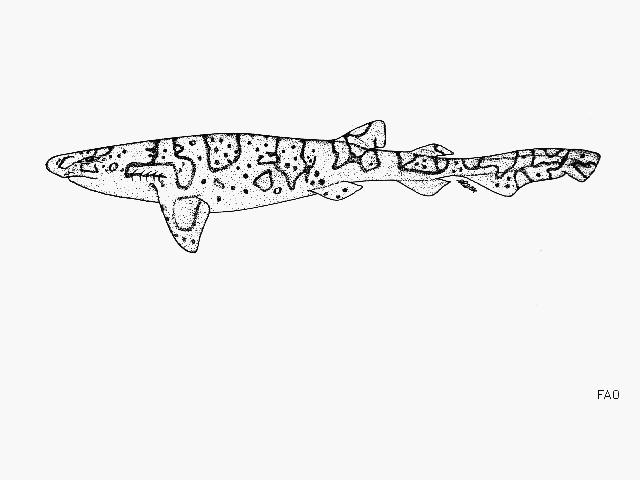
Cephaloscyllium fasciatum female holotype BMNH 1965.8.11.1 (421 mm TL): dorsal view; lateral view. Photograph by P.R. Last. In: White, W.T. & Ebert, D.A. (2008); synonym of Cephaloscyllium formosanum Teng, 1962 after Ng et al. 2026
Cephaloscyllium fasciatum female holotype BMNH 1965.8.11.1 (421 mm TL): dorsal view; lateral view. Photograph by P.R. Last. In: White, W.T. & Ebert, D.A. (2008); synonym of Cephaloscyllium formosanum Teng, 1962 after Ng et al. 2026
Common names
Formosa swellshark
Formosa swellshark
Short Description
Original diagnosis after NAKAYA, INOUE & HO, 2013 [20016]: Four broad dark saddle blotches before first dorsal fin; first saddle just behind eye, second saddle over gill openings, third saddle above inner margin of pectoral fin and fourth above pelvic fin origin. A narrow dark band between third and fourth saddle blotches. Numerous small white spots on all body. Margins of egg case indented. Medium-sized species getting mature at size less than 65 cm TL.
Original diagnosis after NAKAYA, INOUE & HO, 2013 [20016]: Four broad dark saddle blotches before first dorsal fin; first saddle just behind eye, second saddle over gill openings, third saddle above inner margin of pectoral fin and fourth above pelvic fin origin. A narrow dark band between third and fourth saddle blotches. Numerous small white spots on all body. Margins of egg case indented. Medium-sized species getting mature at size less than 65 cm TL.
Size / Weight / Age
Size at maturation less than 655 mm TL (female). Maximum size at least 655 mm TL (female) [20016];
Size at maturation less than 655 mm TL (female). Maximum size at least 655 mm TL (female) [20016];
Dentition
number of upper jaw teeth 68, lower jaw teeth 78 (Teng, 1962). All teeth same, with 3 (infrequently 5) cusps, principal cusp large and long; no symphyseal tooth on upper jaw, but three small teeth on lower jaw symphysis [20016];
number of upper jaw teeth 68, lower jaw teeth 78 (Teng, 1962). All teeth same, with 3 (infrequently 5) cusps, principal cusp large and long; no symphyseal tooth on upper jaw, but three small teeth on lower jaw symphysis [20016];
Remarks
shark-references Species-ID=13814;
shark-references Species-ID=13814;
Image gallery