


 Catalog of Fishes
 literature references
 FishBase
 NCBI GenBank
Etmopterus heterodontus
Ng & Lin, 2026
Classification: Elasmobranchii Squaliformes Etmopteridae
Reference of the original description
Additions to the lanternshark genus Etmopterus (Squaliformes: Etmopteridae) from the Indo-West Pacific, with descriptions of three new species. Journal of the Fisheries Society of Taiwan, 54(2), 75–108
Additions to the lanternshark genus Etmopterus (Squaliformes: Etmopteridae) from the Indo-West Pacific, with descriptions of three new species. Journal of the Fisheries Society of Taiwan, 54(2), 75–108
Types
Etmopterus heterodontus
Holotype: MNHN: IC-2004-2380; Paratype: MNHN: IC-2003-0561; MNHN: IC-2024-0702 (ex. MNHN 2003-0558); MNHN: IC- 2024-0917; MNHN: IC-2024-1322;
Etmopterus heterodontus
Holotype: MNHN: IC-2004-2380; Paratype: MNHN: IC-2003-0561; MNHN: IC-2024-0702 (ex. MNHN 2003-0558); MNHN: IC- 2024-0917; MNHN: IC-2024-1322;
Images of types
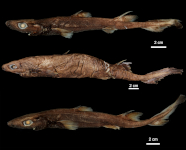
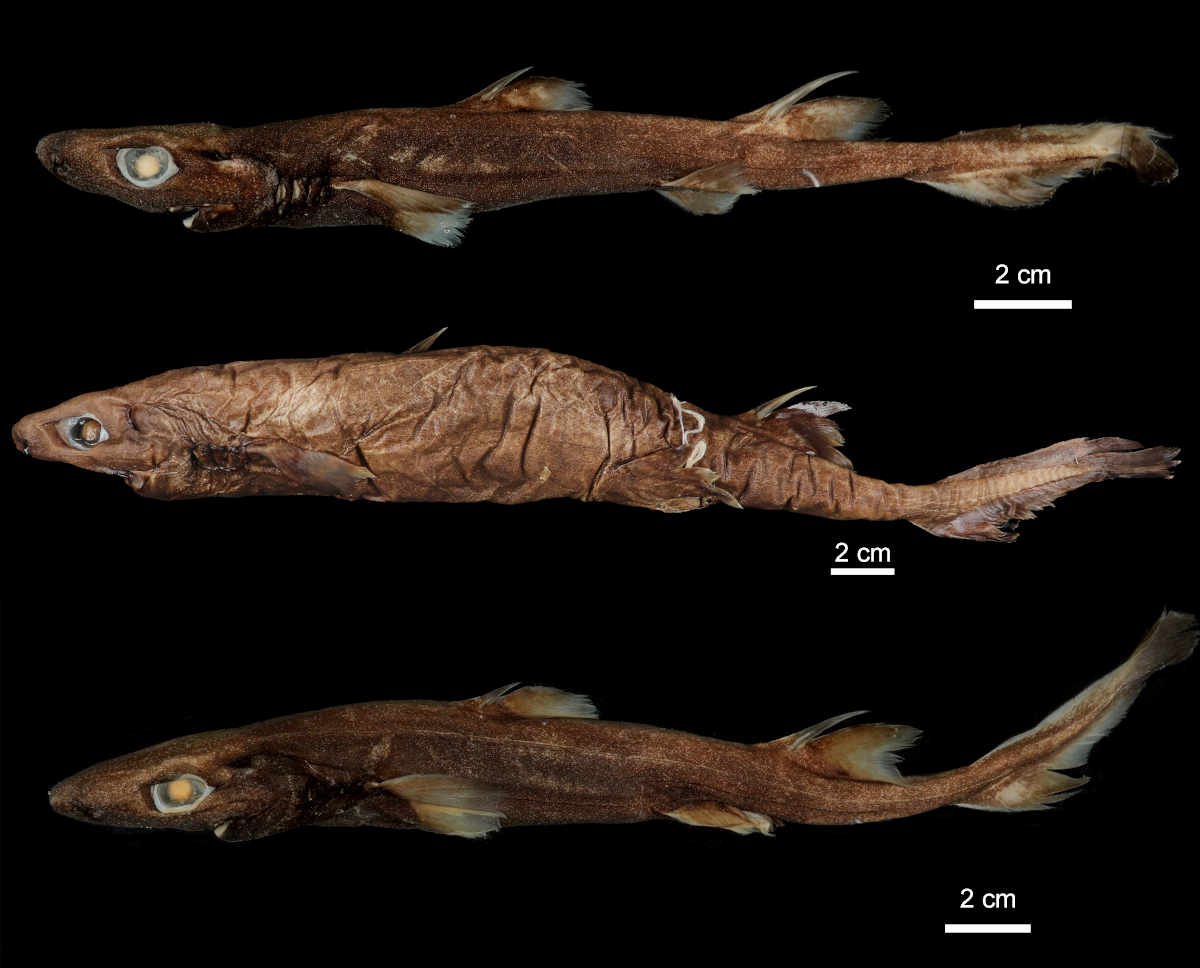
Description :
Citation: Etmopterus heterodontus Ng & Lin, 2026: In: Database of modern sharks, rays and chimaeras, www.shark-references.com, World Wide Web electronic publication, Version 10/2026
Please send your images of "Etmopterus heterodontus" to info@shark-references.com
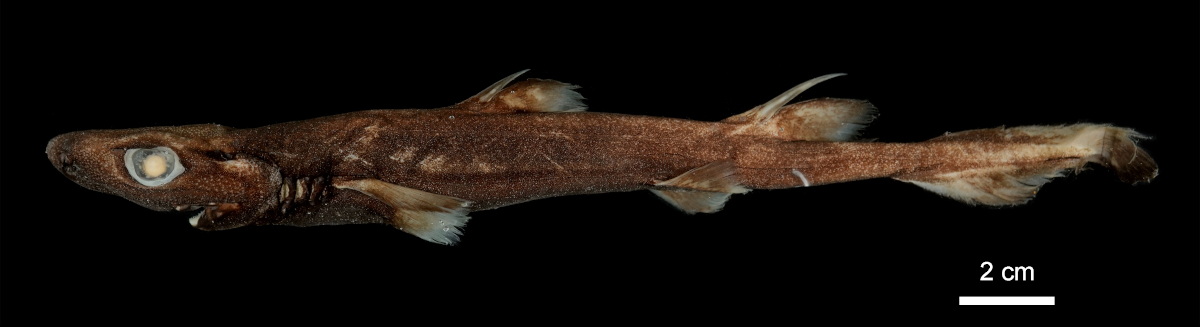
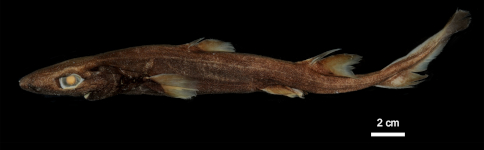
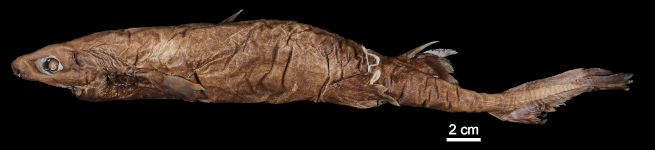
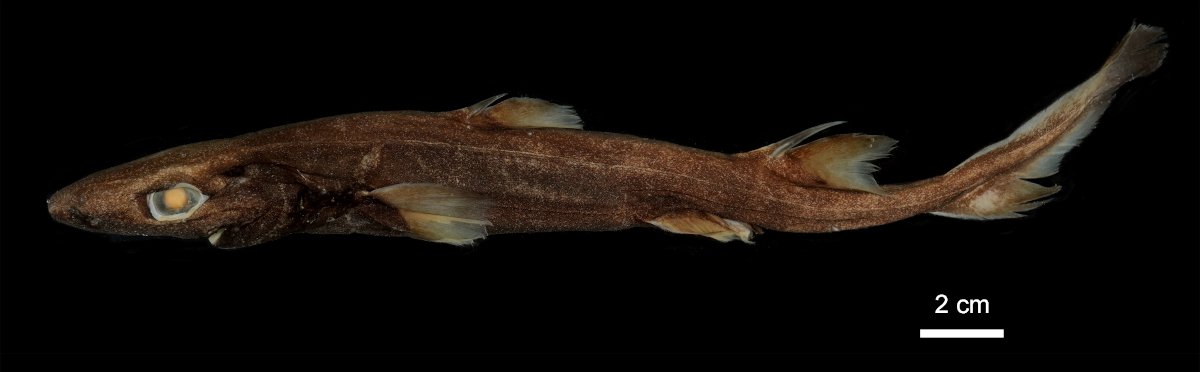
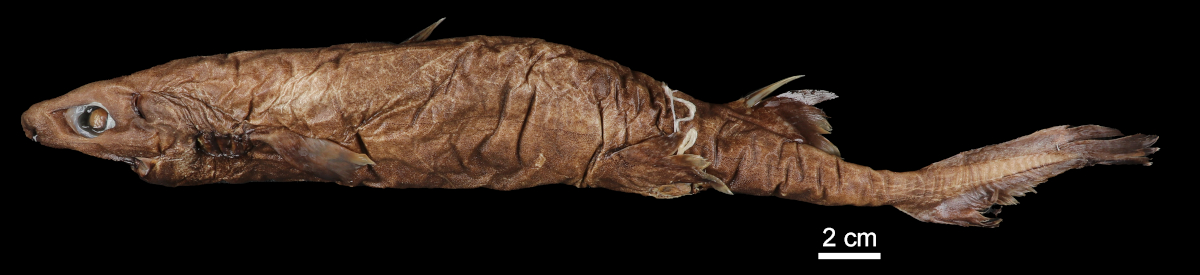
Etmopterus heterodontus Ng & Lin, 2026; holotype (MNHN-IC-2004-2380, female, 243 mmTL) © Shing-Lai Ng & Ching-Feng Lin
Etmopterus heterodontus Ng & Lin, 2026; holotype (MNHN-IC-2004-2380, female, 243 mmTL) © Shing-Lai Ng & Ching-Feng Lin
Short Description
Diagnosis after Ng & Lin, 2026 [36209]: A presumably moderately large (at least 379 mm TL) species of the E. lucifer group, differing from all other congeners in having a combination of frustum-shaped denticles, lower-jaw tooth substantially erect, flanked with cusplets even in juveniles, the origin of flank-marking base below the D2 origin, and moderately short posterior caudal marking, length 3.7–5.5% TL.
Diagnosis after Ng & Lin, 2026 [36209]: A presumably moderately large (at least 379 mm TL) species of the E. lucifer group, differing from all other congeners in having a combination of frustum-shaped denticles, lower-jaw tooth substantially erect, flanked with cusplets even in juveniles, the origin of flank-marking base below the D2 origin, and moderately short posterior caudal marking, length 3.7–5.5% TL.
Dentition
Teeth dissimilar in upper and lower jaw; upper teeth multicuspid, in three functional series, small, central cusp thick (Fig. 6); 2 (1) cusplets on each side of the cusp of upper teeth; inner pair of cusplet longest, length about one-third of the central cusp; teeth in lower jaw multicuspid, in three series, one functional; lower teeth knife-like, with remarkably erect cusp, directing upwards, almost forming about a right angle against lower jaw (Fig. 6); cusp flanked with 1–2 (1) pairs of minute, triangular cusps. Tooth count of upper jaw 22 (18–22), lower jaw 25–28 (28), total count 44–50 (50).[36209]
Teeth dissimilar in upper and lower jaw; upper teeth multicuspid, in three functional series, small, central cusp thick (Fig. 6); 2 (1) cusplets on each side of the cusp of upper teeth; inner pair of cusplet longest, length about one-third of the central cusp; teeth in lower jaw multicuspid, in three series, one functional; lower teeth knife-like, with remarkably erect cusp, directing upwards, almost forming about a right angle against lower jaw (Fig. 6); cusp flanked with 1–2 (1) pairs of minute, triangular cusps. Tooth count of upper jaw 22 (18–22), lower jaw 25–28 (28), total count 44–50 (50).[36209]
Remarks
shark-references Species-ID=17872
shark-references Species-ID=17872
Image gallery