


 Catalog of Fishes
 literature references
 FishBase
 NCBI GenBank
Gymnura indicus
Kasinath & Bineesh, 2026
Classification: Elasmobranchii Myliobatiformes Gymnuridae
Reference of the original description
Integrative Taxonomy Reveals a New Butterfly Ray, Gymnura indicus sp. nov. (Batoidea: Gymnuridae), from the Indian EEZ. Records of the Zoological Survey of India, 126 (i1S), 59-78
Integrative Taxonomy Reveals a New Butterfly Ray, Gymnura indicus sp. nov. (Batoidea: Gymnuridae), from the Indian EEZ. Records of the Zoological Survey of India, 126 (i1S), 59-78
Types
Gymnura indicus
Holotype: ZSI: MBRC/F/3591; Paratype: ZSI: MBRC/F/3596; ZSI: MBRC/F/3595; ZSI: MBRC/F/3594; ZSI: MBRC/F/3598; ZSI: MBRC/F/3599;
Gymnura indicus
Holotype: ZSI: MBRC/F/3591; Paratype: ZSI: MBRC/F/3596; ZSI: MBRC/F/3595; ZSI: MBRC/F/3594; ZSI: MBRC/F/3598; ZSI: MBRC/F/3599;
Images of types
Description :
Citation: Gymnura indicus Kasinath & Bineesh, 2026: In: Database of modern sharks, rays and chimaeras, www.shark-references.com, World Wide Web electronic publication, Version 11/2026
Please send your images of "Gymnura indicus" to info@shark-references.com
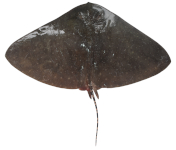
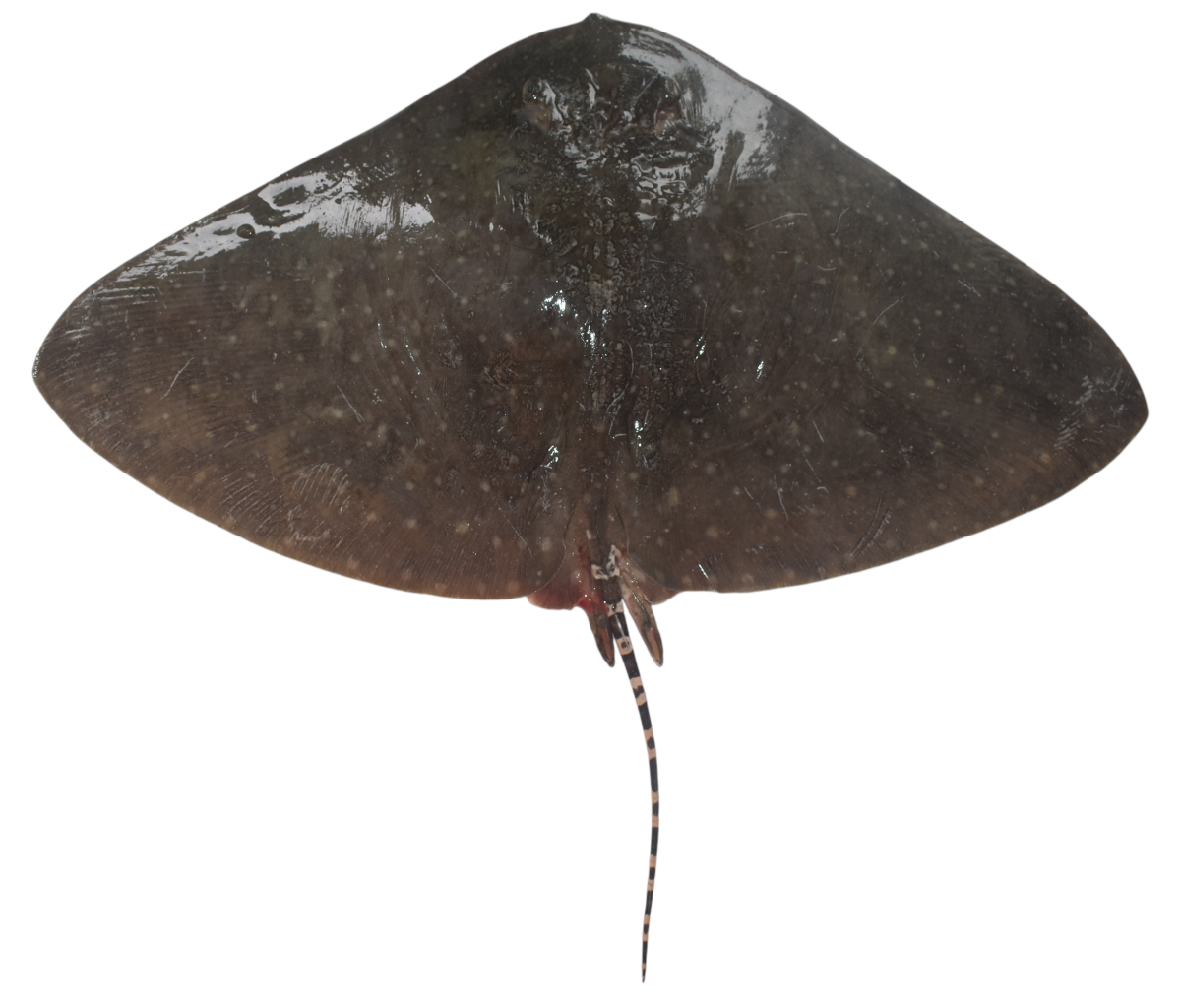
Gymnura indicus Kasinath & Bineesh, 2026; holotype, ZSI/MBRC/F/3591, 421 mm DW, mature male © by the authors
Gymnura indicus Kasinath & Bineesh, 2026; holotype, ZSI/MBRC/F/3591, 421 mm DW, mature male © by the authors
Common names
 Indian butterfly ray
Short Description
Diagnosis after Kasinath & Bineesh, 2026 [38010]: A medium-sized Gymnura species distinguished by the following combination of characters: spiracular tentacle and dorsal fin absent; disc relatively long (body length 53.9–56.5% DW); snout relatively elongate (preorbital length 8.9–10.3% DW, postorbital length 10.6–11.5% DW, prenasal length 7.3–8.2% DW); anterior interspiracular width relatively large (11.9–13.4% DW); prebranchial length relatively great (PRB1 16.2–18.6% DW; PRB2 15.4–17.1% DW); pelvic-fin base comparatively longer (5.2–7.4% DW); cloaca-to-spine origin distance short (6.0–7.0% DW); eye small, diameter 0.12–0.18 times interorbital distance.
Diagnosis after Kasinath & Bineesh, 2026 [38010]: A medium-sized Gymnura species distinguished by the following combination of characters: spiracular tentacle and dorsal fin absent; disc relatively long (body length 53.9–56.5% DW); snout relatively elongate (preorbital length 8.9–10.3% DW, postorbital length 10.6–11.5% DW, prenasal length 7.3–8.2% DW); anterior interspiracular width relatively large (11.9–13.4% DW); prebranchial length relatively great (PRB1 16.2–18.6% DW; PRB2 15.4–17.1% DW); pelvic-fin base comparatively longer (5.2–7.4% DW); cloaca-to-spine origin distance short (6.0–7.0% DW); eye small, diameter 0.12–0.18 times interorbital distance.
Distribution
off Tuticorin and off Gujarat, indicating occurrence in both the Bay of Bengal and Arabian Sea.[38010]
off Tuticorin and off Gujarat, indicating occurrence in both the Bay of Bengal and Arabian Sea.[38010]
Dentition
Teeth minute and numerous, not exposed when the mouth is closed, arranged in longitudinal rows forming continuous dental bands in both jaws. Each tooth unicuspid, with a short, sharp conical cusp arising from a slightly swollen base; central and lateral teeth similar in size. Dentition generally similar between upper and lower jaws and between sexes, although adult males possess relatively more pointed and erect cusps with tips directed slightly outward, whereas females exhibit comparatively lower, less acute cusps with tips inclined inward. Tooth number increases ontogenetically. [38010]
Teeth minute and numerous, not exposed when the mouth is closed, arranged in longitudinal rows forming continuous dental bands in both jaws. Each tooth unicuspid, with a short, sharp conical cusp arising from a slightly swollen base; central and lateral teeth similar in size. Dentition generally similar between upper and lower jaws and between sexes, although adult males possess relatively more pointed and erect cusps with tips directed slightly outward, whereas females exhibit comparatively lower, less acute cusps with tips inclined inward. Tooth number increases ontogenetically. [38010]
Remarks
shark-references Species-ID=17954
shark-references Species-ID=17954
Image gallery