


 Catalog of Fishes
 literature references
 FishBase
 NCBI GenBank
Rhinochimaera costaricana
Vidaurre-Quesada, Salas-Jimenez, Carvajal-Rodriguez, Lara-Quesada, Santos, Araripe & Angulo, 2026
Classification: Holocephali Chimaeriformes Rhinochimaeridae
Reference of the original description
A new species of Rhinochimaera Garman 1901 (Holocephali: Chimaeriformes: Rhinochimaeridae) from the Eastern Pacific Ocean. Zootaxa, 5828(3), 535–548
A new species of Rhinochimaera Garman 1901 (Holocephali: Chimaeriformes: Rhinochimaeridae) from the Eastern Pacific Ocean. Zootaxa, 5828(3), 535–548
Description :
Citation: Rhinochimaera costaricana Vidaurre-Quesada, Salas-Jimenez, Carvajal-Rodriguez, Lara-Quesada, Santos, Araripe & Angulo, 2026: In: Database of modern sharks, rays and chimaeras, www.shark-references.com, World Wide Web electronic publication, Version 10/2026
Please send your images of "Rhinochimaera costaricana" to info@shark-references.com
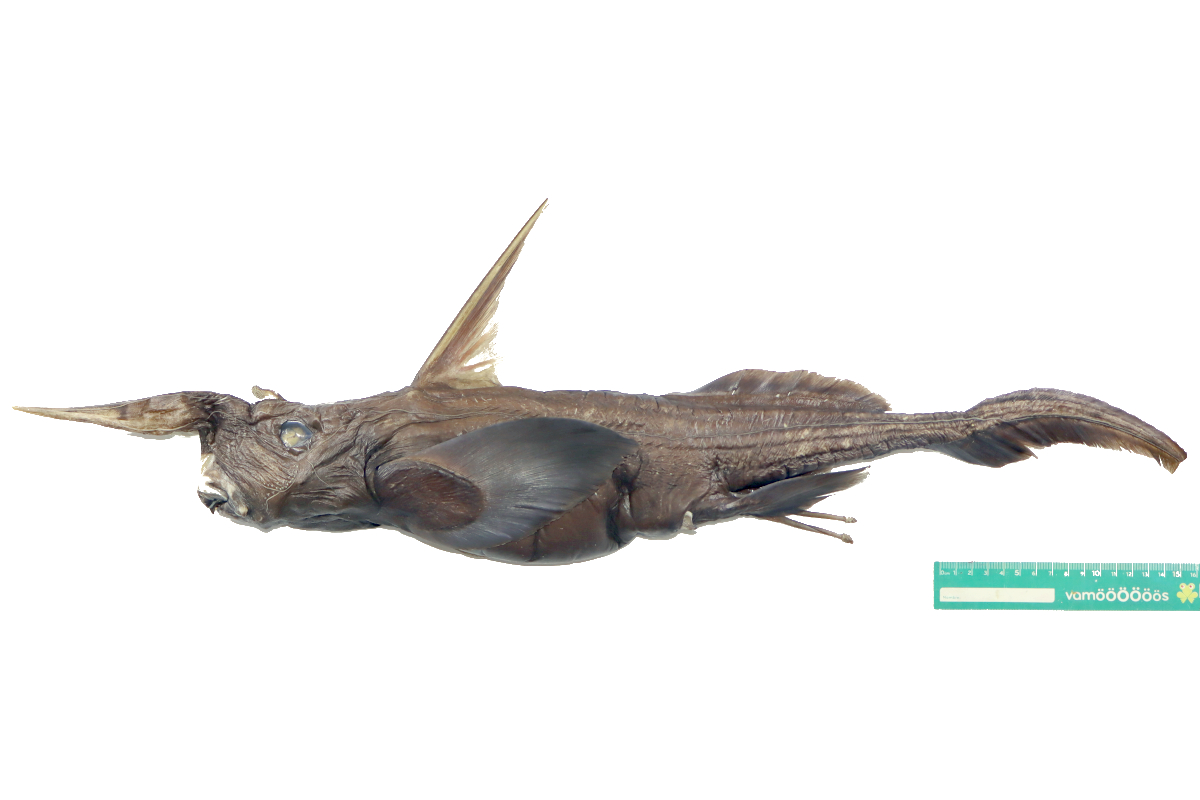
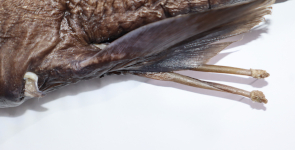
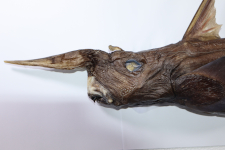
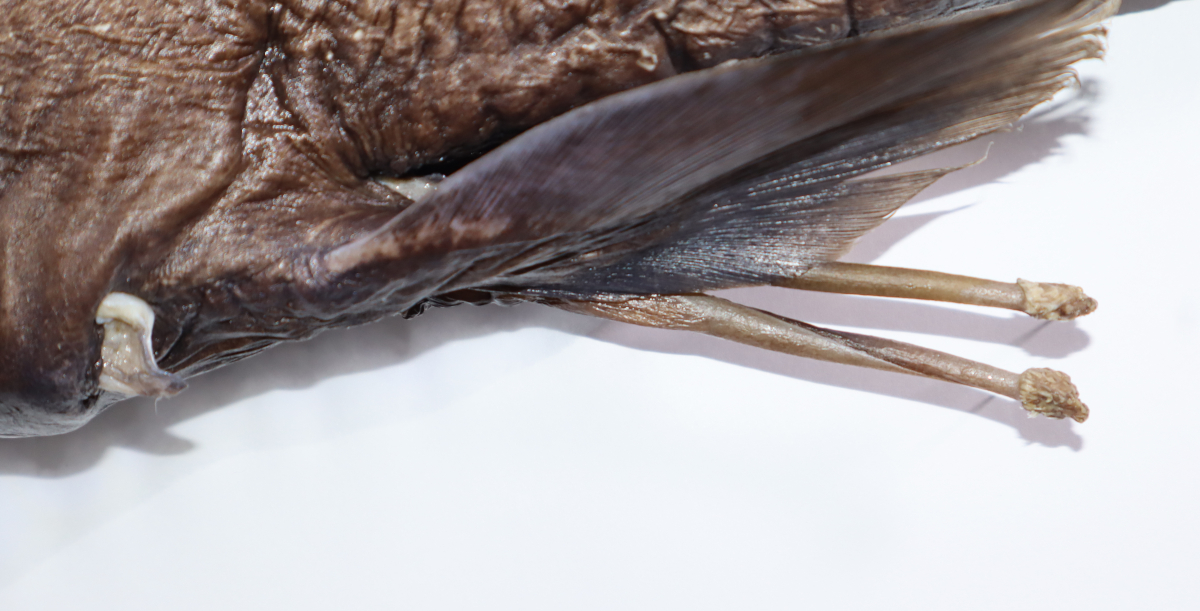
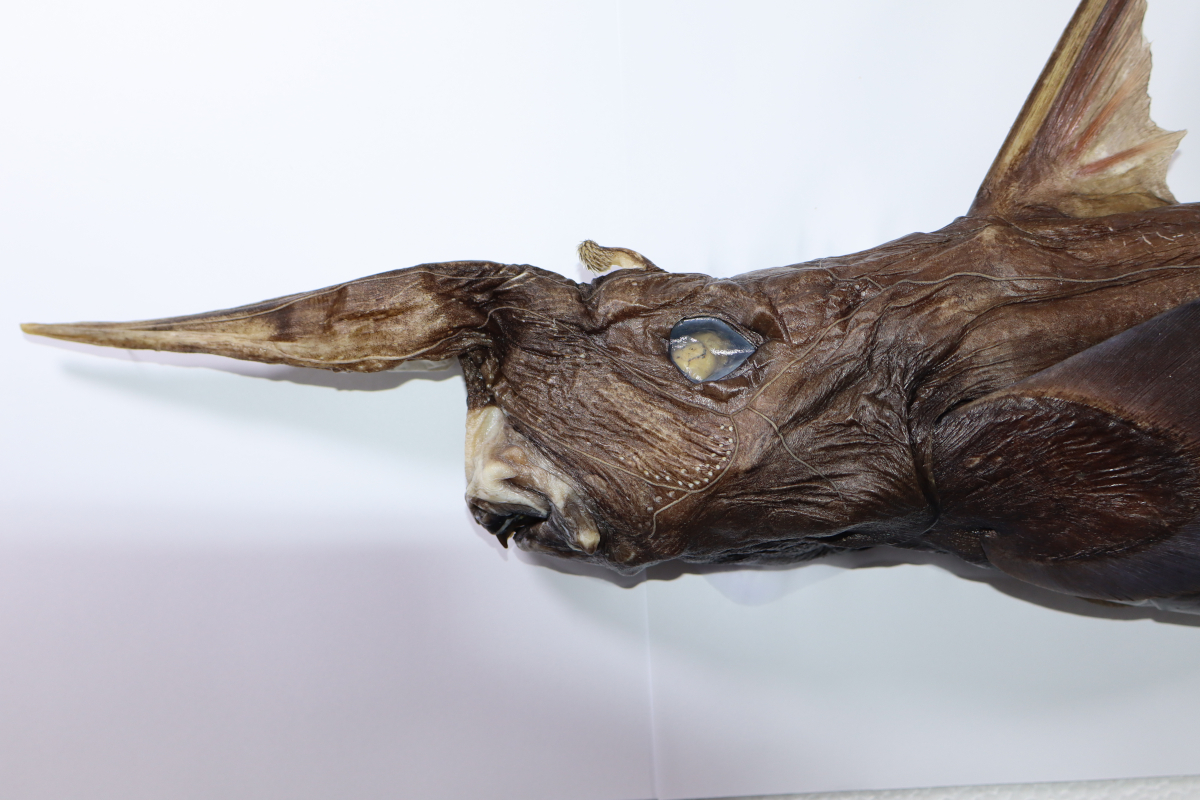
Rhinochimaera costaricana Vidaurre-Quesada, Salas-Jimenez, Carvajal-Rodriguez, Lara-Quesada, Santos, Araripe & Angulo, 2026; holotype, male, 783 mm TL, 382 mm BDL © Naidely Valeria Vidaurre Quesada
Rhinochimaera costaricana Vidaurre-Quesada, Salas-Jimenez, Carvajal-Rodriguez, Lara-Quesada, Santos, Araripe & Angulo, 2026; holotype, male, 783 mm TL, 382 mm BDL © Naidely Valeria Vidaurre Quesada
Short Description
Diagnosis after Vidaurre-Quesada et al., 2026 [35998]: Rhinochimaera costaricana sp. nov. is assigned to the genus Rhinochimaera by the following combination of characters: dorsal surface of head not arched above the snout profile; mouth positioned well anterior to the eyes; nostrils, lips, and mouth forming a distinct ventral prominence on the snout; tooth plates narrow, elongate, and sharp-edged, lacking ridges and tritors; palatine and mandibular tooth plates very narrow and elongate; pectoral fins narrow, with pectoral length approximately half or less than the anterior margin length; anal fin absent; and dorsal caudal tubercles present along the upper caudal margin. This combination readily distinguishes the new species from Neoharriotta, which possesses a distinct, separate anal fin, and from Harriotta, the only other rhinochimaerid genus occurring in the region, which is characterized by a mouth located below or only slightly anterior to the eye, tooth plates bearing ridges and tritors, and a well-developed upper caudal-fin lobe lacking dorsal tubercles.
Diagnosis after Vidaurre-Quesada et al., 2026 [35998]: Rhinochimaera costaricana sp. nov. is assigned to the genus Rhinochimaera by the following combination of characters: dorsal surface of head not arched above the snout profile; mouth positioned well anterior to the eyes; nostrils, lips, and mouth forming a distinct ventral prominence on the snout; tooth plates narrow, elongate, and sharp-edged, lacking ridges and tritors; palatine and mandibular tooth plates very narrow and elongate; pectoral fins narrow, with pectoral length approximately half or less than the anterior margin length; anal fin absent; and dorsal caudal tubercles present along the upper caudal margin. This combination readily distinguishes the new species from Neoharriotta, which possesses a distinct, separate anal fin, and from Harriotta, the only other rhinochimaerid genus occurring in the region, which is characterized by a mouth located below or only slightly anterior to the eye, tooth plates bearing ridges and tritors, and a well-developed upper caudal-fin lobe lacking dorsal tubercles.
Remarks
shark-references Species-ID=17853
shark-references Species-ID=17853
Image gallery