


Squalus minor
(Leriche, 1902)
Classification: Elasmobranchii Squaliformes Squalidae
Reference of the original description
Les poissons paléocènes de la Belgique. Mémoires du Musée Royal d'Histoire Naturelle de Belgique, 2(5), 1–48
Les poissons paléocènes de la Belgique. Mémoires du Musée Royal d'Histoire Naturelle de Belgique, 2(5), 1–48
Synonyms / new combinations and misspellings
Acanthias hennequini, Acanthias minor, Biforisodus minor, Ginglymostoma trilobata, Squalus aff. smithi, Squalus cf. minor, Squalus hennequini, Squalus smithi, Squalus trilobatus, Squalus (Acanthias) minor
Acanthias hennequini, Acanthias minor, Biforisodus minor, Ginglymostoma trilobata, Squalus aff. smithi, Squalus cf. minor, Squalus hennequini, Squalus smithi, Squalus trilobatus, Squalus (Acanthias) minor
Types
Squalus minor
Acanthias minor
Syntype: IRSNB(fossil): P 00017; IRSNB(fossil): P 00018; IRSNB(fossil): P 00019; IRSNB(fossil): P 00021; IRSNB(fossil): P 00021; IRSNB(fossil): P 00022;
Squalus smithi
Holotype: IRSNB(fossil): P 04797;
Squalus minor
Acanthias minor
Syntype: IRSNB(fossil): P 00017; IRSNB(fossil): P 00018; IRSNB(fossil): P 00019; IRSNB(fossil): P 00021; IRSNB(fossil): P 00021; IRSNB(fossil): P 00022;
Squalus smithi
Holotype: IRSNB(fossil): P 04797;
Images of types
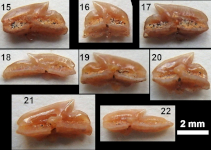
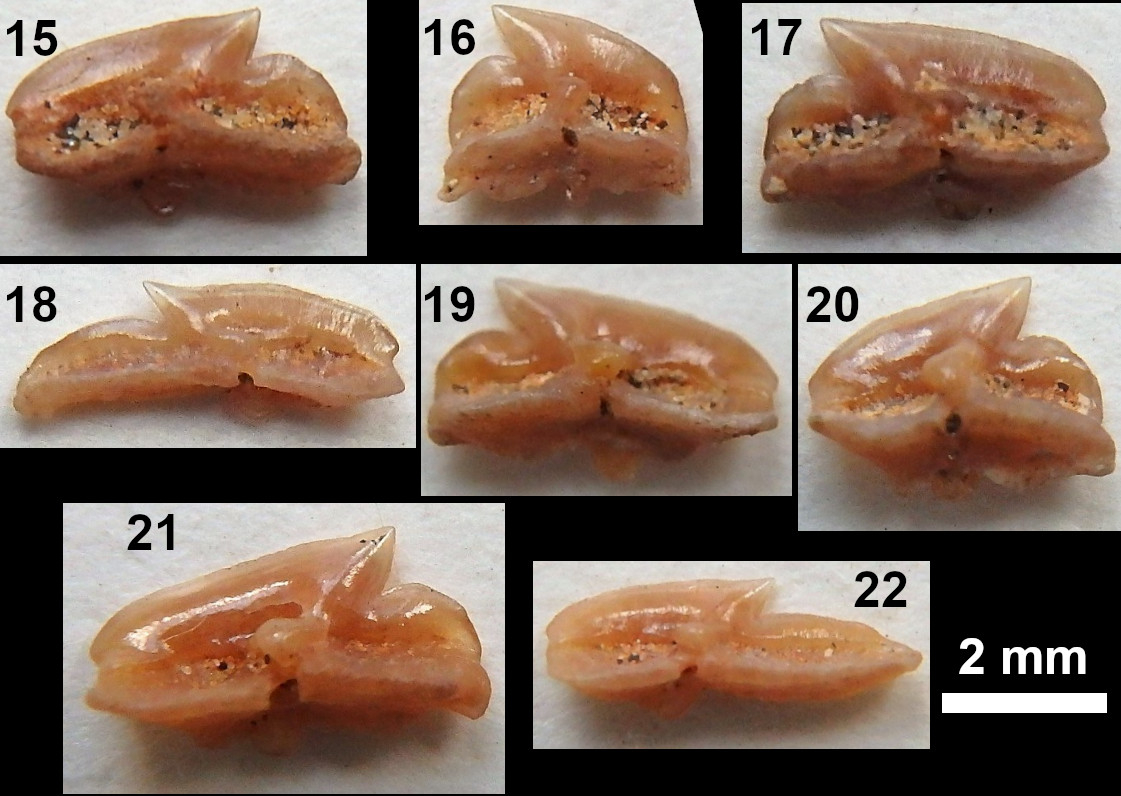
Description:
Citation: Squalus minor (Leriche, 1902): In: Database of fossil elasmobranch teeth www.shark-references.com, World Wide Web electronic publication, Version 10/2026
Please send your images of "Squalus minor" to info@shark-references.com
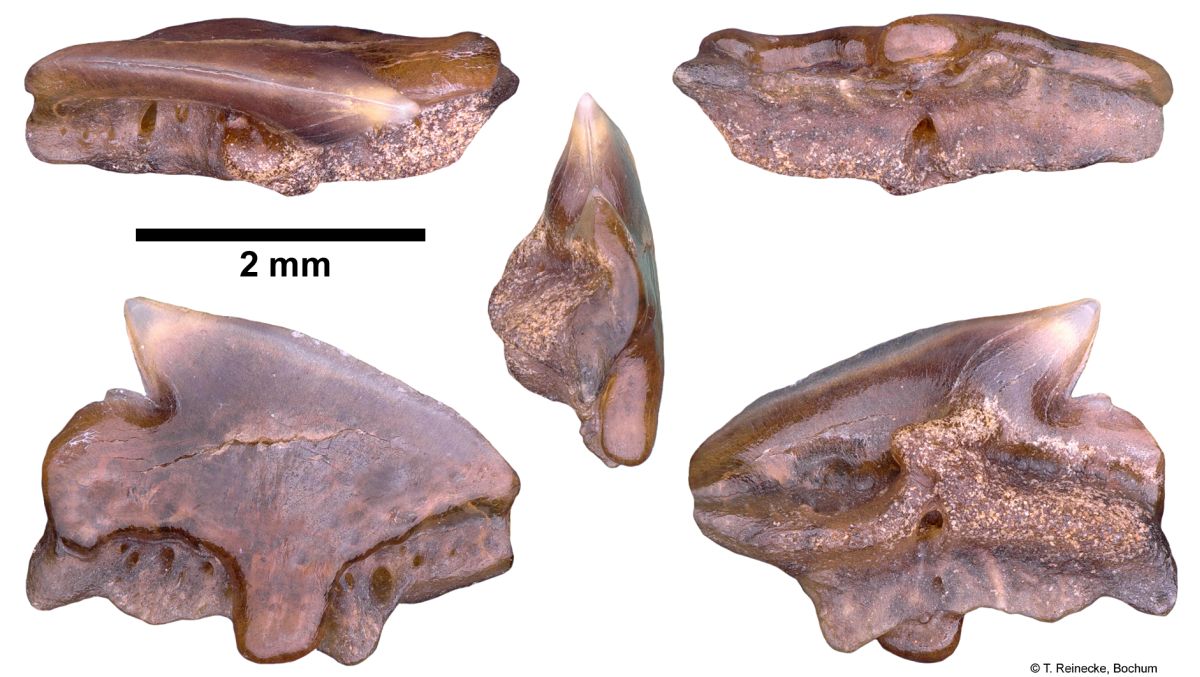
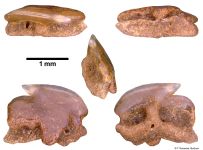
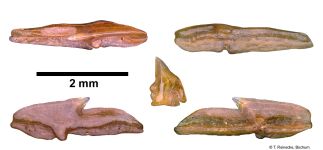
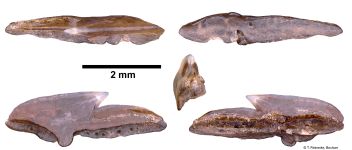
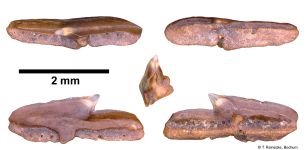
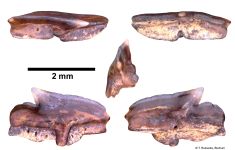
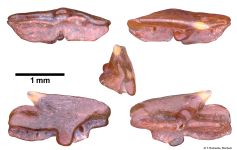
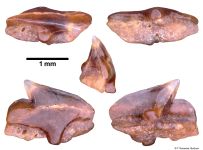
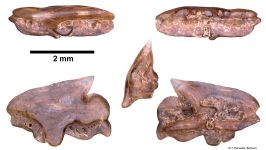
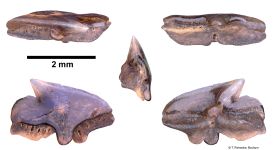
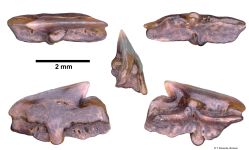
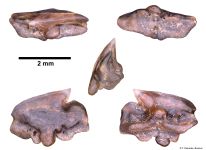
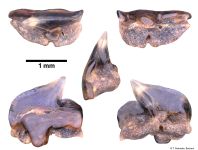
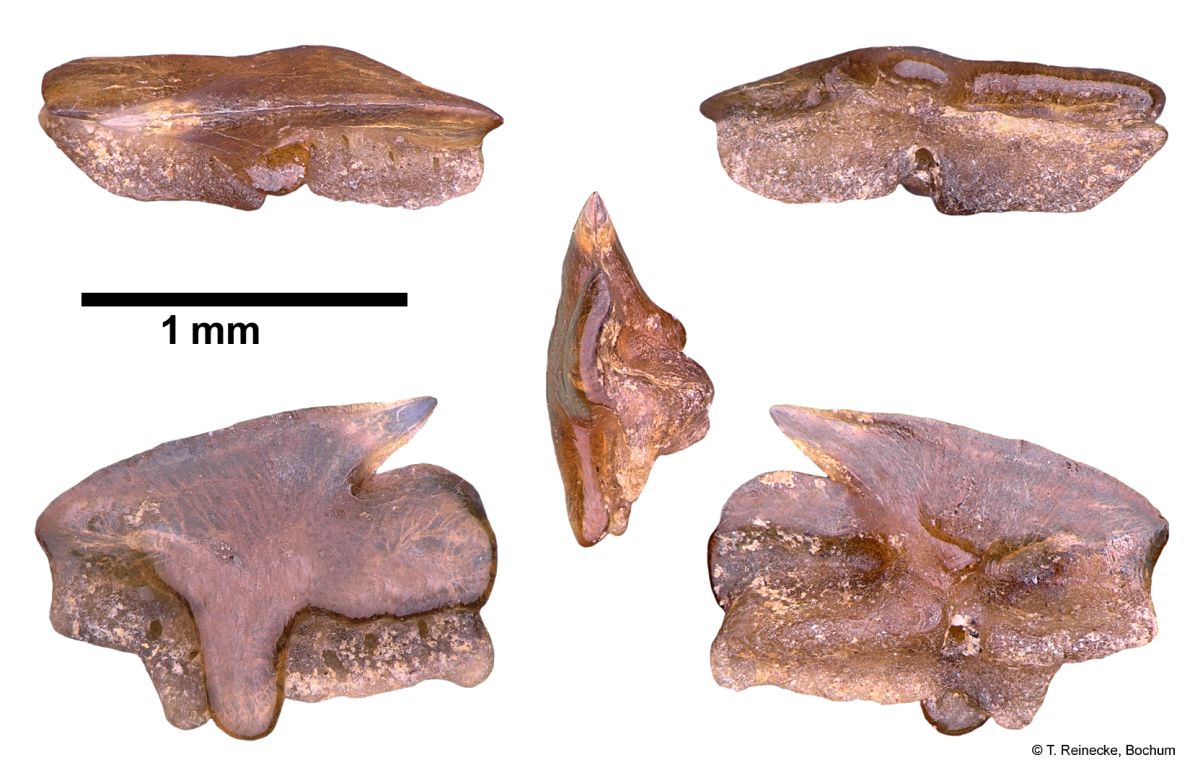
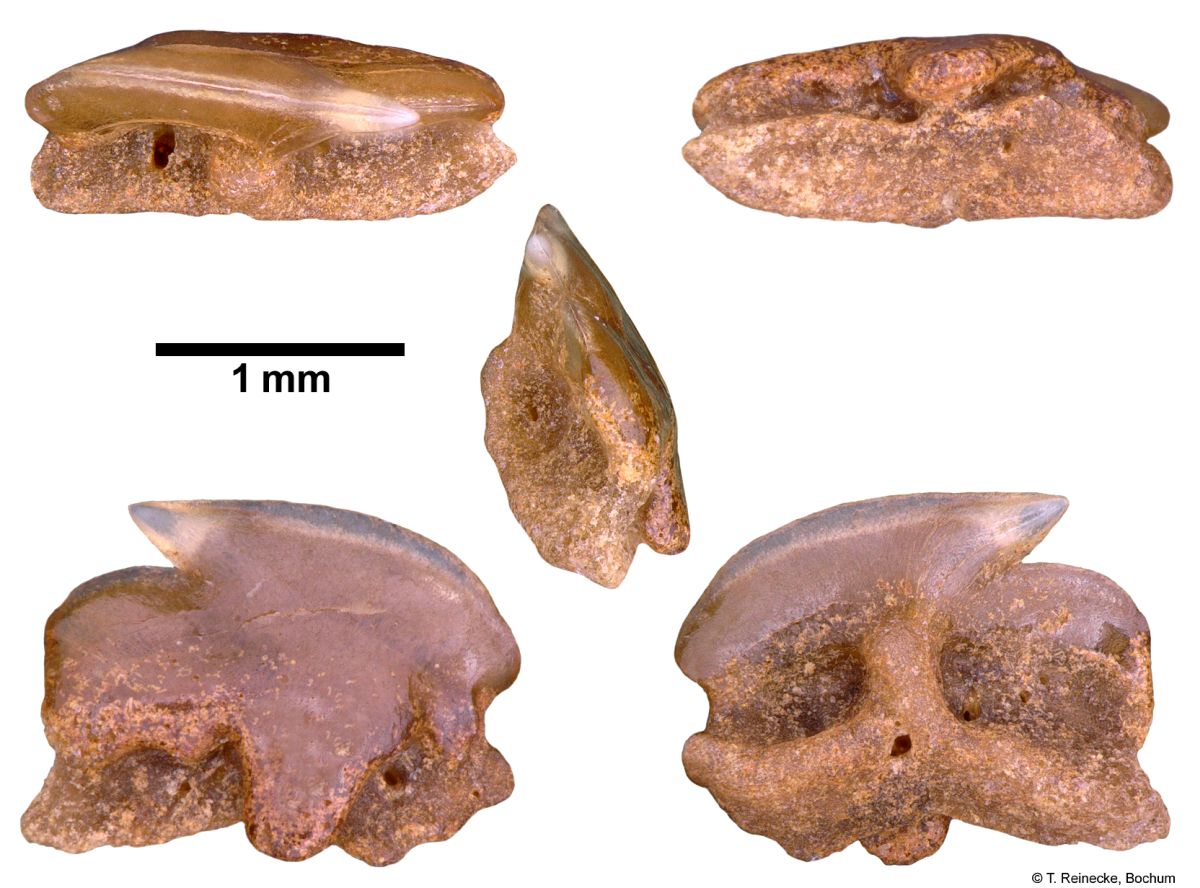
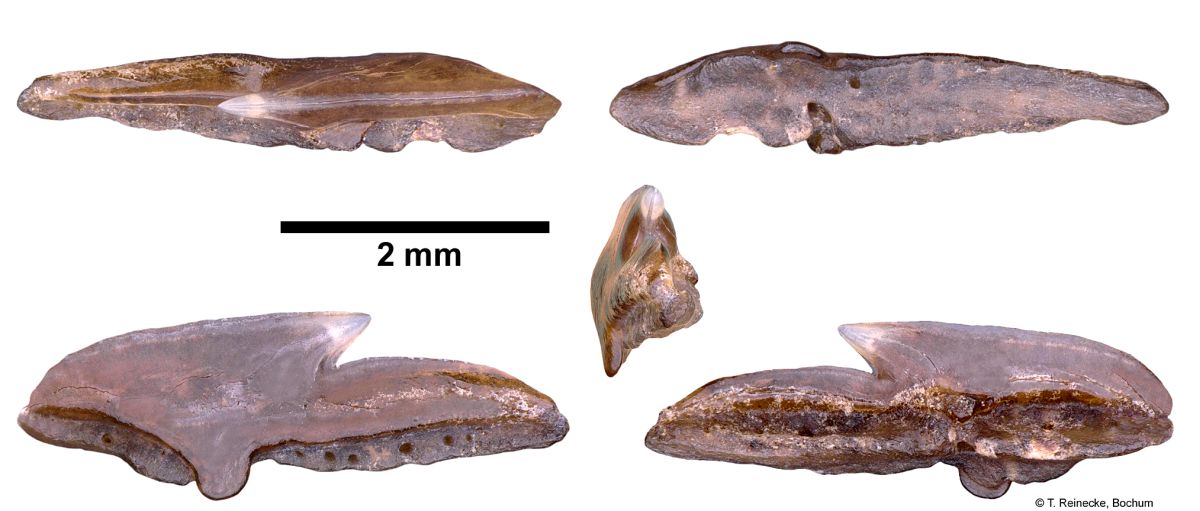
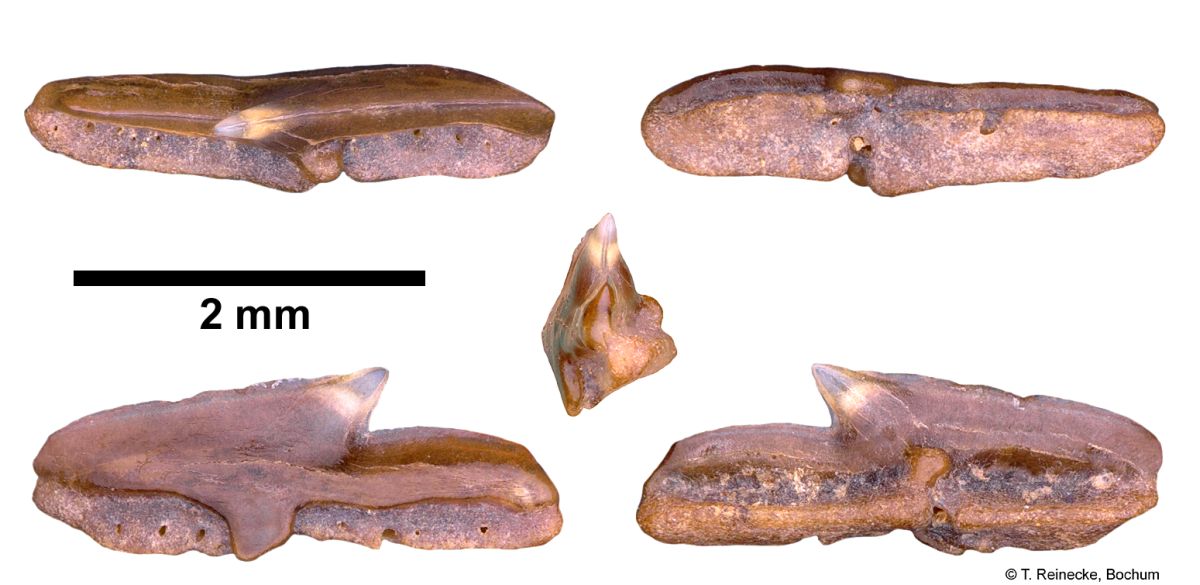
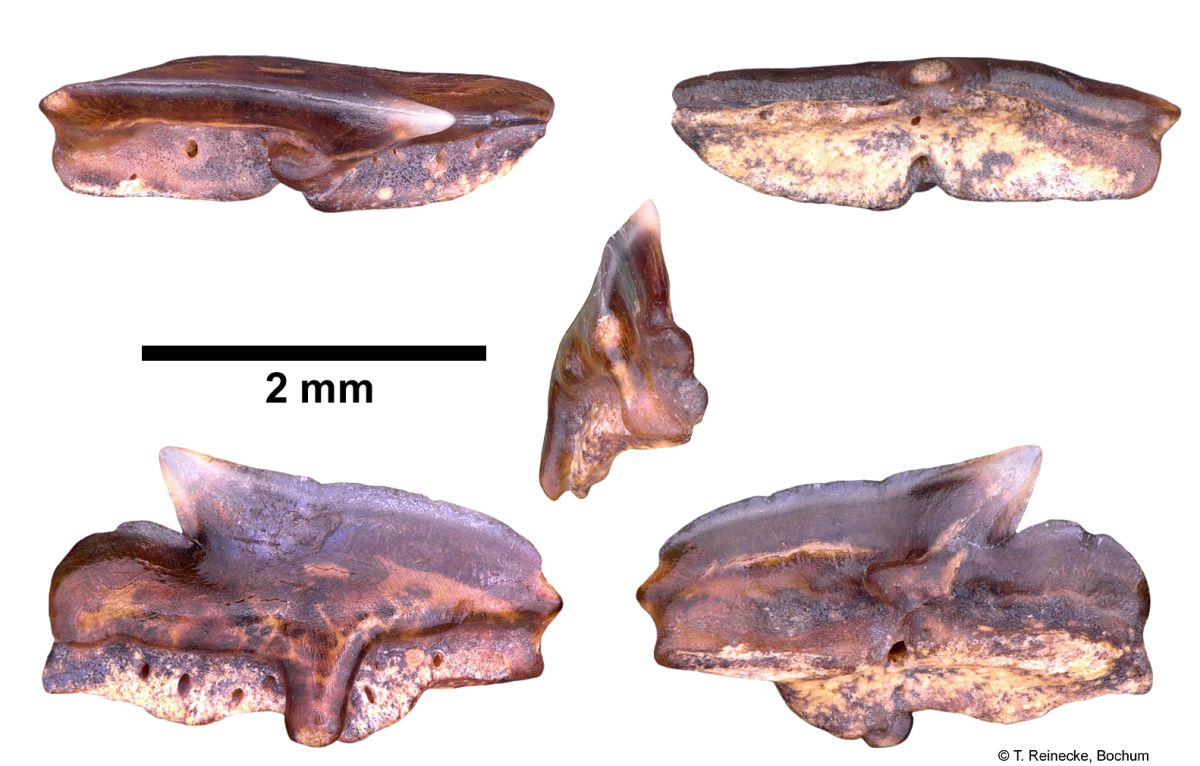
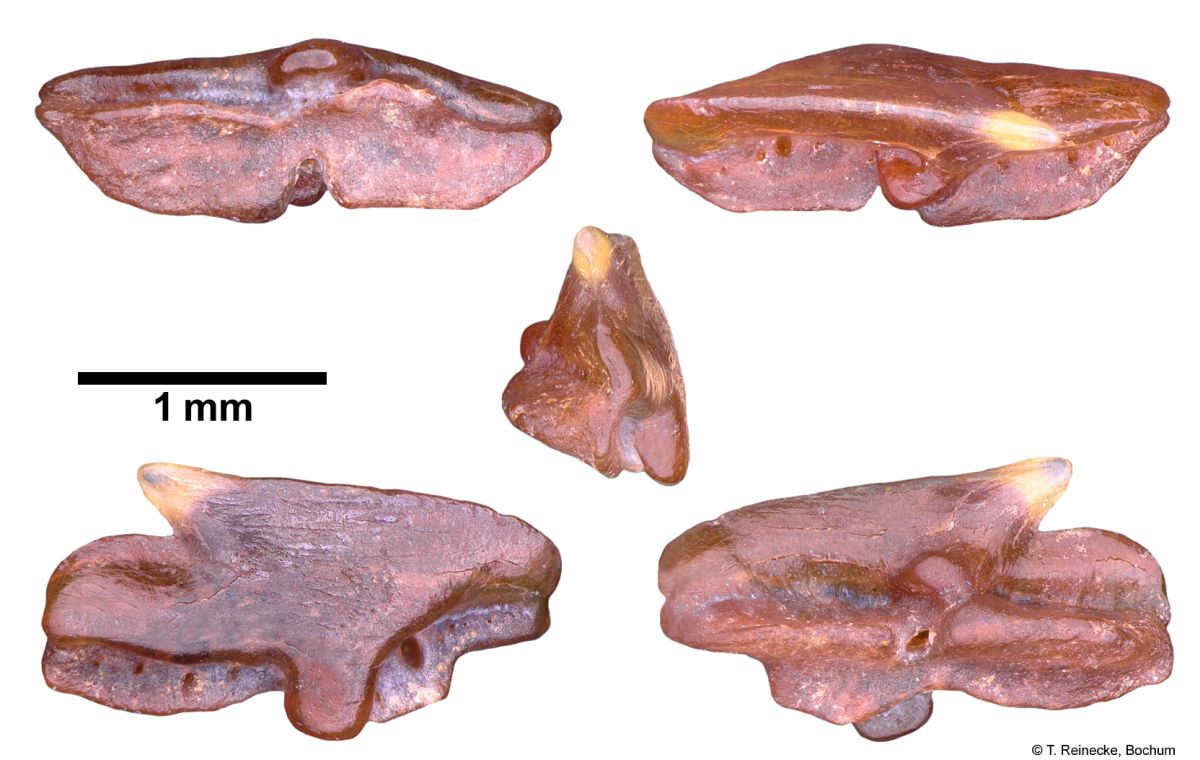
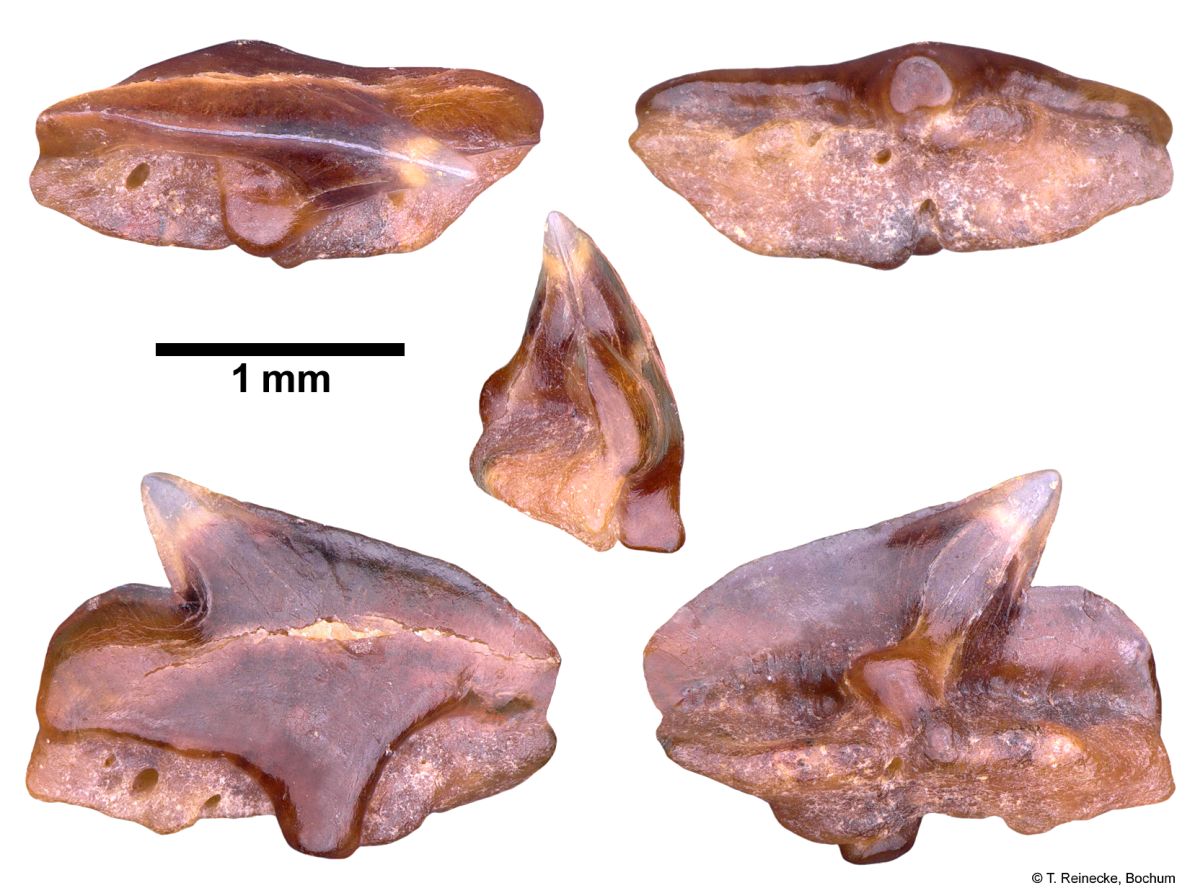
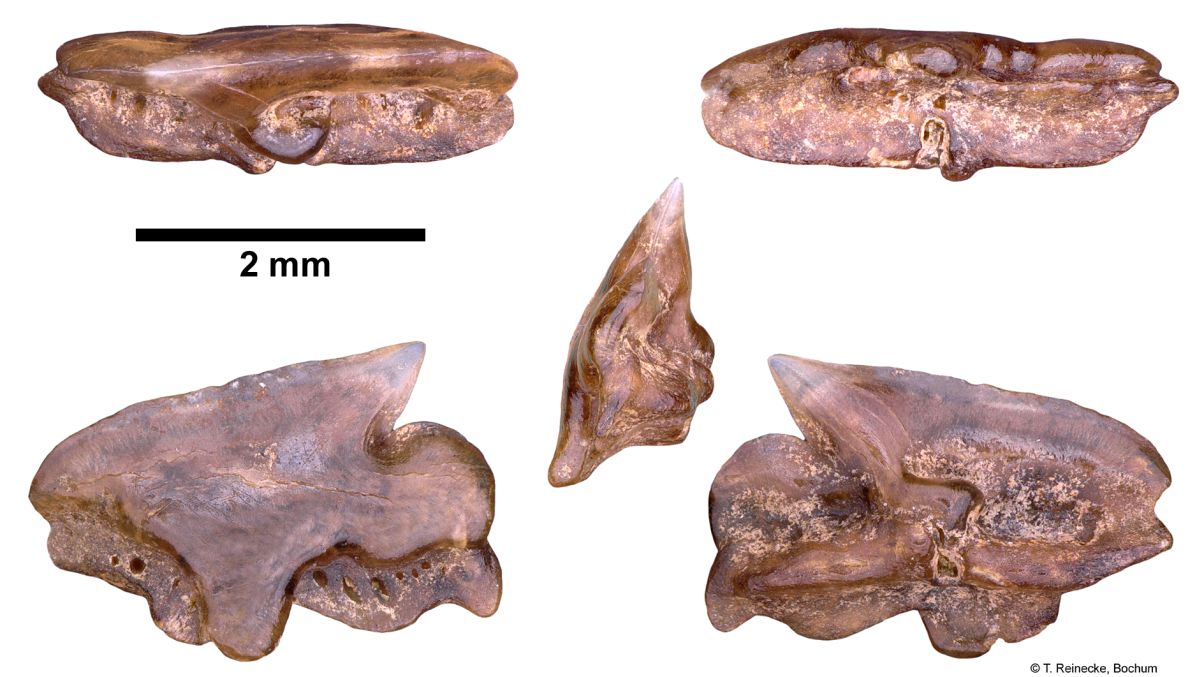
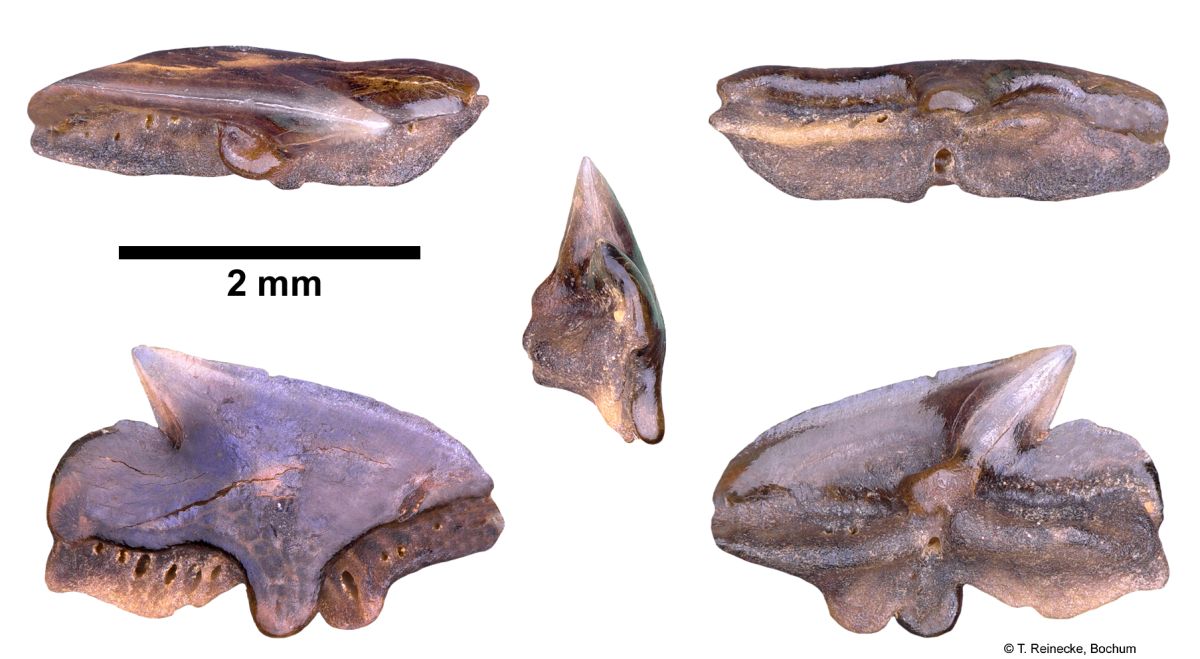
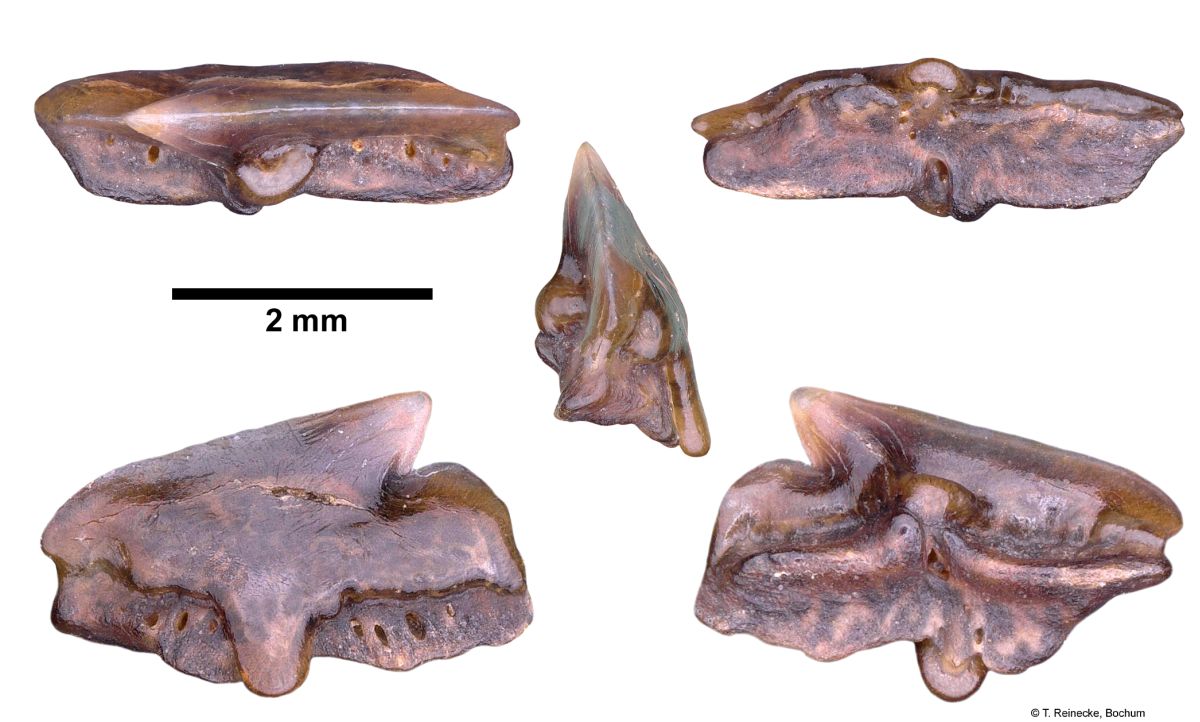
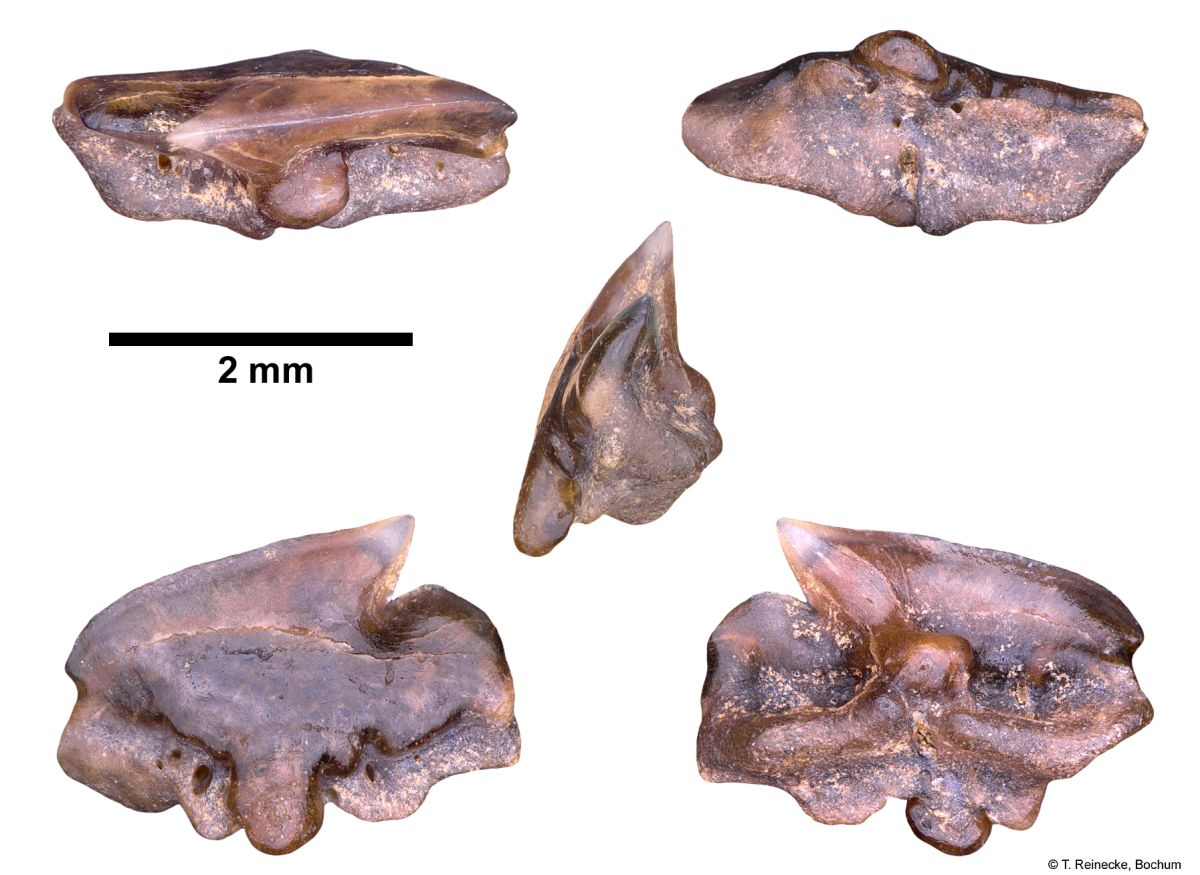
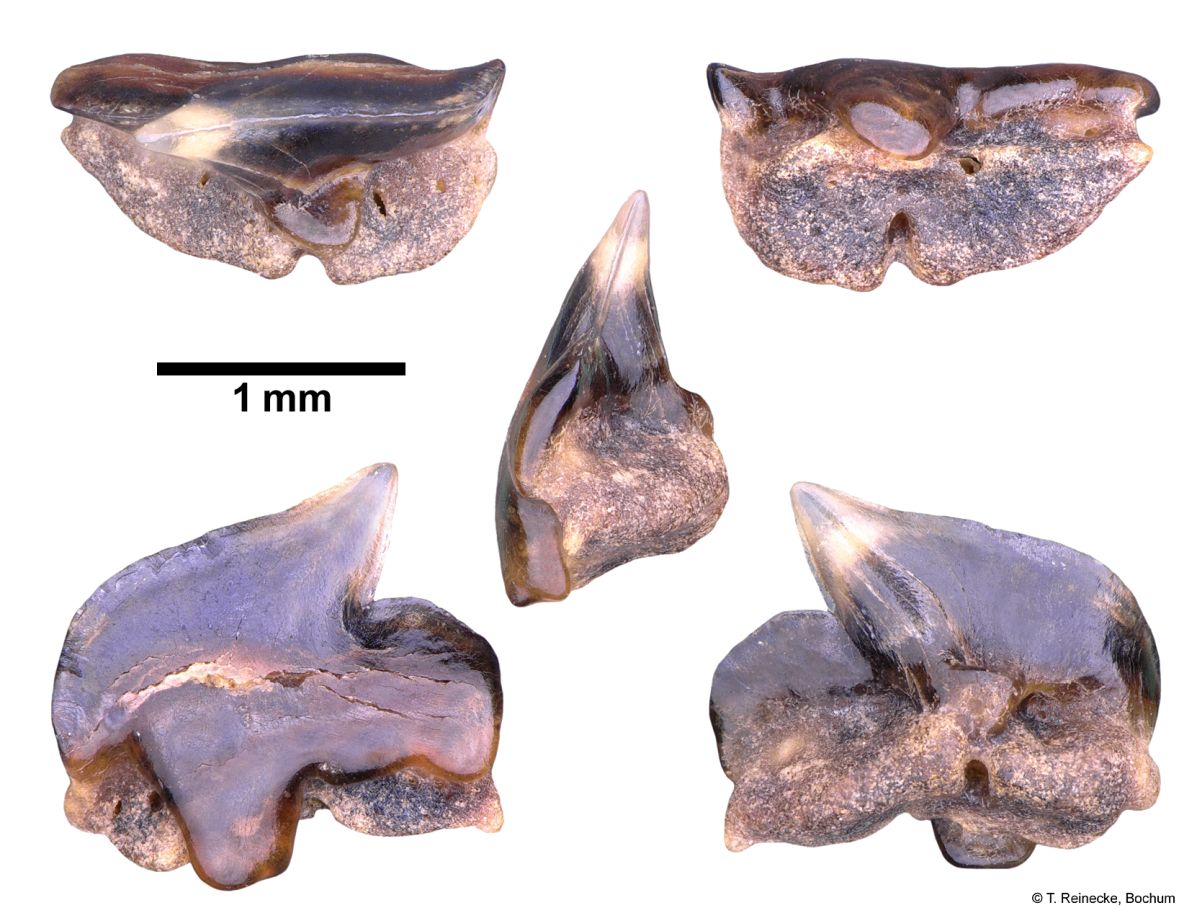
Squalus minor (Leriche, 1902); London Clay Formation, Division D, Sheppey Member, Ypresian, early Eocene; Cliff Reach, Burnham-on-Crouch, UK; coll. Senckenberg Research Institute and Natural History Museum, Frankfurt, SMF P 12135, © T. Reinecke, Bochum
Squalus minor (Leriche, 1902); London Clay Formation, Division D, Sheppey Member, Ypresian, early Eocene; Cliff Reach, Burnham-on-Crouch, UK; coll. Senckenberg Research Institute and Natural History Museum, Frankfurt, SMF P 12135, © T. Reinecke, Bochum
Description
Original description after Leriche (1902) p. 16 [3999]: Cette espèce ne saurait être confondue avec la précédente; elle s'en distingue aisément par sa taille beaucoup plus petite et par plusieurs caractères de la couronne. Celle-ci a sa pointe plus recourbée et ses bords complètement lisses; le bord antérieur est plus convexe; le mamelon postérieur est élevé, et son bord est arrondi. Cette forme rappelle, de très près, celle du Tuffeau de Maëstricht, qu'Agassiz (L. Agassiz. Recherches sur les Poissons fossiles, T. III, p. 227, PI. XXVIa, Fig. 18-20.) a désignée sous le nom de Corax appendiculatus. La dent figurée par Agassiz, et que M. A. S. Woodward (A.-S. Woodward. Catal. foss. Fishes, T. I, p. 423.) regarde, avec doute, comme une dent postérieure de Corax pristodontus, Agassiz ou de Pseudocorax affinis, Agassiz, appartient bien, en effet, au genre Acanthias; elle ne semble guère différer des dents à'Acanthias minor que par les crénelures de ses bords.
Localité : Orp-le-Grand.
Original description after Leriche (1902) p. 16 [3999]: Cette espèce ne saurait être confondue avec la précédente; elle s'en distingue aisément par sa taille beaucoup plus petite et par plusieurs caractères de la couronne. Celle-ci a sa pointe plus recourbée et ses bords complètement lisses; le bord antérieur est plus convexe; le mamelon postérieur est élevé, et son bord est arrondi. Cette forme rappelle, de très près, celle du Tuffeau de Maëstricht, qu'Agassiz (L. Agassiz. Recherches sur les Poissons fossiles, T. III, p. 227, PI. XXVIa, Fig. 18-20.) a désignée sous le nom de Corax appendiculatus. La dent figurée par Agassiz, et que M. A. S. Woodward (A.-S. Woodward. Catal. foss. Fishes, T. I, p. 423.) regarde, avec doute, comme une dent postérieure de Corax pristodontus, Agassiz ou de Pseudocorax affinis, Agassiz, appartient bien, en effet, au genre Acanthias; elle ne semble guère différer des dents à'Acanthias minor que par les crénelures de ses bords.
Localité : Orp-le-Grand.
Remarks
shark-references Species-ID=6794;
valid after Cvancara & Hoganson (1993) p. 5 [596]; Reinecke & Engelhard (1997) p. 8 [2031]; Case (1996) p. 4 [397]; Hoganson et al. (2019) p. 18 [27441]; Pollerspöck et al. p. 5 (2005) [35355]
Taxonomic remark after Pollerspöck et al. p. 5 (2005) [35355]: Leriche (1902) revised the fauna described in Daimeries (1888a, b, c) and redescribed the species Acanthias minor Daimeries, 1888. Under the list of synonyms, Leriche (1902) listed the name Biforisodus minor, first introduced by Daimeries (1888a, b), with the note (“nom seulement” = just a name). Daimeries (1888a, b) also listed the name Acanthias hennequini and subsequently published it in Daimeries, 1888c. Leriche made no specific comments on the validity of this name. In the introduction to the systematic section, however, Leriche (1902) pointed out that Daimeries never provided detailed descriptions of the new species that he had published several times under different names lacking a suitable explanation („Enfin, dans une série de notes, M. Daimeries (') a fait quelques additions aux listes des Poissons du Heersien et du Tuffeau de Lincent, et indiqué plusieui's formes nouvelles. Malheureusement, ces notes n'ont jamais été suivies du travail descriptif annoncé par l'auteur à différentes reprises.“). For this reason, we assume that Leriche (1902) interpreted the species-name Acanthias hennequini as unavailable and therefore chose the original species name “A. minor”. However, as this species name as proposed by Daimeries (1888a, b) is to be regarded as a nomen nudum, and such species-names can be used again at any time, Leriche's (1902) name proposal is to be regarded as an independent nomenclatural act. As all other requirements are also met (Art. 8, 11 and 12 of the Code) (ICZN 1999), the species-name A. minor Leriche, 1902 is available. The series of types from Daimeries’ collection illustrated by Leriche (1902) (pl. 1, figs. 9-16) are therefore syntypes (fig. 4).
shark-references Species-ID=6794;
valid after Cvancara & Hoganson (1993) p. 5 [596]; Reinecke & Engelhard (1997) p. 8 [2031]; Case (1996) p. 4 [397]; Hoganson et al. (2019) p. 18 [27441]; Pollerspöck et al. p. 5 (2005) [35355]
Taxonomic remark after Pollerspöck et al. p. 5 (2005) [35355]: Leriche (1902) revised the fauna described in Daimeries (1888a, b, c) and redescribed the species Acanthias minor Daimeries, 1888. Under the list of synonyms, Leriche (1902) listed the name Biforisodus minor, first introduced by Daimeries (1888a, b), with the note (“nom seulement” = just a name). Daimeries (1888a, b) also listed the name Acanthias hennequini and subsequently published it in Daimeries, 1888c. Leriche made no specific comments on the validity of this name. In the introduction to the systematic section, however, Leriche (1902) pointed out that Daimeries never provided detailed descriptions of the new species that he had published several times under different names lacking a suitable explanation („Enfin, dans une série de notes, M. Daimeries (') a fait quelques additions aux listes des Poissons du Heersien et du Tuffeau de Lincent, et indiqué plusieui's formes nouvelles. Malheureusement, ces notes n'ont jamais été suivies du travail descriptif annoncé par l'auteur à différentes reprises.“). For this reason, we assume that Leriche (1902) interpreted the species-name Acanthias hennequini as unavailable and therefore chose the original species name “A. minor”. However, as this species name as proposed by Daimeries (1888a, b) is to be regarded as a nomen nudum, and such species-names can be used again at any time, Leriche's (1902) name proposal is to be regarded as an independent nomenclatural act. As all other requirements are also met (Art. 8, 11 and 12 of the Code) (ICZN 1999), the species-name A. minor Leriche, 1902 is available. The series of types from Daimeries’ collection illustrated by Leriche (1902) (pl. 1, figs. 9-16) are therefore syntypes (fig. 4).
Image gallery

References


Nomenclatural revision of the squaliform taxa introduced by Daimeries (1888). Paleoichthys, 9, 1–7
Nomenclatural revision of the squaliform taxa introduced by Daimeries (1888). Paleoichthys, 9, 1–7
Nomenclatural revision of the squaliform taxa introduced by Daimeries (1888). Paleoichthys, 9, 1–7
Nomenclatural revision of the squaliform taxa introduced by Daimeries (1888). Paleoichthys, 9, 1–7
Bioluminescence and repeated deep-sea colonization shaped the diversification and body size evolution of squaliform sharks. Proceedings of the Royal Society B-Biological Sciences, 292(2042), Article 20242932
DOI: 10.1098/rspb.2024.2932
Bioluminescence and repeated deep-sea colonization shaped the diversification and body size evolution of squaliform sharks. Proceedings of the Royal Society B-Biological Sciences, 292(2042), Article 20242932
DOI: 10.1098/rspb.2024.2932
Taxonomic revision and new elasmobranch records from the Wemmel Sand and Asse Clay members, base of the Maldegem Formation (middle Lutetian, southern North Sea Basin) Geologica Belgica, 28(3–4), 117–131
DOI: 10.20341/gb.2025.007
Faszination Haie – Die Welt der fossilen und der lebenden Haie. Der Steinkern, 58, 1–116
Paleontology and stratigraphic implications of a late Paleocene elasmobranch assemblage in Talcahuano, southcentral Chile. Andean Geology, 50(2), 217–247
DOI: 10.5027/andgeoV50n2-3494
Global impact and selectivity of the Cretaceous-Paleogene mass extinction among sharks, skates, and rays. Science, 379, 802–806
DOI: 10.1126/science.abn2080
Fossile hajtaender fra Trelde Naes. Self-published
The Lower Eocene (Ypresian) Chondrichthyes from Egem, Belgium. Part 1, Orders: Hexanchiformes, Squaliformes, Squatiniformes, Heterodontiformes and Orectolobiformes. Palaeo Ichthyologica, 15, 1–55
Of teeth and trees: A fossil tip-dating approach to infer divergence times of extinct and extant squaliform sharks. Zoologica Scripta, 47(5), 539–557
DOI: 10.1111/zsc.12299
Quantitative analysis of Elasmobranch assemblages from two successive Ypresian (early Eocene) facies at Marke, western Belgium. Geologica Belgica, 15(3), 146–153
Inventaire systématique des Invertebrata, Vertebrata, Plantae et Fungi des Sables de Bruxelles. Geominpal Belgica Découvertes géologiques, minéralogiques et paléontologiques en Belgique, 1(2): 35–65
London Clay Fossils of Kent and Essex. Rochester, Kent, Medway Fossil and Mineral Society, 228 p, ISBN: 978–0–9538243–1–1
Fossil record and origin of squaliform sharks (Chondrichthyes, Neoselachii). In Gallucci, V.F. & McFarlane, G.A. & Bargmann, G.G. (Eds). Biology and management of dogfish sharks. American Fisheries Society. Bethesda, Maryland: 19–38
Fossil record and origin of squaliform sharks (Chondrichthyes, Neoselachii). In Gallucci, V.F. & McFarlane, G.A. & Bargmann, G.G. (Eds). Biology and management of dogfish sharks. American Fisheries Society. Bethesda, Maryland: 19–38
Fossil record and origin of squaliform sharks (Chondrichthyes, Neoselachii). In Gallucci, V.F. & McFarlane, G.A. & Bargmann, G.G. (Eds). Biology and management of dogfish sharks. American Fisheries Society. Bethesda, Maryland: 19–38
Biostratigraphy and palaeobiota changes during Palaeocene-Eocene transition in the Pershinsky pit (Middle Trans-Urals). Lithosphere, 2008(1), 18–50
Les ichthyofaunes du gisement à ambre de Le Quesnoy (Paléocène et Éocène du bassin de Paris, France). Cossmanniana, 11(1–4), 1–13
Report of Field Meeting to Burnham-on-Crouch, Essex. Tertiary Research, 22(1-4), 89–92
London Clay Fossils of the Isle of Sheppey. Medway Lapidary and Mineral Society, ISBN 0-9538243-0-6, 100pp.
Les élasmobranches de la transition Paléocène-Eocène de Dormaal (Belgique) : implications biostratigraphiques et paléobiogéographiques. Bulletin de la Société géologique de France, 170(3), 327–334
Ichthyofaunen aus dem atlantischen Tertiär der USA. Leipziger Geowissenschaften, 9–10, 1–360
The selachian fauna from Geschiebe of the Lower Selandian basal conglomerate (Thanetian, Late Paleocene) in the Danish subbasin (Sealand, Scania, Western Baltic Sea). Erratica, 2, 3–45
Selachian Biostratigraphy of the Salamanca Formation (Palaeogene, Patagonia, Argentina); Preliminary Report. In book: XIII Jornadas de Paleontología. Libro de Resúmenes y Excursiones, Editors: Grandal d'Anglade, Gutierrez Marco, Santos Fidalgo: 156–159
A new selachian fauna from the Lower Hornestown Formation (Early Paleocene/Montian) of Monmouth County, New Jersey. Palaeontographica, Abt. A, 242(1–3), 1–14
Synthèse des données actuelles sur les vertébrés de la transition Paléocène-Éocène de Dormaal (Belgique). Bulletin de la Société Belge de Géologie, 104(1–2), 119–131
Contribution à l'étude des élasmobranches du Thanétien (Paléocène) du Bassin de Paris. 1. Découverte d'une faune d'Elasmobranches dans la partie supérieure des Sables de Bracheux (Thanétien, Paléocène du Bassin de Paris) des régions de Compiègne (Oise) et de Montdidier (Somme). Belgian Geological Survey, Professional Paper, Elasmobranches et Stratigraphie, 278, 185–259
De visfauna uit de basis van de Klei van Egemkapel in de groeve Ampe te Egem (onder eoceen van Noordwest -Belgie) Tielt, 1994
Fossil Sharks of the Chesapeake Bay Region. Egan Rees and Boyer, Inc. Columbia. 146 pp.
Soortenlijst van fossiele vissen uit het Eoceen van België. Afzettingen WTKG, 15(4), 6–12
Vertebrates of the Cannonball Formation (Paleocene) in North and South Dakota. Journal of Vertebrate Paleontology, 13(1), 1–23
DOI: 10.1080/02724634.1993.10011484
A checklist of Neoselachii (Pisces, Chondrichthyes) from the Palaeogene of the Paris Basin, France. Tertiary Research, 13(1) , 27–36
Fossils from the Bracklesham Group exposed in the M27 Motorway excavations, Southampton, Hampshire. Tertiary Research, 12(3–4), 131–137
A checklist of Palaeocene and Eocene sharks and rays (Chondrichthyes) from the Pamunkey Group, Maryland and Virginia, USA. Tertiary Research, 12(2), 81–88
An Illustrated Guide to the British Middle Eocene Vertebrates. Privately published, London, 59 pp.

Fossiles de Belgique. Dents de Requins et de Raies du Tertiaire de la Belgique. Institut royal des Sciences naturelles de Belgique, 184 pp.
Selachii-resten van boring IJselmuiden-1. Afzettingen, 9(4), 69–73
Stand der Untersuchungen an der Chondrichthyes-Fauna des nordwestdeutschen Tertiärs. Beiträge zur regionalen Geologie der Erde, 18, 503–509
Haaie- en Roggentanden uit het Tertiair van Belgie. Institut royal des Sciences naturelles de Belgique, 1–171
Elasmobranch teeth (Vertebrata, Pisces) from the Dongen Formation (Eocene) in the Netherlands. Mededelingen Van De Werkgroep Voor Tertiaire En Kwartaire Geologie, 22(2), 73–122
Fossil sharks, rays and chimaeroids of the English Tertiary period. Gosport Museum, 1–47, 10 fig., 3 tabl., 16 pl.
Additions to the fauna of Belgium. 6. The Belgian Eocene Squalidae. Tertiary Research, 4(1), 1–6
Additions to the fauna of Belgium. 6. The Belgian Eocene Squalidae. Tertiary Research, 4(1), 1–6
The distribution of sharks, rays and chimaeroids in the English Palaeogene. Tertiary Research, 3(1), 13–19
Elasmobranch associations in Tertiary and Quaternary deposits of the Netherlands (Vertebrata, Pisces), 2. Paleogene of the eastern and northern part of The Netherland, Neogene in the eastern part of The Netherland. Mededelingen Van De Werkgroep Voor Tertiaire En Kwartaire Geologie, 17(2), 65–70
Eine Lagerstätte kreidezeitlicher und paläogener Chondrichthyes-Reste bei Fürstenau (Niedersachsen). Osnabrücker Naturwissenschaftliche Mitteilungen, 6, 35–44
Les Sélaciens des terrains néocrétacés et paléocènes de Belgique et des contrées limitrophes. Eléments d'une biostratigraphie intercontinentale. Mémoires pour servir à l'explication des Cartes géologiques et minières de la Belgique, 15, 1–401
The palaeontology of the London Clay (Lower Eocene) of the Herne Bay coastal section, Kent, England. Proceedings of the Geological Association, 88(3): 163–178
DOI: 10.1016/S0016-7878(77)80025-4
Contribution à la connaissance de la faune ichthyologique des phosphates du Maroc. Annales de la société géologique de Belgique, 95(2), 271–284
Les vertébrés du Landénien Inférieur (LIa ou Heersien) de Maret (Hameau d'Orp-le-Grand). Bulletin de la Société Belge de Géologie, de Paléontologie et d'Hydrologie, 81(3–4), 191–207
Notes on the Upper Cretaceous and Lower Tertiaray fish faunas of northern West Greenland. Meddelelser fra Dansk Geologisk Forening, 19(2), 204–217
Le Landénien de Dormaal (Brabant) et sa faune ichthyologique. Mémoires de l'Institut Royal des Sciences Naturelles de Belgique, 156, 1–66
Faune ichthyologique du London Clay. Trustees of the British Museum: 496 pp., 82 fig., 68 pl.
(Sharks of Paleogene and their stratigraphic significance). «in russian». Nauka Press: 229 p., 76 fig., 31 pl. Moscou.
Transformation des systèmes de fixation et de vascularisation dentaires dans l'évolution des sélaciens du sous-ordre des Squaliformes. Mémoires de l'Institut Royal des Sciences Naturelles de Belgique, 65, 1–55
Overzicht van de belangrijkste tertiaire haaien en roggensoorten. Aflevering I, het Paleoceen Selachii, 1(5), 2–4
Overzicht van de belangrijkste tertiaire haaien en roggensoorten. Aflevering I, het Paleoceen Selachii, 1(5), 2–4
Les poissons tertiaires de la Belgique (Supplément). Mémoires de l'Institut Royal des Sciences Naturelles de Belgique, 118, 473–600
Contributions à l'étude des Poissons fossiles de la Belgique. IV. Observations sur la faune ichtyologique du Landénien. Bulletin du Musée Royal d'Histoire Naturelle de Belgique, 19(36), 1–16
Note préliminaire sur les vertébrés fossiles des phosphates du Maroc. Bulletin de la Société géologique de France, 5(5), 413–439
Contribution à lètude des poisons fossils du Nord de la France et des regions voisines. Mémoires de la Société géologique du Nord, 5, 1–430
Les poissons paléocènes de la Belgique. Mémoires du Musée Royal d'Histoire Naturelle de Belgique, 2(5), 1–48
DOI: Taxonomic remark: Cestracion sp. (p. 30 pl. 1 fig. 28) = Heterodontus lerichei after Migom (2024)
Les poissons paléocènes de la Belgique. Mémoires du Musée Royal d'Histoire Naturelle de Belgique, 2(5), 1–48
DOI: Taxonomic remark: Cestracion sp. (p. 30 pl. 1 fig. 28) = Heterodontus lerichei after Migom (2024)
Notes ichthyologiques (Système Landénien) - I. Annales de la Société royale malacologique de Belgique, Bulletin des Séances, 23, 42–43
Notes ichthyologiques - III. Annales de la Société royale malacologique de Belgique, Bulletin des Séances, 23, 101–104
Nomenclatural revision of the squaliform taxa introduced by Daimeries (1888). Paleoichthys, 9, 1–7
Nomenclatural revision of the squaliform taxa introduced by Daimeries (1888). Paleoichthys, 9, 1–7
Nomenclatural revision of the squaliform taxa introduced by Daimeries (1888). Paleoichthys, 9, 1–7
Nomenclatural revision of the squaliform taxa introduced by Daimeries (1888). Paleoichthys, 9, 1–7
Bioluminescence and repeated deep-sea colonization shaped the diversification and body size evolution of squaliform sharks. Proceedings of the Royal Society B-Biological Sciences, 292(2042), Article 20242932
DOI: 10.1098/rspb.2024.2932
Bioluminescence and repeated deep-sea colonization shaped the diversification and body size evolution of squaliform sharks. Proceedings of the Royal Society B-Biological Sciences, 292(2042), Article 20242932
DOI: 10.1098/rspb.2024.2932
Taxonomic revision and new elasmobranch records from the Wemmel Sand and Asse Clay members, base of the Maldegem Formation (middle Lutetian, southern North Sea Basin) Geologica Belgica, 28(3–4), 117–131
DOI: 10.20341/gb.2025.007
Faszination Haie – Die Welt der fossilen und der lebenden Haie. Der Steinkern, 58, 1–116
Paleontology and stratigraphic implications of a late Paleocene elasmobranch assemblage in Talcahuano, southcentral Chile. Andean Geology, 50(2), 217–247
DOI: 10.5027/andgeoV50n2-3494
Global impact and selectivity of the Cretaceous-Paleogene mass extinction among sharks, skates, and rays. Science, 379, 802–806
DOI: 10.1126/science.abn2080
Fossile hajtaender fra Trelde Naes. Self-published
The Lower Eocene (Ypresian) Chondrichthyes from Egem, Belgium. Part 1, Orders: Hexanchiformes, Squaliformes, Squatiniformes, Heterodontiformes and Orectolobiformes. Palaeo Ichthyologica, 15, 1–55
Of teeth and trees: A fossil tip-dating approach to infer divergence times of extinct and extant squaliform sharks. Zoologica Scripta, 47(5), 539–557
DOI: 10.1111/zsc.12299
Quantitative analysis of Elasmobranch assemblages from two successive Ypresian (early Eocene) facies at Marke, western Belgium. Geologica Belgica, 15(3), 146–153
Inventaire systématique des Invertebrata, Vertebrata, Plantae et Fungi des Sables de Bruxelles. Geominpal Belgica Découvertes géologiques, minéralogiques et paléontologiques en Belgique, 1(2): 35–65
London Clay Fossils of Kent and Essex. Rochester, Kent, Medway Fossil and Mineral Society, 228 p, ISBN: 978–0–9538243–1–1
Fossil record and origin of squaliform sharks (Chondrichthyes, Neoselachii). In Gallucci, V.F. & McFarlane, G.A. & Bargmann, G.G. (Eds). Biology and management of dogfish sharks. American Fisheries Society. Bethesda, Maryland: 19–38
Fossil record and origin of squaliform sharks (Chondrichthyes, Neoselachii). In Gallucci, V.F. & McFarlane, G.A. & Bargmann, G.G. (Eds). Biology and management of dogfish sharks. American Fisheries Society. Bethesda, Maryland: 19–38
Fossil record and origin of squaliform sharks (Chondrichthyes, Neoselachii). In Gallucci, V.F. & McFarlane, G.A. & Bargmann, G.G. (Eds). Biology and management of dogfish sharks. American Fisheries Society. Bethesda, Maryland: 19–38
Biostratigraphy and palaeobiota changes during Palaeocene-Eocene transition in the Pershinsky pit (Middle Trans-Urals). Lithosphere, 2008(1), 18–50
Les ichthyofaunes du gisement à ambre de Le Quesnoy (Paléocène et Éocène du bassin de Paris, France). Cossmanniana, 11(1–4), 1–13
Report of Field Meeting to Burnham-on-Crouch, Essex. Tertiary Research, 22(1-4), 89–92
London Clay Fossils of the Isle of Sheppey. Medway Lapidary and Mineral Society, ISBN 0-9538243-0-6, 100pp.
Les élasmobranches de la transition Paléocène-Eocène de Dormaal (Belgique) : implications biostratigraphiques et paléobiogéographiques. Bulletin de la Société géologique de France, 170(3), 327–334
Ichthyofaunen aus dem atlantischen Tertiär der USA. Leipziger Geowissenschaften, 9–10, 1–360
The selachian fauna from Geschiebe of the Lower Selandian basal conglomerate (Thanetian, Late Paleocene) in the Danish subbasin (Sealand, Scania, Western Baltic Sea). Erratica, 2, 3–45
Selachian Biostratigraphy of the Salamanca Formation (Palaeogene, Patagonia, Argentina); Preliminary Report. In book: XIII Jornadas de Paleontología. Libro de Resúmenes y Excursiones, Editors: Grandal d'Anglade, Gutierrez Marco, Santos Fidalgo: 156–159
A new selachian fauna from the Lower Hornestown Formation (Early Paleocene/Montian) of Monmouth County, New Jersey. Palaeontographica, Abt. A, 242(1–3), 1–14
Synthèse des données actuelles sur les vertébrés de la transition Paléocène-Éocène de Dormaal (Belgique). Bulletin de la Société Belge de Géologie, 104(1–2), 119–131
Contribution à l'étude des élasmobranches du Thanétien (Paléocène) du Bassin de Paris. 1. Découverte d'une faune d'Elasmobranches dans la partie supérieure des Sables de Bracheux (Thanétien, Paléocène du Bassin de Paris) des régions de Compiègne (Oise) et de Montdidier (Somme). Belgian Geological Survey, Professional Paper, Elasmobranches et Stratigraphie, 278, 185–259
De visfauna uit de basis van de Klei van Egemkapel in de groeve Ampe te Egem (onder eoceen van Noordwest -Belgie) Tielt, 1994
Fossil Sharks of the Chesapeake Bay Region. Egan Rees and Boyer, Inc. Columbia. 146 pp.
Soortenlijst van fossiele vissen uit het Eoceen van België. Afzettingen WTKG, 15(4), 6–12
Vertebrates of the Cannonball Formation (Paleocene) in North and South Dakota. Journal of Vertebrate Paleontology, 13(1), 1–23
DOI: 10.1080/02724634.1993.10011484
A checklist of Neoselachii (Pisces, Chondrichthyes) from the Palaeogene of the Paris Basin, France. Tertiary Research, 13(1) , 27–36
Fossils from the Bracklesham Group exposed in the M27 Motorway excavations, Southampton, Hampshire. Tertiary Research, 12(3–4), 131–137
A checklist of Palaeocene and Eocene sharks and rays (Chondrichthyes) from the Pamunkey Group, Maryland and Virginia, USA. Tertiary Research, 12(2), 81–88
An Illustrated Guide to the British Middle Eocene Vertebrates. Privately published, London, 59 pp.
Fossiles de Belgique. Dents de Requins et de Raies du Tertiaire de la Belgique. Institut royal des Sciences naturelles de Belgique, 184 pp.
Selachii-resten van boring IJselmuiden-1. Afzettingen, 9(4), 69–73
Stand der Untersuchungen an der Chondrichthyes-Fauna des nordwestdeutschen Tertiärs. Beiträge zur regionalen Geologie der Erde, 18, 503–509
Haaie- en Roggentanden uit het Tertiair van Belgie. Institut royal des Sciences naturelles de Belgique, 1–171
Elasmobranch teeth (Vertebrata, Pisces) from the Dongen Formation (Eocene) in the Netherlands. Mededelingen Van De Werkgroep Voor Tertiaire En Kwartaire Geologie, 22(2), 73–122
Fossil sharks, rays and chimaeroids of the English Tertiary period. Gosport Museum, 1–47, 10 fig., 3 tabl., 16 pl.
Additions to the fauna of Belgium. 6. The Belgian Eocene Squalidae. Tertiary Research, 4(1), 1–6
Additions to the fauna of Belgium. 6. The Belgian Eocene Squalidae. Tertiary Research, 4(1), 1–6
The distribution of sharks, rays and chimaeroids in the English Palaeogene. Tertiary Research, 3(1), 13–19
Elasmobranch associations in Tertiary and Quaternary deposits of the Netherlands (Vertebrata, Pisces), 2. Paleogene of the eastern and northern part of The Netherland, Neogene in the eastern part of The Netherland. Mededelingen Van De Werkgroep Voor Tertiaire En Kwartaire Geologie, 17(2), 65–70
Eine Lagerstätte kreidezeitlicher und paläogener Chondrichthyes-Reste bei Fürstenau (Niedersachsen). Osnabrücker Naturwissenschaftliche Mitteilungen, 6, 35–44
Les Sélaciens des terrains néocrétacés et paléocènes de Belgique et des contrées limitrophes. Eléments d'une biostratigraphie intercontinentale. Mémoires pour servir à l'explication des Cartes géologiques et minières de la Belgique, 15, 1–401
The palaeontology of the London Clay (Lower Eocene) of the Herne Bay coastal section, Kent, England. Proceedings of the Geological Association, 88(3): 163–178
DOI: 10.1016/S0016-7878(77)80025-4
Contribution à la connaissance de la faune ichthyologique des phosphates du Maroc. Annales de la société géologique de Belgique, 95(2), 271–284
Les vertébrés du Landénien Inférieur (LIa ou Heersien) de Maret (Hameau d'Orp-le-Grand). Bulletin de la Société Belge de Géologie, de Paléontologie et d'Hydrologie, 81(3–4), 191–207
Notes on the Upper Cretaceous and Lower Tertiaray fish faunas of northern West Greenland. Meddelelser fra Dansk Geologisk Forening, 19(2), 204–217
Le Landénien de Dormaal (Brabant) et sa faune ichthyologique. Mémoires de l'Institut Royal des Sciences Naturelles de Belgique, 156, 1–66
Faune ichthyologique du London Clay. Trustees of the British Museum: 496 pp., 82 fig., 68 pl.
(Sharks of Paleogene and their stratigraphic significance). «in russian». Nauka Press: 229 p., 76 fig., 31 pl. Moscou.
Transformation des systèmes de fixation et de vascularisation dentaires dans l'évolution des sélaciens du sous-ordre des Squaliformes. Mémoires de l'Institut Royal des Sciences Naturelles de Belgique, 65, 1–55
Overzicht van de belangrijkste tertiaire haaien en roggensoorten. Aflevering I, het Paleoceen Selachii, 1(5), 2–4
Overzicht van de belangrijkste tertiaire haaien en roggensoorten. Aflevering I, het Paleoceen Selachii, 1(5), 2–4
Les poissons tertiaires de la Belgique (Supplément). Mémoires de l'Institut Royal des Sciences Naturelles de Belgique, 118, 473–600
Contributions à l'étude des Poissons fossiles de la Belgique. IV. Observations sur la faune ichtyologique du Landénien. Bulletin du Musée Royal d'Histoire Naturelle de Belgique, 19(36), 1–16
Note préliminaire sur les vertébrés fossiles des phosphates du Maroc. Bulletin de la Société géologique de France, 5(5), 413–439
Contribution à lètude des poisons fossils du Nord de la France et des regions voisines. Mémoires de la Société géologique du Nord, 5, 1–430
Les poissons paléocènes de la Belgique. Mémoires du Musée Royal d'Histoire Naturelle de Belgique, 2(5), 1–48
DOI: Taxonomic remark: Cestracion sp. (p. 30 pl. 1 fig. 28) = Heterodontus lerichei after Migom (2024)
Les poissons paléocènes de la Belgique. Mémoires du Musée Royal d'Histoire Naturelle de Belgique, 2(5), 1–48
DOI: Taxonomic remark: Cestracion sp. (p. 30 pl. 1 fig. 28) = Heterodontus lerichei after Migom (2024)
Notes ichthyologiques (Système Landénien) - I. Annales de la Société royale malacologique de Belgique, Bulletin des Séances, 23, 42–43
Notes ichthyologiques - III. Annales de la Société royale malacologique de Belgique, Bulletin des Séances, 23, 101–104