


Weltonia ancistrodon
(Arambourg, 1952)
Classification: Elasmobranchii Hexanchiformes Hexanchidae
Reference of the original description
Les vertébrés fossiles des gisements de phosphates (Maroc-Algérie-Tunisie). Notes et Mémoires du Service Géologique du Maroc, 92, 1–372
Les vertébrés fossiles des gisements de phosphates (Maroc-Algérie-Tunisie). Notes et Mémoires du Service Géologique du Maroc, 92, 1–372
Image of the original description

Original image of the Syntypes of Notidanus (Heptranchias) ancistrodon nov. sp., Arambourg, 1952, Pl . I. figs 59-71, Thanetian, Late Palaeocene, Descenderie D, Ouled Abdoun, Morocco; Pl . I. figs 72-82, Thanetian, Late Palaeocene, Boujniba, Khouribga region, Morocco; Ypresian, early Eocene; Pl . I. figs 83, 84, Mohammed Chleuh, Ouled Abdoun Basin, Morocco; ?coll. Muséum National d'Histoire Naturelle, Paris, France
Original image of the Syntypes of Notidanus (Heptranchias) ancistrodon nov. sp., Arambourg, 1952, Pl . I. figs 59-71, Thanetian, Late Palaeocene, Descenderie D, Ouled Abdoun, Morocco; Pl . I. figs 72-82, Thanetian, Late Palaeocene, Boujniba, Khouribga region, Morocco; Ypresian, early Eocene; Pl . I. figs 83, 84, Mohammed Chleuh, Ouled Abdoun Basin, Morocco; ?coll. Muséum National d'Histoire Naturelle, Paris, France
Synonyms / new combinations and misspellings
Heptranchias cf. ancistrodon, Notidanus (Heptranchias) ancistrodon
Heptranchias cf. ancistrodon, Notidanus (Heptranchias) ancistrodon
Description:
Citation: Weltonia ancistrodon (Arambourg, 1952): In: Database of fossil elasmobranch teeth www.shark-references.com, World Wide Web electronic publication, Version 10/2026
Please send your images of "Weltonia ancistrodon" to info@shark-references.com

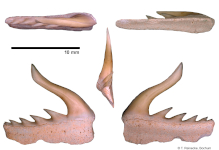
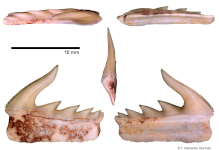
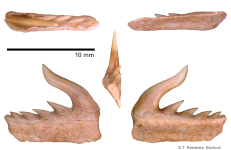
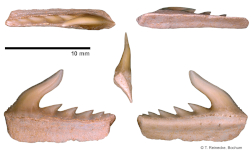
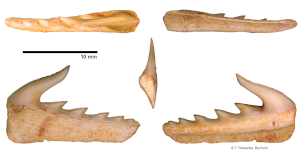
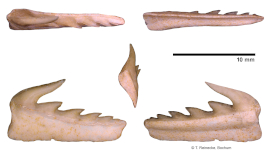
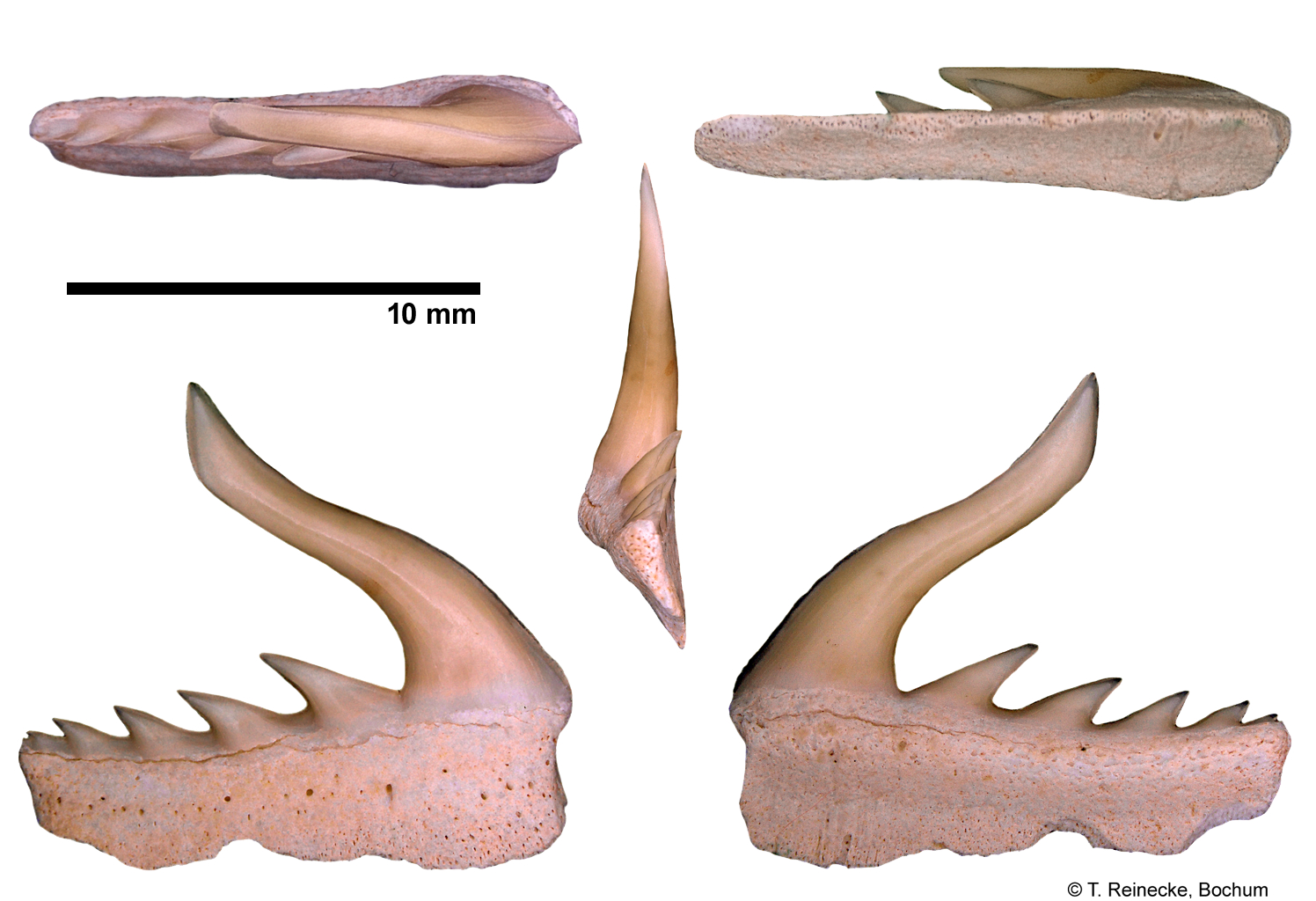
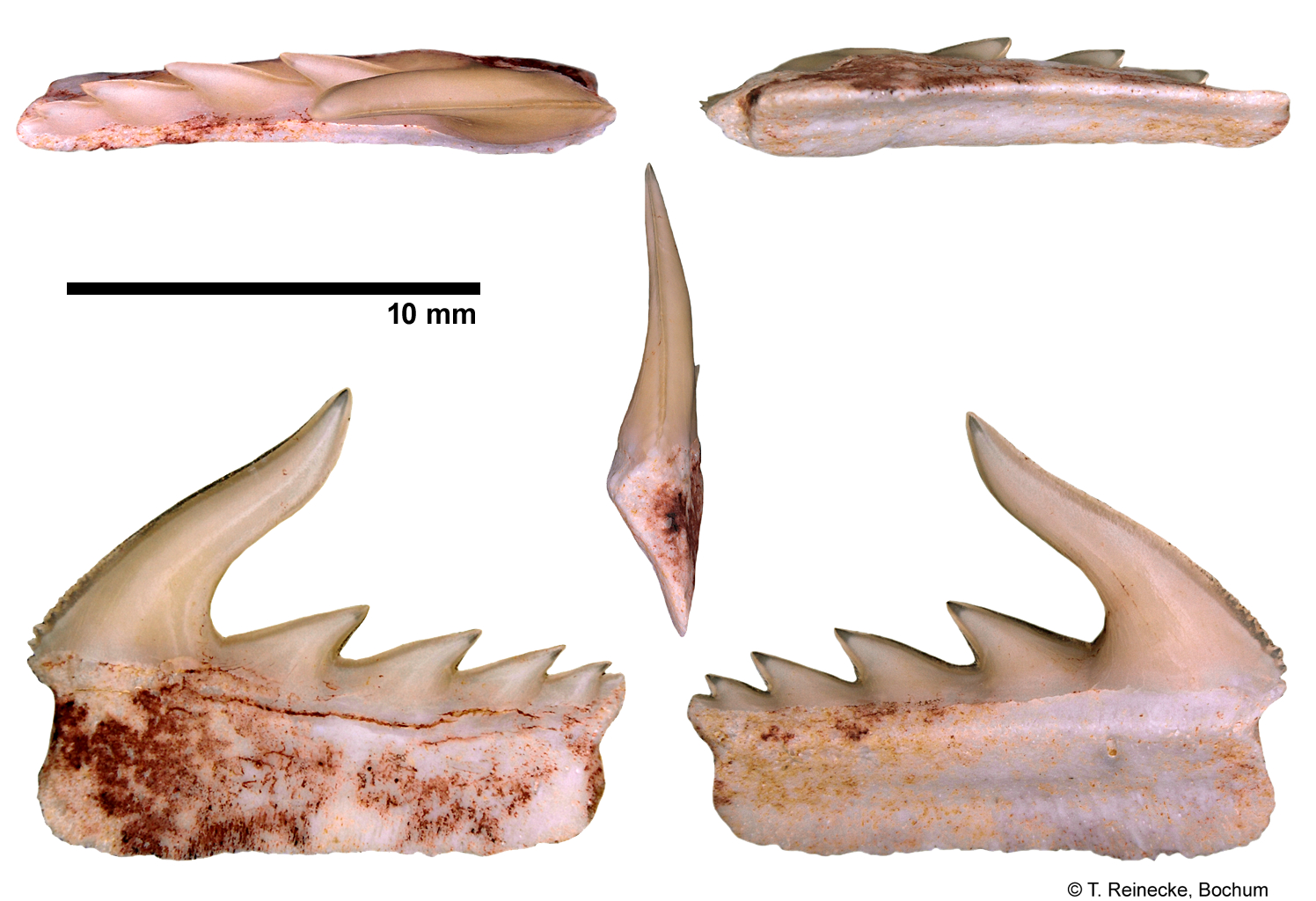
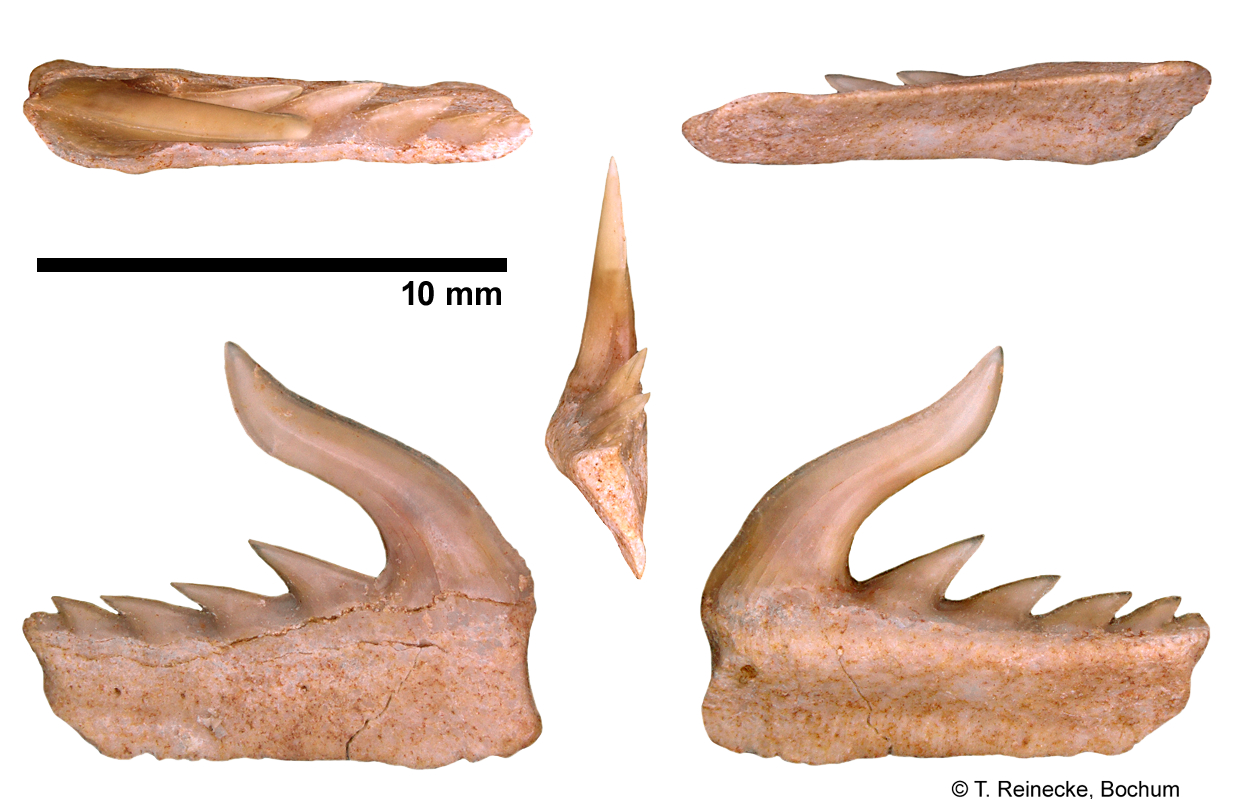
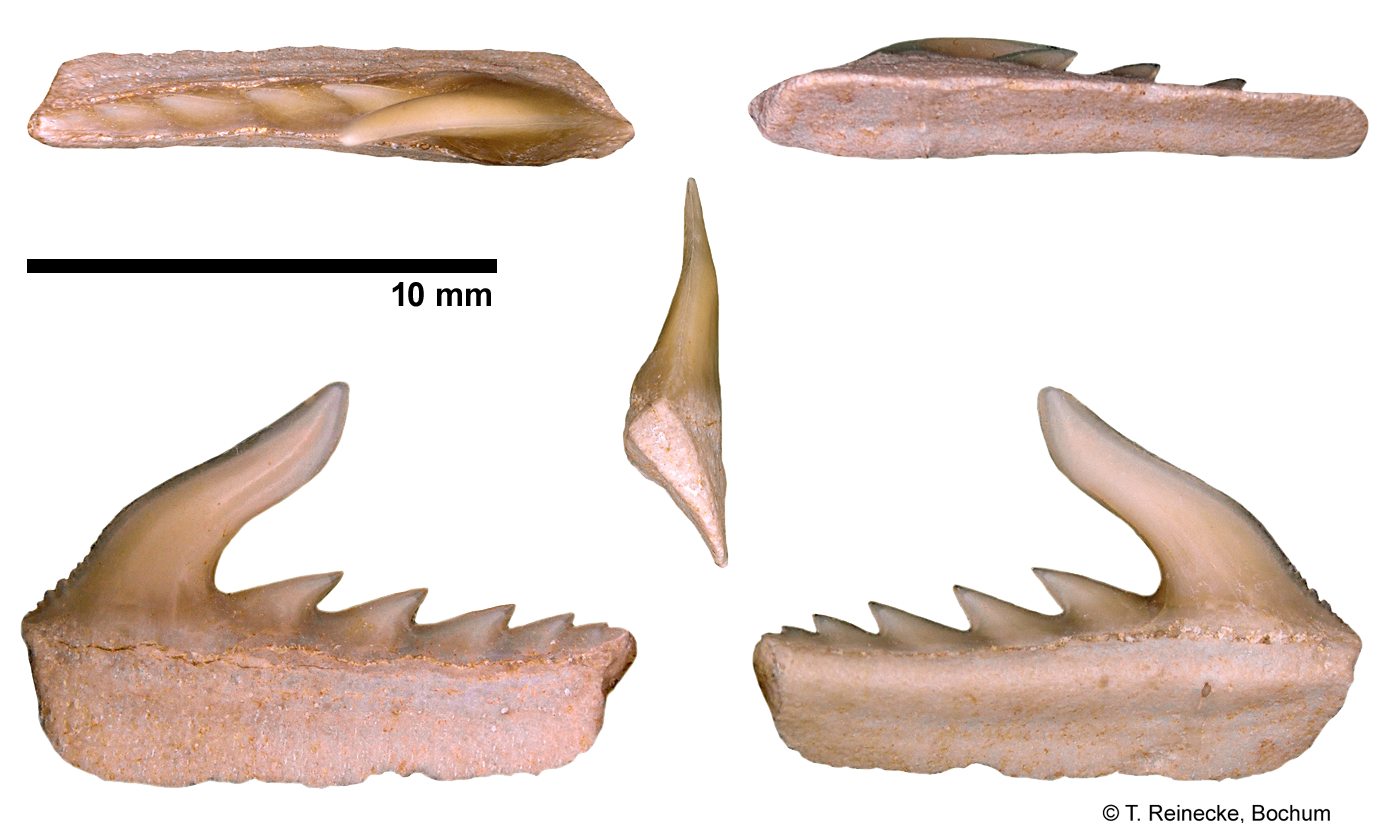
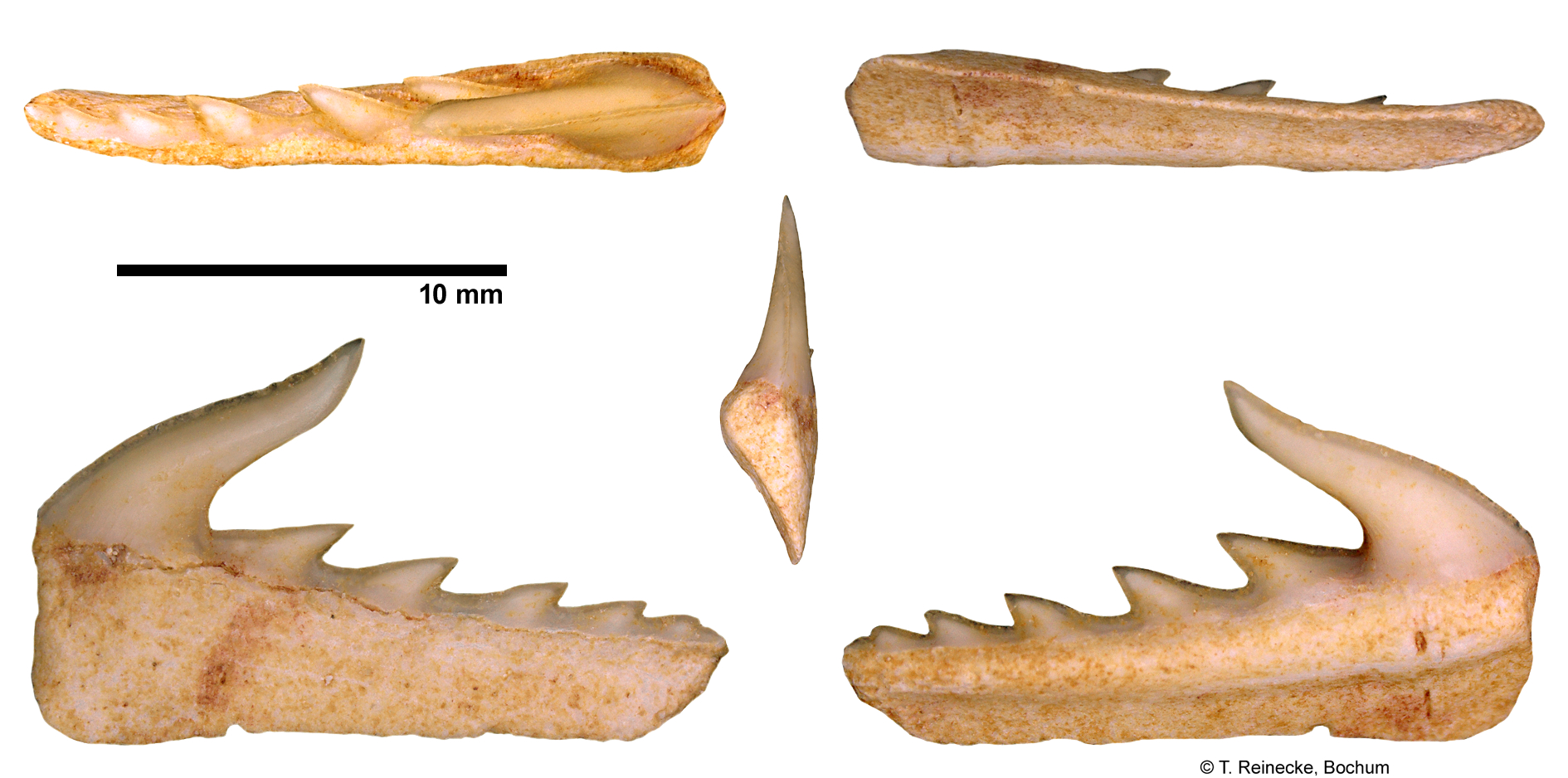
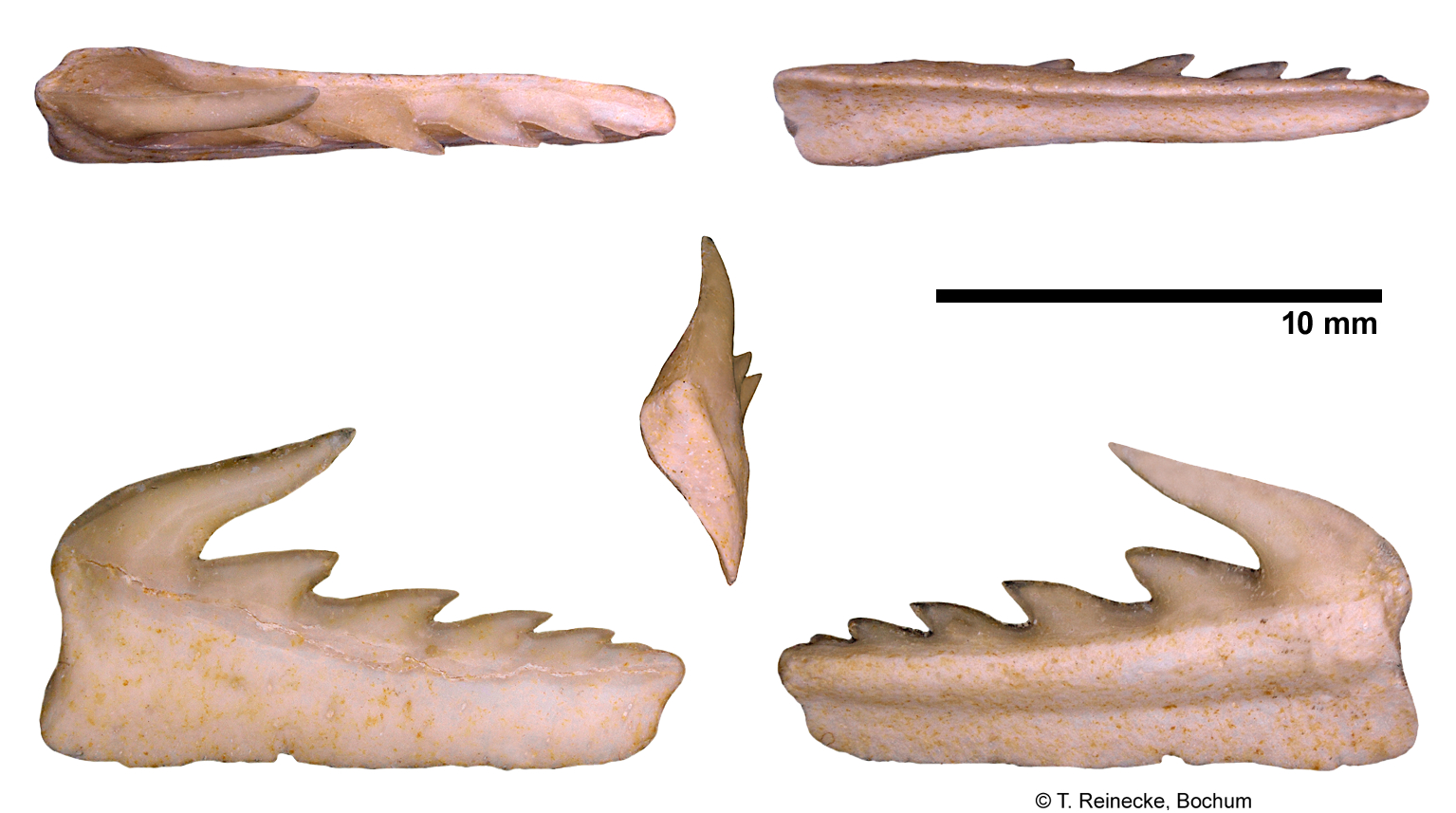
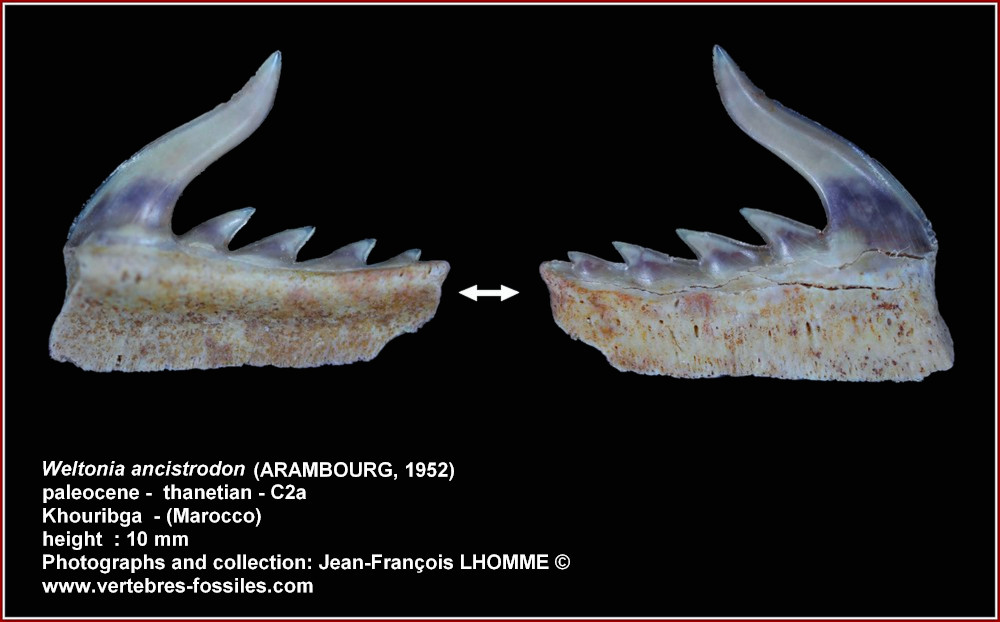
Weltonia ancistrodon (Arambourg, 1952); Thanetian, late Paleocene; Ouled Abdoun Basin, Morocco; coll. Pollerspöck, © T. Reinecke, Bochum
Weltonia ancistrodon (Arambourg, 1952); Thanetian, late Paleocene; Ouled Abdoun Basin, Morocco; coll. Pollerspöck, © T. Reinecke, Bochum
Description
Original diagnosis after (Arambourg, 1952) [90]: Notidanus a denture caracterisée par le grand développement, aux dents latérales de la machoire supérieure, de la première cuspide, comprimée et recourbée en forme d'S vers la commissure; denticules latéraux au nombre de 4 ou 5. Dents mandibulaires a 7 denticules au maximum, regulièrement décroissants. Bord antérieur de la première cuspide très finement denticulé à sa base.
Original diagnosis after (Arambourg, 1952) [90]: Notidanus a denture caracterisée par le grand développement, aux dents latérales de la machoire supérieure, de la première cuspide, comprimée et recourbée en forme d'S vers la commissure; denticules latéraux au nombre de 4 ou 5. Dents mandibulaires a 7 denticules au maximum, regulièrement décroissants. Bord antérieur de la première cuspide très finement denticulé à sa base.
Remarks
shark-references Species-ID=7511;
valid after Ward (1979) p. 118 [2493]; Case (1996) p. 4 [397]
shark-references Species-ID=7511;
valid after Ward (1979) p. 118 [2493]; Case (1996) p. 4 [397]
Image gallery
References

Faszination Haie – Die Welt der fossilen und der lebenden Haie. Der Steinkern, 58, 1–116

New vertebrate microfossils expand the diversity of the chondrichthyan and actinopterygian fauna of the Maastrichtian–Danian Hornerstown Formation in New Jersey. Acta Palaeontologica Polonica, 69(2), 173–198
DOI: 10.4202/app.01117.2023
Global impact and selectivity of the Cretaceous-Paleogene mass extinction among sharks, skates, and rays. Science, 379, 802–806
DOI: 10.1126/science.abn2080
Fossil Shark Teeth of the World. Lamna Books, 170 p
A new selachian fauna from the Lower Hornestown Formation (Early Paleocene/Montian) of Monmouth County, New Jersey. Palaeontographica, Abt. A, 242(1–3), 1–14
Late Cretaceous and Cenozoic Squalomorphii of the Northwest Pacific Ocean. PhD, Univ. of California Berkeley, 553 p., 71 fig.
Les vertébrés fossiles des gisements de phosphates (Maroc-Algérie-Tunisie). Notes et Mémoires du Service Géologique du Maroc, 92, 1–372
Faszination Haie – Die Welt der fossilen und der lebenden Haie. Der Steinkern, 58, 1–116
New vertebrate microfossils expand the diversity of the chondrichthyan and actinopterygian fauna of the Maastrichtian–Danian Hornerstown Formation in New Jersey. Acta Palaeontologica Polonica, 69(2), 173–198
DOI: 10.4202/app.01117.2023
Global impact and selectivity of the Cretaceous-Paleogene mass extinction among sharks, skates, and rays. Science, 379, 802–806
DOI: 10.1126/science.abn2080
Fossil Shark Teeth of the World. Lamna Books, 170 p
A new selachian fauna from the Lower Hornestown Formation (Early Paleocene/Montian) of Monmouth County, New Jersey. Palaeontographica, Abt. A, 242(1–3), 1–14
Late Cretaceous and Cenozoic Squalomorphii of the Northwest Pacific Ocean. PhD, Univ. of California Berkeley, 553 p., 71 fig.
Les vertébrés fossiles des gisements de phosphates (Maroc-Algérie-Tunisie). Notes et Mémoires du Service Géologique du Maroc, 92, 1–372